

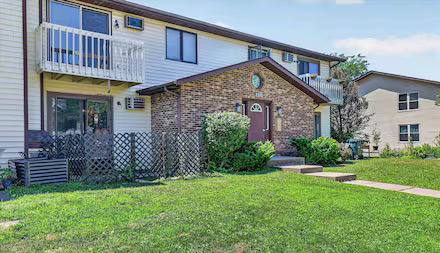
The cost of living index in Madison, Wisconsin is 102, which is nearly the same as the U.S. average of 100.
As the state capital and home to the University of Wisconsin, the cost of living is relatively restrained, and the figure represents 'exactly average.' However, the index of 102 does not mean that all categories are uniformly average. Housing costs are slightly above average, grocery prices are around average, and the tax structure is somewhat unfavorable, as indicated by the data.
Looking at housing costs, the average rent for a one-bedroom apartment in Madison is estimated to be between $1,300 and $1,600 per month. Compared to the national average of $1,500 to $2,200, this is relatively low, but it is higher than other cities in Wisconsin, such as Milwaukee (COL around 92) or Green Bay (COL around 88). In the Isthmus area near the campus, rents can exceed $1,700, indicating that the cost of living can vary depending on location.
Grocery costs for a family of four are estimated to be around $800 to $1,050 per month, which falls within the national average range. Known for its dairy production, Wisconsin tends to have lower prices for cheese and dairy products compared to other regions. Transportation costs are manageable, as the bus network (Metro Transit) connecting UW Madison campus and downtown is relatively well-operated, allowing for a car-free lifestyle to some extent. If you own a vehicle, the expected monthly costs, including Wisconsin registration fees and fuel, are around $400 to $600.
The tax structure in Wisconsin is a variable that cannot be overlooked when planning for living expenses. According to the data, the state income tax in Wisconsin is as high as 7.65%, which is somewhat high compared to other Midwestern states. The sales tax is 5% state tax plus an additional 0.5% for Dane County, where Madison is located, totaling 5.5%. Property taxes are also known to be higher than the national average, making it reasonable to consider annual property tax burdens when purchasing a home.
Winter heating costs are also a significant factor in the cost of living in Madison. From December to March, snowfall is substantial, and there are many days when temperatures drop below freezing, leading to heating costs of over $250 per month. The average utility bill is estimated to be around $230 per month, with summer cooling costs being relatively low, resulting in seasonal variations.
In terms of the Korean community, Madison is considered one of the major areas of Korean concentration in Wisconsin. Due to its university town characteristics, there is a proportion of Korean international students, professors, and researchers, and there are Asian markets in the city that carry Korean food products. There are also Korean markets in Milwaukee (about 80 miles, 1 hour and 20 minutes away), indicating a pattern of complementary use.
The index of 102 for Madison clearly represents a 'middle point.' It is not as expensive as a major city, nor as cheap as rural areas, and it maintains a rich educational and cultural infrastructure while keeping the standard of living at an average level. The figures show that it is lower than other college towns like Ann Arbor, MI (COL 105) and higher than Iowa City (COL 95). It appears to be a viable option for households weighing the balance between cost of living and quality of life.
 FilialFedor
 Rynex78







 Coding Elf |
 Dragon Lee |
 gravity |
 Agenda Center |
 Texas Migration Story |
 Starry Eyes |
 planeto |
 Forever Coco is Bangga |
 My Love Bambino Alaview |
 dorange |
  festive |
  You Turn Me On |
  Supplemental Security Income (SSI) Information |
  Sams Market |
  ansdal |
  VVV 80 |
  BIODOCTOR NEWS |
  Gold Bar |
  Tamfa Fan |
  Jenny's Mom blog |
  Karina's Blog |
  Best Frozen Yogurt |
  Victory 1988 |
  Infinite Style |
  Mr Cleveland |
  Sugar Cream Door Bulletproof Noodles |
  novapixel |
  lavender |
  macan 08 |