
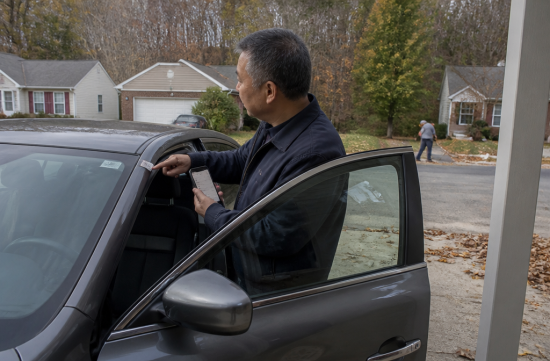
When the car insurance renewal notice arrives, it's easy to just glance at the amount and move on. However, if you've been driving less lately, there's a point worth pausing to consider.
If you've switched to remote work or are preparing for retirement, you might still be paying insurance premiums based on last year's conditions. Even though mileage is a key factor in determining insurance rates, many people overlook this during renewal.
In such cases, you should look into mileage-based insurance products. They generally fall into two categories.
One is the pay-per-mile model, where you pay a base rate each month plus a fee for each mile driven that month.
The other is the telematics model. This records your driving habits and mileage through an app or device, applying discounts based on the results.
First, let's discuss the pay-per-mile option. The base rate and per-mile fee vary depending on the type of vehicle, driving history, and location. Therefore, you shouldn't base your decision on someone else's rates.
There are also safety measures for long-distance driving. Reviews on various insurance comparison sites indicate that Nationwide SmartMiles only charges for up to 250 miles per day.
Allstate Milewise also has a daily cap of 250 miles in most states, while in Illinois, Indiana, Ohio, and Oregon, it's capped at 150 miles. If you're only occasionally visiting a distant relative, this structure can be less burdensome.
However, whether it's available in Tennessee varies by company. According to third-party reviews, SmartMiles is sold in all states except Alaska, Hawaii, Louisiana, North Carolina, New York, and Oklahoma, which means Tennessee is likely included.
Milewise had differing lists of states where it's sold, and I couldn't find a list that included Tennessee. If you're interested, it's best to ask Allstate directly for accurate information.
You might remember Metromile. After being acquired by Lemonade, the pay-per-mile product is only available in Arizona, Oregon, and Washington, and they reportedly only sell standard insurance in Tennessee.
Now, let's look at the telematics options. Notable examples include Progressive Snapshot, State Farm Drive Safe & Save, and Nationwide SmartRide.
Nationwide states that simply signing up for SmartRide can earn you a 10% discount. If your driving habits are good, the discount can increase.
One important thing to check is whether your insurance premium could increase if your results are poor.
According to a Bankrate review, one in five participants in Progressive's Snapshot program saw their premiums rise due to their driving habits, primarily due to speeding and hard braking. This is not a trivial percentage.
On the other hand, State Farm assures that there are no surcharges due to Drive Safe & Save. However, there is a catch.
If you're already receiving a low-mileage discount and exceed 7,500 miles in recorded mileage, you could lose that discount. This means you could end up worse off by losing benefits you were already receiving.
So, how much can you actually save? According to a Consumer Reports survey, the median annual savings for telematics users was $120. For households with young drivers, it was $245.
Honestly, these numbers are modest compared to expectations. Still, they are worth considering given the effort of reviewing a few documents once a year during renewal.
Here's a checklist of what to do before renewal. First, check your mileage from the past year. You can quickly find this by comparing the mileage on maintenance receipts or oil change stickers.
Next, ask your current insurance company if you have a low-mileage discount and whether your mileage falls within the criteria. Surprisingly, this can often be resolved with just a phone call.
Then, get side-by-side quotes for pay-per-mile and standard insurance with the same coverage conditions. If the coverage limits or deductibles differ, the comparison becomes meaningless.
When choosing telematics, check the potential for surcharges and the extent of data collection in the terms and conditions. If you're uncomfortable with your location and driving times being recorded, a pay-per-mile model may be more appealing.
If you often drive at night or have many hard brakes, it's better to avoid products that monitor driving habits. You know your driving style best.
Conversely, if your mileage has decreased but you occasionally take long trips, a pay-per-mile model with a daily cap might be suitable. A scenic drive or weekend hike can easily fit within the limits.
These products often have changing conditions depending on the company and state. The information provided here is based on publicly available reviews and company guidelines, so always verify the final amounts and conditions with a quote.
If your family has two cars, you can also consider using pay-per-mile for just one of them. This means evaluating the conditions for the car that is mostly parked versus the one you drive daily.
My opinion is clear. If it were me, I would seek quotes first for options that only consider mileage or programs without surcharges rather than those with surcharge risks.
Buying insurance should prioritize fitting it to your lifestyle over just getting the cheapest rate. If your life has changed, it's time to adjust your insurance accordingly.
 MagicTree
 LikeUSmiling


 Carolina border |
 juicylol |

 Mr Song Song |

 Way to easy |
 holy cow |

 ttano |



 quietwave |

 U.S. Weather Bureau News |

 silverfox |
 Colorado Lee |
 kiwiii |
 foxtrot83 |
 stiff |
 namico |
 Caribbean |
 dynamico |
 Elastico |
 United States Army |
 Moving Waterfall |
 travelo |
 BOOM BOOM BOOM |
 blues town |
 glenview 89 |
 Mr Oh |
 skiny joe |
 envora21 |
 nameone |
 bayaa |