
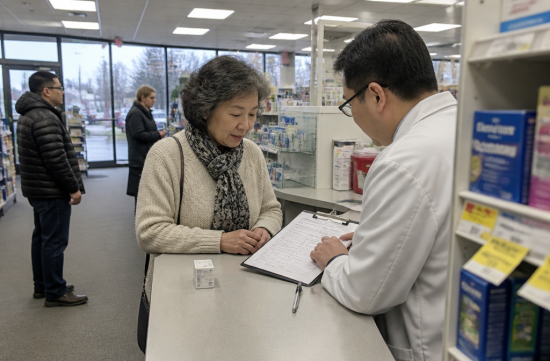
Last week, while I was at the local pharmacy getting my flu shot, I overheard someone asking the pharmacist, "I'm sixty-eight, should I also get the RSV vaccine?" The pharmacist's response was longer than I expected, so I perked up to listen.
In fact, I get this question quite often from people around me. Some think that everyone over 60 should get it, while others have never heard of it. So today, I looked up information from the CDC and FDA and organized it step by step based on the guidelines for this fall.
RSV is commonly known as a cold virus for babies. However, as people age or have underlying health conditions, it can lead to severe illnesses like pneumonia, making it a virus that adults should also be concerned about.
To get straight to the point, not everyone in their 60s is recommended to get the vaccine. The current CDC guidelines consider both age and health status.
For those aged 75 and older, a single dose of the RSV vaccine is recommended regardless of health status. This age group is at a significantly higher risk of hospitalization due to RSV.
The situation is a bit different for those aged 60 to 74. The recommendation is only for individuals at high risk of severe RSV.
Previously, the guideline was to consult with a doctor if you were over 60, but this changed in the summer of 2024 to a system based on age and risk level. This likely caused confusion for many.
In April 2025, the ACIP voted to expand the recommendation to include high-risk individuals aged 50 to 59, which the CDC accepted in June of that year. Therefore, the current CDC guidelines include high-risk individuals aged 50 to 74 and those 75 and older.
So, what exactly constitutes being at high risk? Individuals with chronic lung disease or heart disease, as well as those with weakened immune systems, are typical examples.
People with complications from diabetes, severe obesity, or those living in long-term care facilities also fall into this category. Just taking one blood pressure medication doesn't automatically qualify you, so don't worry too much.
This means that if you are in your 60s and healthy without any underlying conditions, you are not currently in the recommended group for vaccination. Conversely, if you have been diagnosed with conditions like COPD or heart failure, it's advisable to get vaccinated.
One important point that many overlook is that the RSV vaccine is not a shot you get every year like the flu vaccine.
The CDC considers anyone who has already received the vaccine to be fully vaccinated and currently does not recommend additional doses. If you received it last year, you can skip it this year.
I initially thought it was something you had to get every year like the flu shot. Checking your vaccination record is the best way to be sure.
You can get vaccinated at any time of the year. However, it's said that getting vaccinated in late summer to early fall, just before RSV season starts, is when you'll see the best results.
You might think that waiting until the end of October is a bit late, but if you haven't been vaccinated yet, I believe it's better to get it now. The winter here is long, and people tend to spend more time indoors.
Currently, there are three adult RSV vaccines available: GSK's Arexvy, Pfizer's Abrysvo, and Moderna's Emresvi.
The CDC does not specifically recommend any one product over the others. You can get vaccinated with whatever is available at the pharmacy.
We also can't overlook safety concerns. The FDA has mandated that warnings about Guillain-Barré syndrome be added to the labels of Abrysvo and Arexvy in January 2025.
This is based on observational studies involving Medicare beneficiaries aged 65 and older, which showed a tendency for increased risk within 42 days post-vaccination. However, the FDA stated that there isn't enough evidence to prove causation and maintains that the benefits of vaccination outweigh the risks.
I believe it's important to be informed about this and discuss it with your doctor, especially if you have a history of Guillain-Barré syndrome.
Many people are also concerned about costs. The RSV vaccine is covered under Medicare Part D, not Part B, meaning it falls under prescription drug plans.
Part D plans must provide adult vaccines recommended by the ACIP with no deductible or copay, meaning a $0 out-of-pocket cost. The same applies if you have a Medicare Advantage plan that includes prescription drug coverage.
So, if you don't have Part D, you might not receive these benefits. Be sure to check if your card includes prescription drug coverage before heading to the pharmacy.
To summarize: those aged 75 and older should get vaccinated once. For those in their 60s, if you have underlying health conditions, you should get vaccinated; if you're healthy, there's no need to rush based on current guidelines.
If you've already been vaccinated, you can skip it this year. Ultimately, your health status is the key factor.
I would probably ask my primary care physician at my next check-up whether I fall into the high-risk category. Since individual situations vary, be sure to consult with your doctor or pharmacist before making a decision.
It's the season for chilly winds. Make sure to wash your hands frequently and enjoy a warm cup of tea as you stay healthy this winter.
 moonforestdreamer2021
 RubyStar




 The Emperor Must Grow |

 squidogame |
 daddyyo |

 Top Beaches |
 Solo Yolo |
 winter |

 Forest Gump |

 Forever Coco is Bangga |


 Wenda |

 ssome |
 skykong |
 Shining Our Own World |
 gardener 007 |
 golfmaster |
 Nanana Nanana Nanana |
 Who's watching? |
 endone |
 RockStar |
 Casa Mia |
 You Only Live Once |
 Hardworking CPA |
 Joyce 77 |
 Runner Kim |
 My Town My Way Blog |
 My Miami Stories |
 Entip |
 Tony Park |
 Jean Claude Bundang Blog |
 DJ DC BLOG |