
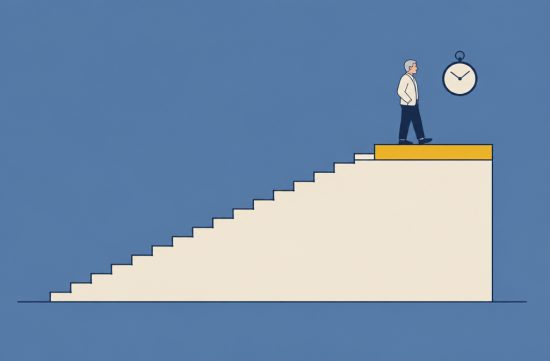
Last week, while working at a local café, I happened to overhear a conversation between two elderly gentlemen at the next table. One said, "Next year, I'll finally be 67, so I'll start receiving my pension, right?" That statement stuck with me.
Upon looking into it, I found out it wasn't just a casual remark. Those born in 1960 will turn 67 in 2027, making them the first generation to reach the Full Retirement Age (FRA) as defined by Social Security.
According to the official SSA guidelines, anyone born after 1960 has a fixed FRA of 67 years. The gradual increase in FRA by a few months for each birth year, as seen in the past, ends with those born in 1960.
Originally, the FRA was set at 65 for those born before 1937. Due to legislative changes in 1983, it gradually increased over several decades, and now we've reached the final step.
However, there's an interesting catch here. The SSA counts those born on January 1 as being born the previous year.
This means that someone born on January 1, 1960, will have an FRA of 66 years and 10 months, just like someone born in 1959. It was a bit surprising at first since it's just a one-day difference.
So, how much will your benefits be reduced if you start receiving them before age 67? According to SSA data, if someone with an FRA of 67 applies at age 62, their monthly benefit will be reduced by 30%.
This reduction remains for life. It means that instead of receiving the full amount, you'll be locked into receiving only 70% of it, so it's essential to crunch the numbers before making a decision.
On the flip side, waiting can lead to rewards. If you delay until age 70, you'll earn an 8% credit for each year you wait past your FRA.
If you delay from age 67 to 70, you'll receive 24% more than your FRA amount. After age 70, no further credits are added, so there's no reason to wait beyond that.
If you're unsure, you can think of it in simple terms. If the FRA amount is $2,000 per month, applying at 62 would give you $1,400, while applying at 70 would yield $2,480. This is a simplified calculation without considering COLA, so the actual numbers may vary.
The timing isn't bad either. The SSA announced a 3.6% Cost of Living Adjustment (COLA) for 2027 on October 14.
Considering that the COLA for 2026 was 2.8%, this is quite an increase. While the feeling of inflation seems greater, it's still good news that the numbers are going up.
If you're still working, you should also be aware of the income limits. For the entire year of 2027, if you're under FRA, earning over $25,560 will result in a deduction of $1 for every $2 earned over that limit.
For those reaching FRA in 2027, the rules are different. If you earn over $67,920 in the month before reaching FRA, you'll lose $1 for every $3 earned over that amount.
Once you reach FRA, there are no income limits at all. This is a significant difference for freelancers or those with fluctuating incomes.
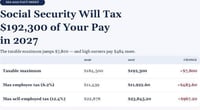
Additionally, the maximum income subject to Social Security tax will rise to $192,300 in 2027, up from $184,500 in 2026.
When should you apply? The SSA advises that you can apply for benefits up to four months before you want to start receiving them.
So, if you want to start receiving benefits around your birthday in 2027, it's a good idea to check your estimated amounts in your My Social Security account early that year. If you don't have an account, creating one now is also a good idea.
One thing that can be confusing is Medicare. The enrollment age for Medicare is still 65, so you need to manage that separately from your pension FRA of 67.
If you've already enrolled in Medicare at 65, you're fine, but if you delay your pension application while also delaying Medicare, you could face late enrollment penalties, so be cautious.
Personally, as I organized this information, I realized that while the numbers are straightforward, the choices are anything but simple. Health status, other income, and spousal benefits all come into play.
That's why I want to emphasize this point. The timing of when you start receiving benefits can significantly affect your outcomes, so it's wise to consult with SSA representatives or financial professionals.
In the Korean community, I often hear stories of people who regret applying at 62 based on what someone told them. Conversely, there are those who waited too long and couldn't enjoy their benefits due to health issues.
It's hard to say that one side is the absolute answer. However, knowing your numbers and making an informed choice is entirely different from making a choice without that knowledge.
If it were me, I would log into my account and write down the estimated amounts for 62, 67, and 70 side by side. Seeing the differences visually makes the decision easier than you might think.
As that gentleman at the café said, next year is quite significant for those born in 1960. It's the first year they'll fully reap the rewards of decades of work.
If you know someone born in 1960, consider suggesting they check these numbers together. A small conversation could lead to a difference of several years' worth of benefits.
Someday, I'll find myself standing at that staircase too. I hope that by then, these numbers I've organized today will feel a little less unfamiliar.
 CoinLegend
 EastBakery







 memorabilia |
 orvian89 |

 looksee 78 |

 vivavida |

 MEDBIO American Doctor Blog |

 menmo |

 ramen |


 calvor |

 vorame |
 Colorado Lee |
 kiwiii |
 foxtrot83 |
 stiff |
 namico |
 Caribbean |
 dynamico |
 Elastico |
 United States Army |
 Moving Waterfall |
 travelo |
 BOOM BOOM BOOM |
 blues town |
 glenview 89 |
 Mr Oh |
 skiny joe |
 envora21 |
 silverfox |
 nameone |
 bayaa |