
Last night, I kept the election results broadcast on for the midterms until late. As soon as the polls in New York closed at 9 PM, I paused for a moment when I saw some districts immediately marked as won.
How can a winner be called when the vote count is still in single digits? Today, I want to calmly explore that curiosity.
First, there's something to clarify. In the U.S., the first entity to declare a winner is not the election authorities but the media.
Official results are confirmed only after each state completes its counting and verification processes. In New York, for instance, the law requires a recount of early and same-day votes, and a review of absentee and mail-in ballots before the final results are announced.
Filling that gap is the AP and the so-called decision desks of various broadcasters. In Korean, we might call them 판정팀 (judgment team).
The AP states that it has been aggregating and reporting election results since 1848. With over 170 years of history, it is almost a classic in this industry.
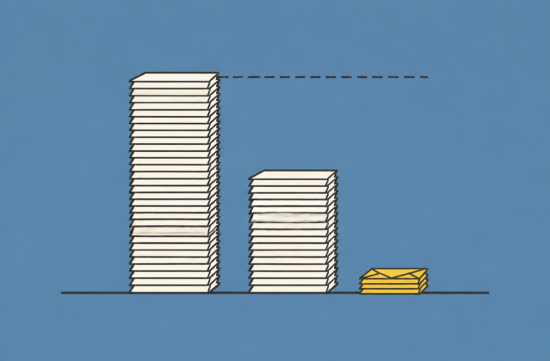
The criteria set by the AP are surprisingly simple. It boils down to one question: Can the trailing candidate catch up with the remaining votes?
They only call a race when they are confident that there is no possibility of catching up. The AP emphasizes that this is not a prediction.
So how are calls made right after the polls close? This is only possible in areas where the outcome is clear.
The AP looks at past voting trends, voter registration statistics, and its own voter survey, AP VoteCast. If a region has historically favored one party and the survey points in the same direction, a call is made as soon as the polls close.
Conversely, if the VoteCast results differ from the long-standing trends in that area, no call is made at the closing time. I found this part to be quite cautious. If there's uncertainty, they simply wait.
There's another principle: they never call a winner until all polling places in that district have closed.
If the race is very close, the AP may use the term "too close to call," indicating that it cannot determine a winner. This applies when only provisional ballots and late-arriving absentee ballots remain, yet the winner is still unclear.
Broadcasters also have similar principles. NBC has publicly stated that its decision desk calls a race only when they are at least 99.5% confident, and they do not release exit poll numbers that suggest results before the polls close.
Who conducts the exit polls? There's a media coalition called the National Election Pool, established in 2003, and Edison Research has been responsible for the exit polls.
Fox News and the AP withdrew from this coalition in 2017. Since then, Fox has been using AP VoteCast data, which is why the timing of calls can differ slightly between channels.
The important thing is who makes the decision. The polling companies only provide the data, and the calls are made separately by each media outlet's decision desk.
This world has become so cautious due to painful memories. Specifically, the events of Florida in 2000.
That night, major broadcasters declared Florida for Gore around 8 PM, only to retract it less than two hours later. The basis for this was the exit poll data from Voter News Service at the time.
By around 2 AM, they called it for Bush again, and Gore acknowledged his defeat over the phone, only to reverse that decision shortly after. Ultimately, the broadcasters retreated once more, stating it was too close to call.
The margin of votes counted that night was 1,784, and an automatic recount began under Florida law. The subsequent legal battles are well-known.
To put it in driving terms, it's like relying solely on one gauge and speeding into a curve, only to skid out.
In 2020, the scene was the opposite. The AP watched the counting in Pennsylvania for several days before declaring Biden the winner at 11:25 AM on Saturday, November 7.
This was after calculating that Trump could not catch up with the remaining votes. It's notable that this was four days later, not on election night.
The AP firmly states that it does not make calls based on pressure from campaigns or parties, announcements from other media, or victory speeches from candidates. The basis is the votes.
So, I try not to feel anxious about delayed calls. In states with a lot of mail-in ballots, the lengthy counting process is not a sign of a broken system; it's just how it's structured.
No matter which party you support, it's good to keep this in mind. Quick calls are convenient, but official results will ultimately come only after each state's verification process is complete.
Personally, I trust channels that wait until the end and get it right over those that plant flags on the screen first. It's similar to how a good car stops better than a fast car.
This midterm election will likely still have close races that haven't been called. Watching the numbers change is, I believe, a rather dignified way to observe democracy.
Tonight, I plan to set down a cup of coffee and think about why the decision team is still waiting as I watch the screen.
 Pointy
 LuckyStone77


 xylora |
 Tan Zoo |

 hot chocolate |

 Chichiki Chicago Train |

 Noodle Noodle |

 The Day the Sun Rises |

 tough guy |

 Belgray Miscellany |

 Fragile Me |

 flexible |
 Colorado Lee |
 kiwiii |
 foxtrot83 |
 stiff |
 namico |
 Caribbean |
 Elastico |
 United States Army |
 Moving Waterfall |
 travelo |
 BOOM BOOM BOOM |
 blues town |
 glenview 89 |
 Mr Oh |
 skiny joe |
 envora21 |
 silverfox |
 nameone |
 bayaa |