
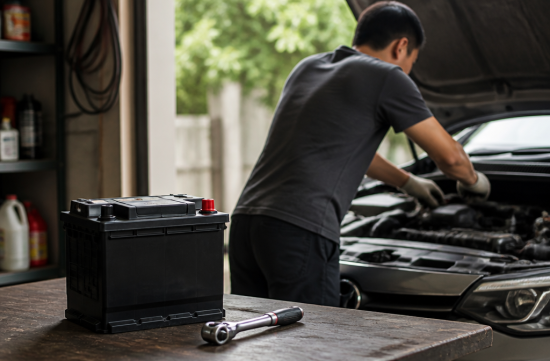
Last week, I started my car in the morning and saw the battery warning light on the dashboard. In Cleveland, the mornings and evenings are getting quite chilly, making this a sensitive season for batteries.
When I called the repair shop to ask, they told me that including parts, the total cost for a battery replacement would be quite high. So, I decided to try replacing it myself this time.
First, let's talk numbers. When you replace a battery at a repair shop or dealership, the total cost, including parts and labor, usually ranges from $150 to $400. If you break down the labor cost alone, it often falls between $40 and $100, and some dealerships charge between $75 and $150 per hour. Even though the job itself is a simple maintenance task that takes between 30 minutes to two hours, the labor costs can add up significantly.
On the other hand, if you buy a battery from a parts store like AutoZone or O'Reilly and install it yourself, the story changes completely. The price of the battery itself ranges from $70 to $200, with different grades available. The basic model is priced between $50 and $70, the next tier, the Gold line, ranges from $80 to $120, and the most durable, the Platinum grade, can go from $180 to $250. By only paying for the parts without labor, you can end up spending about half of what the repair shop would charge. The term "half price" is not just a saying.
Here's a tip: many stores like AutoZone or O'Reilly offer free installation for batteries purchased there. If you're still hesitant about handling tools, taking advantage of this option can save you the entire labor cost.
However, replacing the battery yourself is not always the right answer. Many newer cars come with a start-stop feature, and for these vehicles, you may need to register the new battery with the car's computer after installation. If you skip this registration, battery life management and fuel efficiency control may not work properly, and the registration fee can range from $50 to $150. I recommend checking if your car requires this before proceeding with the replacement.
The reason I personally enjoy this kind of DIY maintenance is not just to save money. Once you understand what goes into your car and why a particular part is necessary, you can handle future situations with much less anxiety. It feels empowering to have a broader area of judgment rather than just being led by what the repair shop says.
All you need is a wrench and some gloves, and just searching for your car model will show you the installation steps in videos, so the difficulty level was not as high as I expected. However, when removing the battery, be sure to disconnect the ground wire first and connect it in the reverse order. If you do it in the wrong order, you could cause a short circuit, so it's best to take your time here.
Also, you shouldn't just throw away the old battery. Most places will give you a few dollars back for returning the old one when you buy a new battery, so there's no need to dispose of it; you can simply return it to the store.
In regions like Cleveland, where temperatures drop significantly in winter, battery life tends to diminish much faster than in other areas. Cold air slows down the chemical reactions inside the battery, making it difficult to generate the necessary current when starting the car. That's why I make it a habit to check the battery voltage before the end of fall. By checking in advance, I can avoid the hassle of a car that won't start on a cold winter morning.
In conclusion, it seems certain that you can finish the job for about half the cost of a repair shop estimate. However, be sure to check if your car requires registration, and remember that there is also the option of free installation at parts stores if you're unsure.


 Michigan Enthusiast |
 Anna Life |
 JESIKYEOALBA BLOG |
 Dad's Tribute TC |
 Glow Yo |
 uplifted |




 solid90 |
  waltz |
  Ohio Ohayoung Hello |
  parlon |
  Shoot Me |
  festive |
  You Turn Me On |
  Supplemental Security Income (SSI) Information |
  Sams Market |
  ansdal |
  VVV 80 |
  BIODOCTOR NEWS |
  Gold Bar |
  Tamfa Fan |
  Jenny's Mom blog |
  Karina's Blog |
  Best Frozen Yogurt |
  Victory 1988 |
  Coding Elf |