
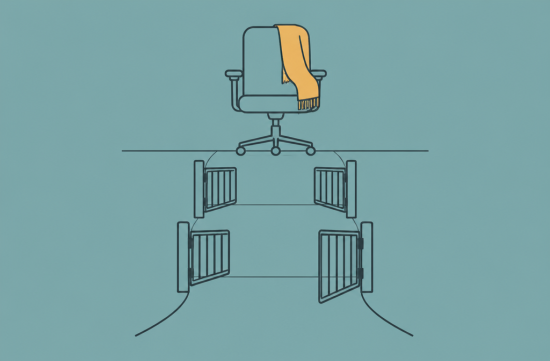
It's Monday morning, and the alarm goes off, but it feels like my body is glued to the bed. We've all been there at least once, right? For me, it's not just once; it's happening every week lately, so I've been seriously considering, "Maybe I need to take a break," and started looking into FMLA.
To cut to the chase, FMLA is a pretty solid program, but the conditions are more complicated than you might think. So before you just say, "I'm taking a break because I'm burned out," there are some things to check.
FMLA stands for Family and Medical Leave Act, which is the federal law for family medical leave. If you qualify, you can take up to 12 weeks of unpaid leave within a 12-month period, and you have the right to return to the same or an equivalent position when you come back.
Here's the first catch: FMLA is unpaid. It protects your job, but it doesn't guarantee your paycheck.
However, your company group health insurance remains in effect during your leave, and the company continues to pay its share of the insurance premiums. If you need to visit the doctor while on leave, this can be a significant point.
So, who can use it? There are two main conditions for employees.
First, you must have worked for the company for at least 12 months. It doesn't have to be consecutive, and if you've worked for the same company before, any gaps within the last 7 years can be combined.
Second, you must have worked at least 1,250 hours in the 12 months leading up to your leave. If you work full-time at 40 hours a week, that's about 32 weeks of work.
However, this 1,250 hours does not include paid time off (PTO) or holidays when you weren't actually working. If you've used a lot of PTO, you might find yourself short on hours.
There are also conditions on the company side. There must be at least 50 employees within a 75-mile radius of where you work. This means small startups or local shops might not qualify at all.
For remote workers, the workplace is determined by where you report or receive your assignments. Unfortunately, your living room doesn't count as your workplace.
Honestly, this part hit me hard. Burnout usually hits the hardest early in your job, but if you haven't been there for a year, FMLA might feel out of reach.
Now, the most important question: Does burnout qualify for FMLA?
FMLA can be used when you have a serious health condition. The Department of Labor (DOL) clearly stated in Fact Sheet 28O in 2022 that mental health conditions can be included.
There are two criteria: you must have needed inpatient care or be receiving ongoing treatment from a healthcare provider.
The DOL materials mention chronic conditions like anxiety disorders or depression that can worsen to the point of being unable to work, and that require treatment at least twice a year to qualify as ongoing treatment.
So, simply saying, "I'm really exhausted lately" isn't enough; it needs to be a health condition diagnosed and treated by a doctor. The key is what diagnosis is attached to the term burnout, rather than the word itself.
Therefore, the first step is to make an appointment with a doctor, not with HR. Meeting with a physician or mental health professional to accurately assess your condition is the starting point.
When you apply for FMLA, your company may request medical certification. If they do, you typically need to submit it within 15 days, so it's helpful to have your medical records ready.
Also, you don't have to take all 12 weeks at once. If medically necessary, intermittent leave is possible, meaning you can take leave as needed or reduce your working hours.
For example, you could take half a day off each week for counseling. Only the hours you actually take off will count against your FMLA leave, so it can be more flexible than you might think.
If the unpaid aspect is a concern, you can also combine any remaining sick days or vacation days with your FMLA leave. Depending on company policy, they may require you to use paid leave first, so be sure to check your handbook.
For those living in Ohio, there's one more thing to note. Ohio currently does not have a state-level paid family medical leave law.
This April, a bipartisan bill called SB 396 was introduced in the state senate, proposing up to 14 weeks of paid leave and a maximum weekly benefit of $1,231. However, it's still in the bill stage, so it's not something you can use right now.
Personally, I understand the direction of partially subsidizing wages. However, since both employees and employers would contribute 0.4% of wages, we need to consider how this burden will affect small businesses.
In summary, here are the requirements: 12 months of employment, 1,250 hours worked, a company with at least 50 employees within 75 miles, and a health condition confirmed by a doctor.
If all four of these conditions are met, FMLA is a powerful tool that allows you to recover while keeping your job. If any one of them is missing, the next step is to ask HR if the company has its own leave policy or short-term disability insurance (STD).
If it were me, I would go to the doctor first and quietly read the leave policy section in the employee handbook. It's a much smarter route than just saying, "I want to quit."
Burnout is not laziness; it's a warning signal from your body. Just like driving a car with the engine warning light on will eventually lead to needing a tow truck, taking care of yourself in a timely manner is ultimately a wise investment.
 CoffeeQueen


 limestone |
 loran |

 DeArizona Blog |

 Swift Falcon |
 Tonky |

 wonder |

 Gleeee |

 Real Estate Investment Korean American |
 Mr Cleveland |


 radiant |
 Con Cheese |
 softmoony |
 Breaking Bad Drama |
 New York Queens Native Blog |
 Shinbaram Dr. Blog |
 vivavida |
 Way to easy |
 oster |
 daddyyo |
 neapolis |
 seadoll |
 ansdal |
 Vivid U.S. Regional Information |
 Vasila's Newlywed Blog |
 Arizona Cowboy |
 merry merry |
 Hoorah Ooorah |
 Fragile Me |
 Rowland Mama |