

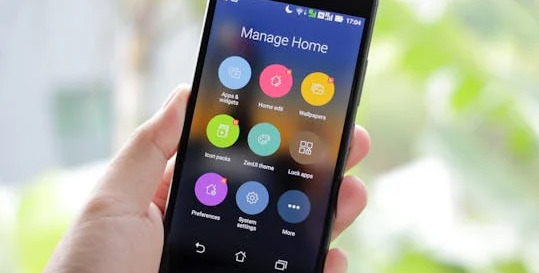
Unlike Korea, where you can simply choose one of the three major companies, the U.S. has many options, which can be a bit confusing at first.
The main carriers in the U.S. are Verizon, AT&T, and T-Mobile. Previously, there were four major players including Sprint, but now it has merged with T-Mobile, effectively creating a three-carrier system.
First, Verizon can be summed up as "expensive but reliable." It is the most trusted option for those in rural areas or who need to avoid dropped calls. However, the prices are on the higher side, with unlimited plans typically costing around $70 to $80 per month. Due to its higher rates compared to other companies, many customers are switching to cheaper alternatives these days.
AT&T feels similar to Verizon but is known for its many bundle benefits. It works well for those who combine their internet or streaming services. The price is generally around $65 to $75. It's a good choice for those looking for a balance of reliability and benefits.
T-Mobile is currently the most popular carrier. Its prices are relatively reasonable, and there are many promotions available. With streaming benefits like Netflix and convenient international data usage, it's a popular choice among younger people and families. The typical cost is around $60 to $70. Since merging with Sprint, its coverage has improved significantly.
In summary, if reliability is your top priority, go with Verizon; if you want a balance of benefits, choose AT&T; and if you're looking for price and value, T-Mobile is the way to go.
These days, it's not necessary to stick with major carriers. There are many budget carriers that use the same networks.
Cricket uses the AT&T network, offering good reliability starting at around $30 per month. Metro by T-Mobile, as the name suggests, uses the T-Mobile network and has decent data conditions for the price, making it popular among families.
Boost Mobile is suitable for those looking for even cheaper options, while Visible uses the Verizon network and offers unlimited service for about $40 per month, making it quite popular these days. Straight Talk connects to various networks based on the situation, providing broad coverage.
Honestly, if you don't use much data and mainly rely on calls, budget carriers can be quite satisfactory.
Recently, a carrier gaining a lot of buzz is Mint Mobile, which became more famous thanks to actor Ryan Reynolds promoting it.
The feature of this carrier is simple. If you pay for several months in advance, the rates drop significantly. By paying for 6 or 12 months upfront, you can get rates as low as $15 to $20 per month. However, keep in mind that you need to pay upfront. For $180 a year, you can get very cheap phone data with 5GB per month. Mint Mobile uses the T-Mobile network, so the quality of 5G and LTE is also quite good.
Ultimately, the selection criteria can be summarized as follows:
There isn't a one-size-fits-all answer for U.S. carriers. Your location, data usage, and budget are the most important factors.
Rural or frequently moving → Verizon
Balance of reliability and benefits → AT&T
Value for money and promotions → T-Mobile
As cheap as possible → Visible, Mint
And remember, even with the same carrier, signal quality can vary by location. So, asking people around you about their carriers is a good idea.
In the U.S., cell phone bills can be a significant fixed expense each month.
If you compare well and choose wisely, you can save several hundred dollars a year.







 forevergee |
 mortrix |
 cherrydino |
 victoria 68 |
 American Man in a Mask |
 Alpha and Omega World |
 Yellow Snowman |
 draxen |

 SODA MAKER |
  Tonky |
  viroma |
  cookie |
  Live and that's it |
  Alright Twain |
  eatontown blog |
  HAWAII Korean Church News |
  Amore |
  linex |
  Balancework |
  laro90 |
  MEDBIO American Doctor Blog |
  SWAT TEAM BLK |
  DREAM BIG |
  frostbite |
  330 Forever My Love |
  El Dorado |
  dralix58 |
  Gorama Round |
  Skydiving |