
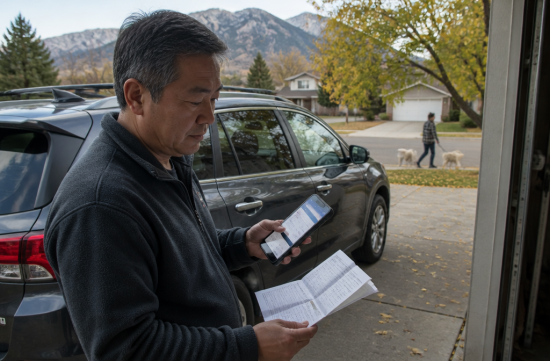
These days, many people around me are sighing after receiving their car insurance renewal notices. However, there are also reports that car insurance rates in Colorado are decreasing. Let's take a look at whether both statements can be true by examining the numbers.
First, we need to establish a starting point. Last November, the governor's office and the state insurance department announced a roadmap for reducing car insurance rates. At that time, Colorado was the fifth most expensive state in the nation.
The goal of the roadmap is to move Colorado out of the top ten in this ranking within two years. Key tasks include improving road safety, cracking down on vehicle theft, and reducing the number of uninsured drivers. The plan is not to directly cut insurance rates but to lower them by reducing the risks of accidents and theft.
The governor himself stated that it takes about a year for the reduced risks to be reflected in the rates. So, it would be unrealistic to expect a significant drop in your bill right away.
So, has the risk actually decreased? There are clear numbers on this.
According to the state government's 2025 annual vehicle theft report, there were 16,291 thefts last year. This is a 34% decrease from the previous year and marks three consecutive years of decline.
Compared to 2021, this represents a 56% reduction. At that time, Colorado had the highest vehicle theft rate per capita, but it has now dropped to sixth place. Honestly, I didn't expect such a significant decrease.
The data on insurance rates shows a similar trend. According to the comparison site Insurify, the average full coverage rate in Colorado dropped from $2,793 annually in June 2025 to $2,579 in December.
In the first half of this year, rates decreased by another 1.3%, and a further drop of 1.7% is expected in the second half. The projected average by the end of the year is $2,559.
However, this is just an estimate from a private company. Some sources, like Bankrate, estimate the average to be around $3,200. There can be significant differences in numbers depending on the survey method, so it's best to use the averages as a directional reference.
From the same data, the average in Colorado Springs is $219 per month for full coverage and $103 per month for liability only, which is quite similar to the state average.
In conclusion, the overall market trend is downward, but there is no guarantee that your insurance company will automatically lower your rates. Therefore, there are several things you need to keep in mind when renewing.
First, always get comparison quotes. During times when averages are decreasing, different insurance companies adjust their rates at different speeds. Even with the same conditions, there can be significant differences between companies.
The state insurance department's website has a premium comparison report that allows you to compare rates by insurance company. This is free information, so I highly recommend checking it out.
Second, check the minimum coverage requirements. Colorado's mandatory liability insurance is $25,000 per person, $50,000 per accident, and $15,000 for property damage.
This is just the legal minimum. Considering today's repair and medical costs, relying solely on the minimum can quickly lead to financial trouble after just one accident. I do not recommend lowering your limits too much just to save on premiums.
Third, do not overlook uninsured motorist coverage (UM/UIM). In Colorado, it is included by default unless you decline it in writing.
Sometimes, people remove this coverage to save a few bucks during renewal. Given that the issue of uninsured vehicles is part of the roadmap's objectives, I would recommend keeping it.
Fourth, take a look at MedPay. According to the state insurance department, if you are at fault in an accident, your injuries will not be covered by your auto insurance without this coverage.
Fifth, reevaluate your comprehensive deductible. Colorado is known for having a high number of hail damage claims.
Raising your deductible will lower your premium, but if you get hit by hail, you'll have to pay that amount out of pocket. If you have a sufficient emergency fund, it may be worth raising it; otherwise, it's best to keep it as is.
Also, ask about discounts one by one. These include safe driving, multi-vehicle, bundling with home insurance, and automatic payments. It's surprisingly rare for insurance companies to offer these proactively.
If you have anti-theft devices, make sure to inform your insurer. According to the state report, Hyundai and Kia vehicles account for about 15% of all thefts, so if you own one of those, it's even more important.
Let's also consider both perspectives fairly. The state government believes that rates will decrease due to the effects of their policies. However, the industry perspective is that rising repair costs and accident compensation will limit the perceived reductions.
I think both viewpoints have merit. The decrease in theft is backed by clear data, but variables like hail and repair costs cannot be controlled by policy.
So, my strategy is simple. About 30 days before renewal, I get my bill and obtain quotes from at least three companies under the same conditions. I maintain my coverage limits but adjust my deductible and discounts.
In a declining market, those who do nothing will end up losing. I encourage you to compare your options during this renewal period. It's definitely worth the effort.
 SWATSquad







 forevergee |
 mortrix |
 cherrydino |
 victoria 68 |
 American Man in a Mask |
 Questions about firearms while living in America |
 forever young |

 Springs Korea |
 Famous Attractions in the United States |
  El Dorado |
  dralix58 |
  Gorama Round |
  Skydiving |
  dreamport |
  Yellow Snowman |
  Toaster Pizza Magic Show |
  velvetnom |
  Anytime Journey |
  Mrs. Duluth |
  jaxter |
  Atlanta Mama |
  Baguette Blog |
  Tan Sol |
  US Embassy |
  Korean Mom |
  My NYC |
  moo moo |
  Mr Oh |