

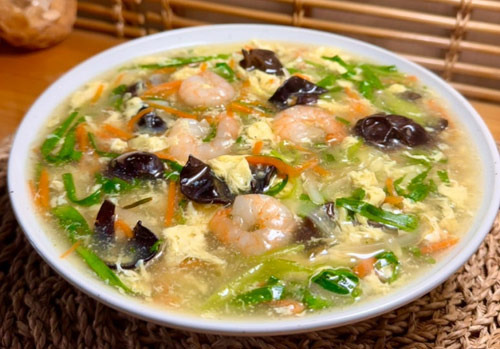
Hello, everyone! What do you usually order when you go to a Chinese restaurant?
Most people typically go for jajangmyeon or jjamppong. But no matter the weather, there's one dish I always order... it's 'ulmyeon'.
Because of its name, I often become the target of jokes like, "A man shouldn't cry, but ulmyeon? Haha!" But this dish is truly misunderstood.
In fact, ulmyeon originated from the Chinese dish called wanlu mian (온로면).
In Chinese characters, it means 'warm', 'starch/thick', and 'noodle'.
It translates to 'noodles served in a warm, thick broth'.
Once you taste it properly, you'll find yourself hooked on its subtle flavor, which is completely different from the bold taste of jjamppong.
Today, I'm bringing you a recipe for ulmyeon that will make you think, "Why haven't I ordered this until now?" (Is that why it's called ulmyeon...) Get ready for a recipe that screams expertise in Chinese cuisine.
This is perfect for cleaning out your fridge, so put on your apron and follow along!
Ingredients
Noodles: fresh noodles (any type like kalguksu or Chinese noodles works!)
Vegetables: onion, carrot, bok choy (if you don't have it, cabbage is fine), a handful of chives, green onion, fresh garlic
Seafood: frozen shrimp, squid (these two are essential for that Chinese restaurant look!)
Secret broth ingredients: 1 tablespoon chicken stock, 0.5 tablespoon soy sauce, 0.5 tablespoon mirin, salt, pepper
Key to ulmyeon: 1 egg, 1 tablespoon starch powder (mix with 2 tablespoons of water)
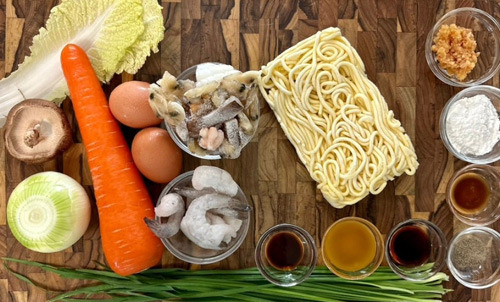
Step 1: Chop the Vegetables and Seafood!
First, thinly slice the onion, carrot, and bok choy into about 6cm lengths. If you don't have bok choy, you can use cabbage leaves lying around in your fridge, which will make the broth very refreshing. Cut the chives into the same length, but keep them separate for later as they'll be added at the end.
For a deep flavor in your Chinese dish, slice the fresh garlic thinly, and soak the wood ear mushrooms in warm water beforehand, tearing them into bite-sized pieces to prepare!
Step 2: Prepare the 'Starch Water'
Crack 1 egg into a bowl and whisk it lightly. Mix 1 tablespoon of starch powder with 2 tablespoons of water to make the starch water. Remember, starch settles at the bottom if left alone, so give it a quick stir with a spoon just before adding it to the broth!
Step 3: Find the Perfect Noodle Texture
Drop the fresh noodles into a generous pot of boiling water! When the noodles start to boil, pour in half a cup of cold water twice. This will create friction and make the noodles perfectly chewy. Once cooked, rinse the noodles thoroughly in cold water to remove excess starch. Here's a tip! Don't throw away the water you boiled the noodles in! You'll use it to reheat the noodles just before serving.
Step 4: Make the 'Secret Broth' with Chicken Stock
Now it's time for the broth. Pour 700ml of water into a pot and add half a tablespoon of soy sauce and half a tablespoon of mirin. Then, add the much-anticipated 1 tablespoon of chicken stock. This one ingredient will give you a deep umami flavor that rivals a broth simmered for 12 hours. Add the green onion and sliced garlic first to infuse the aroma.
Step 5: A Festival of Seafood and Vegetables, and the Egg Curtain
Once the broth is boiling, toss in the shrimp and squid and let it simmer. Skim off any foam that rises to keep the broth clear. Then, add all the vegetables and wood ear mushrooms except for the chives and let it cook.
When the vegetables have softened, slowly pour in the starch water while continuously stirring the broth. Be careful not to let it clump together! When the broth thickens, increase the heat and drizzle the egg mixture in a thin stream while gently stirring with chopsticks in an X pattern. Wow, this visual... you'll feel like a real Chinese restaurant chef!
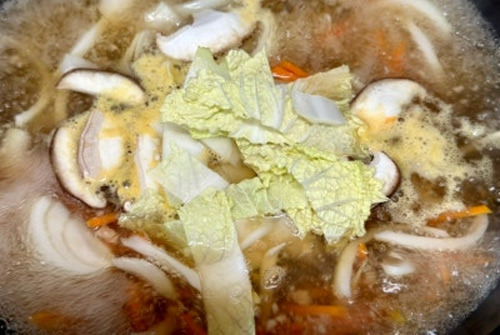
Just before turning off the heat, add the reserved chives and sprinkle some pepper on top.
If the flavor is a bit bland, add a pinch of salt to adjust.
Now, remember the hot water you saved from boiling the noodles?
Gently dip the rinsed noodles in the hot water to warm them up.
Place the noodles beautifully in a bowl, and pour the hot, thick ulmyeon broth generously over them to finish!
Unlike oily, fried jajangmyeon or spicy jjamppong, ulmyeon has a refreshing quality that makes you exclaim, "Ah, this is so refreshing!" with just one bite.
The smooth broth glides down your throat, making you feel truly comfortable. You can also add a sprinkle of chili powder for a spicy kick!
Though its name may suggest tears, 'ulmyeon' will give you a delightful experience that makes your mouth curl up in happiness with just one spoonful.
How about creating a budget-friendly Chinese restaurant vibe at home for dinner tonight?
 DuckZang
 vibetowntraveler1989






 Seattle - Emerald City |
 self-evaluation |
 Sandiego Auntie |
 Karina's Blog |
 Texas Real Estate Blog |
 Alpha and Omega World |
 Yellow Snowman |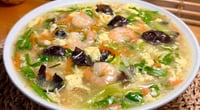


 saffronroute |
  korvex93 |
  Mini Mee |
  Darnignac |
  vanilla |
  selvon |
  brownie |
  Star Blog |
  The Day the Sun Rises |
  sweetpop |
  California Kangaroo |
  zanero |
  station |
  Static |
  Star Way |
  American Blog Forge |
  MMORPG Games |
  Then you must be spring |
  Spicy Immigration Life |
  zenvor16 |