
When looking at homes in Staten Island, you often hear, "This isn't a flood zone, so you don't need flood insurance." While this isn't incorrect, there's a big difference between not being required to have it and not being at risk.
First, there's a fact to consider. FEMA states on its official page that people living outside high-risk flood zones account for nearly 25% of all National Flood Insurance Program (NFIP) claims.
That's one in four claims. I was surprised to see how high that number was when I first came across it.
Why does this happen? FEMA maps (FIRM) are primarily drawn based on the risk of coastal or river flooding. The risk of heavy rain causing sewer backups or pooling in low-lying areas isn't fully captured on these maps.
A prime example is when Hurricane Ida passed through in September 2021. In New York City alone, 13 people died, 11 of whom were in flooded basement apartments.
The hardest-hit areas were Queens and Brooklyn. It was a shocking event for those who relied solely on the maps, as the cause was rain, not coastal storm surges.
Staten Island remembers Hurricane Sandy in 2012 more vividly. According to WNYC reports, 11 people drowned in their homes or nearby in areas like Midland Beach, Ocean Breeze, and parts of Great Kills.
This neighborhood had a bowl-like terrain that was several feet lower than the beachside roads. Analysis showed that once water entered, there was nowhere for it to go.
However, this doesn't mean the entire island is at risk. Many areas on higher ground or inland have a low risk of flooding. Therefore, it's best to check your home address rather than just the neighborhood name.
One important aspect that is often overlooked is that standard homeowners insurance typically does not cover flood damage. Flood coverage must be obtained separately through NFIP or private flood insurance.
Under NFIP, single-family homes can be insured for up to $250,000 for the building and up to $100,000 for personal property. Personal property coverage is not automatically included and must be selected separately.
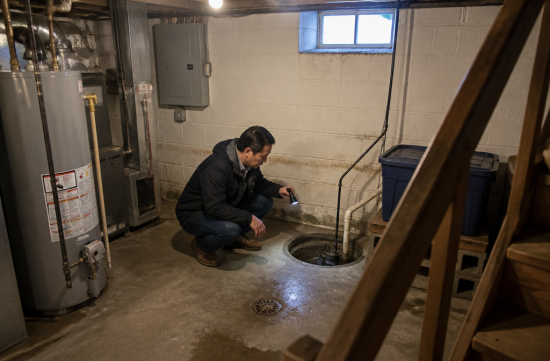
If your home has a basement, you need to be especially careful. NFIP covers building systems like boilers, water heaters, electrical panels, and sump pumps in basements.
On the other hand, most personal items like furniture, electronics, and finished floors and walls in the basement are typically excluded from coverage. Many homes have basements that are used as living spaces, and you may not receive as much back as you expect.
Another consideration is the waiting period. A newly purchased NFIP policy usually takes effect after 30 days. This means that rushing to get coverage after a rain forecast won't help.
There are exceptions. If you obtain a policy while getting or refinancing a mortgage, it can take effect immediately at closing without a waiting period. This is advantageous when buying a home.
The structure of insurance premiums has also changed. FEMA implemented a new pricing methodology called Risk Rating 2.0 for new enrollees starting in October 2021 and for renewal contracts starting in April 2022.
This method bases premiums on individual factors such as distance to water, building height, and reconstruction costs, rather than just flood zone ratings. As a result, even homes outside the same zone can have significantly different quotes.
For existing policyholders, annual increases are capped at 18% by law. Homes with lower risk may even have cheaper premiums, so it's worth getting a quote.
There's also a current policy issue to be aware of. The NFIP is operating under a short-term extension from Congress, with the current approval deadline set for December 11.
Once the deadline passes, new contracts will stop being sold, but existing contracts will remain in effect until expiration. In fact, there was a time during the government shutdown in the fall of 2025 when new enrollments were halted, so if you're considering it, it's better not to delay.
So, what should you check first? First, look up your address on FloodHelpNY to see if it's in a FEMA flood zone.
Second, check the NYC Department of Environmental Protection's stormwater flood maps for potential flooding scenarios during heavy rain. Since the criteria differ from FEMA maps, it's good to look at both.
Third, ask the seller or previous residents about any past flooding history. Starting March 2024, New York State requires sellers to disclose flooding history and flood insurance claims, so be sure to check the sales disclosure form as well.
Fourth, check if your home has a basement, and whether it has a sump pump and backflow prevention valve. Then, compare quotes from NFIP and private flood insurance side by side.
In summary, the pros and cons are clear. If you're outside a flood zone, you're not required to have insurance, and premiums are likely to be relatively low.
However, there is the risk of heavy rain that isn't captured on the maps, and if damage occurs, homeowners insurance won't cover it. Ultimately, it's a matter of weighing annual premiums against potential losses you can handle.
If I were in a low-lying area or had a basement, I would at least get building coverage even if I'm outside the zone. For homes on higher ground, I think it's fine to just get a quote and decide later.
Coverage and premiums can vary significantly based on the home's conditions, so I recommend confirming with an insurance agent before enrolling. The reference point is October 2026, and the sources are FEMA, NYC Department of Environmental Protection, and Congressional Research Service (CRS) data.
 HoneyDreamer








 moo moo |
 ultron78 |
 garlic bread |
 Sugar Cream Door Bulletproof Noodles |
 urbanmint |
 crystalo |
 dermoon |
 lavender |
 linex |
  Amore |
  Balancework |
  laro90 |
  MEDBIO American Doctor Blog |
  SWAT TEAM BLK |
  DREAM BIG |
  frostbite |
  330 Forever My Love |
  El Dorado |
  dralix58 |
  Gorama Round |
  Skydiving |
  dreamport |
  Yellow Snowman |
  Toaster Pizza Magic Show |
  velvetnom |
  Anytime Journey |
  Mrs. Duluth |
  jaxter |