

Indiana is a state located in the Midwestern United States, having joined as the 19th state on December 11, 1816. The name of the state is derived from 'native language', meaning 'land with a roof'. Initially, various Native American tribes inhabited the area, but changes began in the 17th century as European explorers started to explore the region.
In the 19th century, agriculture became the main industry, particularly with active corn and soybean cultivation. As industrialization progressed, the automobile manufacturing and steel industries grew, making Indiana an important industrial center in the United States. In the 20th century, advancements were made in education and healthcare, and today it is established as a state where various industries and cultures coexist.
As of 2023, Indiana's population is estimated to be around 6,800,000. Indiana is one of the most populous states in the Midwest, with major cities including Indianapolis forming densely populated areas. Indianapolis serves as the state capital and plays a significant role as a center for economy, culture, and education.
The racial composition of Indiana can be represented based on data from the U.S. Census Bureau as follows:
- White: approximately 77.7%
- The white population constitutes the majority of Indiana's population, primarily of European descent.
- Black or African American: approximately 9.6%
- Concentrated mainly in urban areas such as Indianapolis.
- Hispanic or Latino (of any race): approximately 8.2%
- Includes individuals who have migrated from Mexico and Latin America, with the Hispanic population being one of the fastest-growing demographic groups in the state.
- Asian: approximately 2.5%
- Primarily residing around Indianapolis and major university towns, with origins from various Asian countries including India, China, and Korea.
The median household income in Indiana is reported to be around $60,000 (USD) as of 2023. This figure is somewhat lower compared to the national average, but the cost of living in the state is relatively low, resulting in a stable living standard for median-income households.
The median income is closely related to the development of various industrial sectors within the state. Manufacturing, healthcare, education, and service industries are the backbone of the state's economy, with stable employment in the manufacturing sector playing a crucial role in maintaining median income. Additionally, recent growth in the technology sector and startup ecosystem has also contributed to the improvement of median income.
Indiana is promoting educational investment and industrial diversification to enhance median income alongside continuous economic growth, which is expected to positively impact the state's economic stability and the living standards of its residents in the future.








 bada2002 |
 Now or Never |
  Yellow Snowman |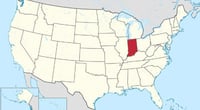

 Indiana Jones |
  Tonky |
  viroma |
  cookie |
  Live and that's it |
  Alright Twain |
  eatontown blog |
  HAWAII Korean Church News |
  Amore |
  linex |
  Balancework |
  laro90 |
  MEDBIO American Doctor Blog |
  SWAT TEAM BLK |
  DREAM BIG |
  frostbite |
  330 Forever My Love |
  El Dorado |
  dralix58 |
  Gorama Round |
  Skydiving |