

Living in Washington DC, political news is a part of daily life.
Many mornings start with a cup of coffee and end with stories about Trump.
However, these days, news about death row inmates is much louder than the political battles happening in the White House or Congress.
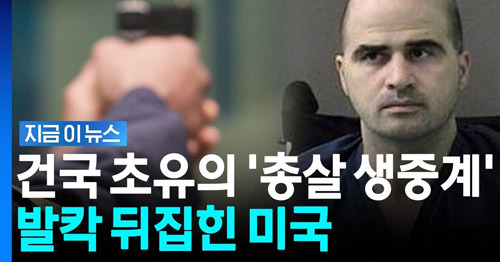
On one side, a death row inmate is said to have survived a lethal injection, while on the other, a former military officer is planning to execute a death row inmate by firing squad and broadcast it live across the country.
This sounds more like a medieval execution story than 21st-century American news.
First, let's look at the incident that occurred in Tennessee.
On September 30, Tennessee executed 50-year-old female inmate Krista Pike.
To be precise, they attempted to execute her.
Pike was sentenced to death for the brutal murder of a classmate in 1995.
She is not someone who deserves sympathy for her crimes.
However, during the execution process, the drug pentobarbital, used for lethal injections, was administered, but she did not die.
Not just once... but twice the drug was administered, and she ultimately did not die.
This reminded me of the term "invulnerable to poison" from Chinese martial arts novels, where one becomes immune to all poisons and cannot die from them.
There are records from the Joseon Dynasty of people surviving poison only to be killed by other means.
Of course, Pike did not actually have an extraordinary resistance to poison.
Experts suggest that the needle may not have properly entered the vein, causing the drug to spread into surrounding tissue.
The problem arose next. The prison carrying out the execution eventually called an ambulance to take the inmate to the hospital.
They attempted to inject her to kill her, but when she did not die, they found themselves in a situation where they had to provide emergency treatment to save her.
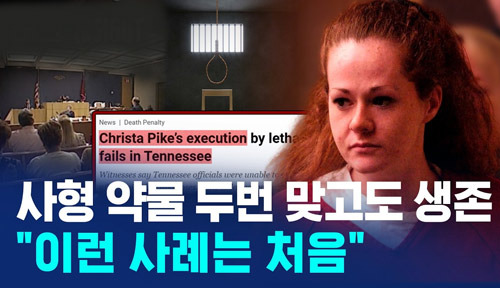
Pike was critically ill at one point and relied on a ventilator, but she regained consciousness and was discharged from the hospital on October 10, returning to prison.
The governor of Tennessee postponed other executions and launched an investigation. The head of the corrections department resigned.
The death row inmate returned alive, while those responsible for the execution lost their jobs.
This is not a laughing matter, yet the situation itself is quite bizarre.
Now, let's talk about Texas.
In November 2009, Nidal Hasan, a former Army major, opened fire on fellow soldiers at Fort Hood, killing 13 and injuring 32.
Hasan was a military psychiatrist and was sentenced to death in a military trial in 2013.
Then, on December 3 of this year, the U.S. military announced plans to execute Hasan by firing squad.
What's even more shocking is that Defense Secretary Pete Hegseth announced that the execution would be public. The Department of Defense even revealed plans for a live internet broadcast.
A live broadcast of a firing squad execution? What kind of grotesque news is this, especially in America?
Firing squads have not completely disappeared in the U.S. Some states still legally allow them, and there have been actual cases of execution.
However, it is extremely rare for the military to carry out an execution.
The last military execution was a hanging in 1961, and the last firing squad execution dates back to 1945.
Now, they plan to broadcast a military firing squad execution live, something that hasn't been seen in over 80 years.
Naturally, there has been a backlash across the country.
Recent public opinion polls show that about 80% of Americans oppose the live broadcast of executions.
In contrast, 53% supported the execution of Hasan by firing squad.
Ultimately, on October 15, President Trump intervened and canceled the live broadcast plans.
The execution will proceed as scheduled, but it will not be broadcast. However, there remains a possibility that the execution schedule may change due to legal procedures.
It's quite a situation when the President of the United States has to directly address whether or not an execution will be broadcast live; Washington politics certainly has its oddities.
In the U.S., laws vary from state to state. Some states have abolished the death penalty, while others maintain it legally but have halted executions.
The federal government and military justice systems operate separately.
The methods of execution also differ by state.
Lethal injection is the most common, but some states allow methods such as the electric chair, firing squad, and nitrogen gas.
It's a peculiar characteristic of the federal nature of the U.S. that even in the punishment of taking a life, the methods can vary so widely.
However, if a state decides to carry out an execution, shouldn't the procedures at least be strict and consistent?
In a country where they call an ambulance after failing to kill someone with a lethal injection, on the other hand, they are planning to broadcast a firing squad execution live, only to cancel it when public opinion turns against them.
At this point, it seems necessary to examine not only the existence of the death penalty but also how the state handles executions.
In Washington, politicians talk about law and justice every day.
Yet, watching the recent news about the death penalty, one can truly realize how much chaos can occur even in the most serious procedures where the state takes a life.
It seems unlikely that any political news in America could create stories as bizarre as those surrounding the death penalty these days.
 OrangeMan
 CocoDreams







 lightyear |
 Moscow Kim |
 coloradoman |
 Montgomery Mom |
 GOGO SING |
 Eldorado 88 |
 El Dorado |


 Washington Monument |
  330 Forever My Love |
  dralix58 |
  Gorama Round |
  Skydiving |
  dreamport |
  Yellow Snowman |
  Toaster Pizza Magic Show |
  velvetnom |
  Anytime Journey |
  Mrs. Duluth |
  jaxter |
  Atlanta Mama |
  Baguette Blog |
  Tan Sol |
  US Embassy |
  Korean Mom |
  My NYC |
  moo moo |
  Mr Oh |