
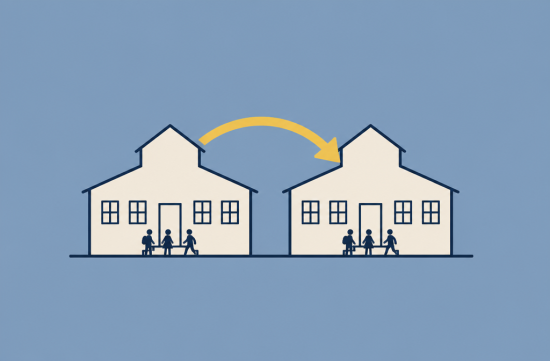
A friend living in SF sighed while talking about their child's school. While schools aren't closing, decisions are expected in just a few years. Hearing that, I started looking for numbers before emotions.
First, the background. In October 2024, SFUSD released a list of 13 schools that could close or merge.
The backlash was immense. Ultimately, they backed down and decided not to close any schools for the 2025-26 school year, and then Superintendent Matt Wayne resigned.
Maria Su took over as the new superintendent. She changed the approach, prioritizing budget adjustments over consolidation.
So, how much was actually cut? According to KQED, the district had already reduced its annual operating budget by $114 million the previous year. This means they stopped spending money that was going out every year, not just a one-time cut.
But that wasn't the end of it. By December 2025, they stated they needed to find an additional $120 million.
The savings outlined in the superintendent's draft were projected to be around $70 million by 2028. To stop the deficit spending, they still needed $30 million more. Honestly, I was a bit shocked by these numbers.
There are also several items that parents will feel directly. A proposal to reduce middle school schedules from 7 periods to 6 was included.
This would result in the elimination of 56 classroom teacher positions and 8 health positions. They mentioned that health education would be integrated into other subjects.
There were also 18 vice principal positions on the chopping block. The plan was to cut school security positions by half.
School buses couldn't be overlooked either. They planned to reduce transportation services for 2,500 students who do not require special education, saving $5 million. For working families, this would likely be the most tangible impact.
The district also planned to cut $14.6 million from headquarters personnel costs and services. Personally, I think this item should have been larger.
Another variable was added. On February 9, 2026, the teacher union UESF went on strike.
This was reportedly the first teacher strike in SF in nearly 50 years. A tentative agreement was reached after 4 days, amounting to $183 million over two years.
It's good that teacher conditions are improving. However, if one side cuts over $100 million while the other side spends $183 million more, where does that leave the budget? I found myself questioning this.
Now, let's return to the topic of consolidation. The main reason is the student population. According to district data, enrollment has dropped by over 4,000 students compared to the 2012-13 school year.
The future looks even more concerning. Projections indicate that, reflecting birth rate trends, enrollment could drop by another 4,600 students by 2032.
California allocates most school budgets based on actual enrollment and attendance. When the number of students decreases, funding decreases as well. Continuing to operate schools with many empty classrooms leads to wasted operational costs.
The district estimated that closing one school in 2024 would save $1 million annually. At the same time, they stated that closing schools alone wouldn't fill the budget gap.
So when will consolidation happen? Originally, they planned to submit a reorganization plan in August 2026 and implement it in the 2027-28 school year.
However, the schedule was pushed back to May 2026. They decided to first change the student assignment method. Instead of the lottery system used since 2011, a new method will be presented to the board by the end of April 2027, with plans to apply it in the fall of 2028.
Consolidation will follow after that. The district explained that the process would take place in the 2028-29 school year and be completed by fall 2030.
Even among the board members, there were complaints. Board member Parag Gupta pointed out that the timeline had extended from 2 years to 4 years, emphasizing that it shouldn't happen again.
Parents' reactions on the ground are similar. One parent mentioned that this topic has come up several times, and they are just watching day by day. This indicates a significant loss of trust.
There is some good news. This school year, 96% of classrooms are staffed by regular teachers, the highest percentage in recent years.
What can parents do now? First, check the enrollment trends at your child's school. Second, keep an eye on the board meeting agendas from time to time.
Third, the draft of the new assignment method coming out next year is crucial. Ultimately, which schools survive will depend on where students are assigned.
To be clear, I believe that the longer consolidation is delayed, the worse it will be. The data already indicates that student numbers are declining.
It's a heartbreaking decision, but it's better for that money to go into classrooms rather than maintaining empty buildings. I'm planning to watch closely to see if they stick to the schedule until 2030.
 Garcon1980







 Way to easy |
 Magic Cabbage School of Martial Arts |
 Vacation on Hawaii |
 morvex37 |
 Ari Songhan American Immigration Life |
 Peter Pan Pet |
 Moscow Kim |

 Nuchuhan Exploration BLOG |
 Sunshine Blog |
  Minnesota Small Business |
  Strawberry Pancake Warrior |
  amolayo |
  korvon |
  Que Buena |
  virexo |
  silverpath |
  Komet Park |
  reliable |
  vexo90 |
  As Always Today |
  veltar87 |
  United States National Administrative Organization Stories |
  springwaltz |
  dense |
  Tiger Milk Foam Research Institute |
  Oreore Mushroom |
  optimistic |
  Good Good |