
Last weekend, I witnessed something at the self-checkout in a grocery store. A high school student in front of me had his card declined twice, and he looked embarrassed as he stared at his phone app for a long time.
I'm not sure if it was because he had insufficient funds or if he confused debit and credit. However, that image stuck with me for some reason.
Back in my day, we didn't learn how to manage money in school. We picked it up from our parents or learned through trial and error.
But the landscape of American high schools is changing significantly. More than half of the states now require students to take a personal finance course to graduate.
According to the nonprofit organization NGPF, there are 30 states that mandate at least one semester of standalone personal finance education before graduation. Delaware became the 30th state to join this requirement in the fall of 2025.
Just in 2020, only 8 states had such requirements. It's not common for an educational policy to spread so quickly in just a few years.
The numbers vary slightly among organizations. If you count states that include finance units within other subjects, the total increases, but there are 30 states with standalone courses.
In 2025 alone, Kentucky, Colorado, Texas, and Delaware passed new laws. California also made this course mandatory for graduates starting in the 2030-31 school year.
Currently, about 20 states and Washington D.C. do not have such requirements. The goal of this organization is to ensure that all high school students take a finance course before graduation, so it seems likely that this will become the norm soon.
So, what about Florida? Florida has been proactive in this regard.
In March 2022, the governor signed the Dorothy L. Hukill Financial Literacy Act. The law is named after the late state senator Dorothy L. Hukill, who initially proposed it.
Senator Hukill introduced this bill in 2018, but it didn't pass the House at that time, and she passed away in October of that year. It was heartwarming to read that her colleagues carried on her legacy and eventually got it passed.
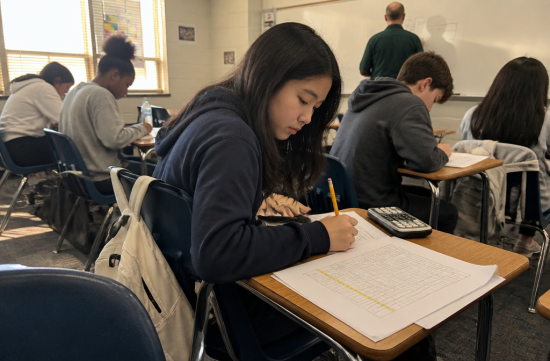
The core of the law is simple. Starting in the 2023-24 school year, students entering 9th grade must earn 0.5 credits in personal finance to receive a standard diploma.
This means that the graduating class of 2027, which will graduate next spring, will be the first to be subject to this requirement. If you have a child in 12th grade, they have likely already completed this or have it in their schedule for this year.
While a new course has been added, the elective credit requirement has decreased from 8 credits to 7.5 credits. It's worth noting that the total graduation credits have not increased.
The course content is surprisingly practical. It covers types of bank accounts and management, organizing checkbooks, filling out loan applications, and calculating federal income tax.
Students will also learn how credit scores are calculated and how to manage debt. Honestly, I would love to revisit this material as an adult.
I remember the day I first got a credit card after immigrating. I was rejected for having no credit history and was confused about what a secured card was.
If someone had calmly taught me for just one semester, I could have avoided years of confusion. That's why this news resonates with me.
I believe it holds a different significance for Korean families. The later parents learn about the American financial system, the fewer opportunities their children have to learn at home.
If schools can fill that gap, it helps level the playing field. I'm glad to see educational policies moving in this direction.
The moment a child receives their first paycheck or signs student loan documents comes faster than you think. The difference between a child who has learned this material and one who hasn't can be significant.
Of course, there are concerns. If the course is created but there aren't enough teachers or materials to teach it, it could end up being a superficial class.
So, I don't think parents' roles will disappear. Simply asking your child what they learned at the dinner table can make the class much more impactful.
If I were in that position, I would do this: during the week when they learn about tax calculations, I would pull out the W-2 or utility bill at home and go over it together.
When they learn about credit scores, it would be helpful to show them my credit card statement and explain how interest works. Just not hiding the numbers can be a significant learning experience.
If you're curious about graduation requirements, ask your school counselor for your child's transcript. You can quickly check which grade they have this course scheduled for.
If you're planning to move to another state, I recommend looking into that state's graduation requirements in advance. Each state has different starting years and credit requirements.
The student at the checkout that day eventually paid with a different card and left. I hope that in a few years, children will be a little less flustered in such situations.
A generation growing up without being embarrassed to talk about money. I believe this change is a gift that will last longer than a diploma.
 GoldenHeart







 Magic Cabbage School of Martial Arts |
 Vacation on Hawaii |
 morvex37 |
 Ari Songhan American Immigration Life |
 Bearded Strawberry Smoothie |
  Way to easy |
 FLORIDA Acus |

 Florida Gario |
 seouljung |
 round1 |
  musicque |
  road98 |
  Churros Train Conductor |
  gleeful |
  Burbank Lee |
  Olivia's Blog |
  Bushing Around Life |
  Active |
  Cherokee Rose |
  Kor. Master |
  Holey Moley |
  Conflite Teacher |
  Hodong Prince Over Flex |
  Mist inn |
  citrus pop |
  Onion Ring |
  phoenixia |
  viewtop |