
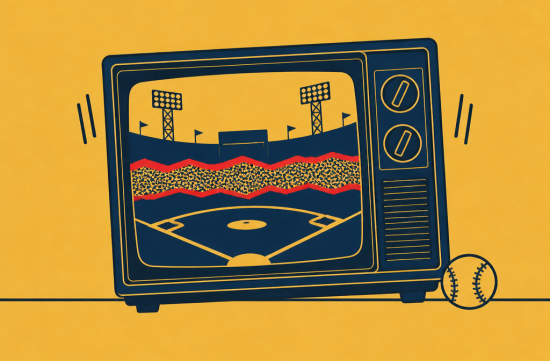
On October 17, 1989, at 5:04 PM, Candlestick Park in San Francisco was buzzing with excitement ahead of Game 3 of the World Series. The stands were packed, and there were just about 30 minutes left before the game was set to start.
That year's World Series was a matchup between the Oakland Athletics and the San Francisco Giants, two teams from the same Bay Area. So, everyone referred to it as the Bay Bridge Series.
In the ABC broadcast booth, Al Michaels and Tim McCarver were seated. About four minutes into the broadcast, the screen began to shake.
Michaels's voice announcing that an earthquake had struck went out over the airwaves, and soon the screen went dark. It was reportedly the first time a major earthquake was broadcast live across the United States.
Even now, it's a strange scene to think about. People who turned on their TVs to watch baseball suddenly became witnesses to a disaster.
This earthquake was named the Loma Prieta earthquake because its epicenter was near the Loma Prieta peak in the Santa Cruz Mountains. It registered a magnitude of 6.9 and occurred along the San Andreas Fault.
The shaking lasted about 15 seconds. In that brief time, roads and buildings collapsed throughout the Bay Area.
According to official counts, there were 63 fatalities and 3,757 injuries. While those numbers might seem manageable at first glance, a closer look reveals a different story.
Among the deceased, 42 lost their lives on the Cypress section of Interstate 880 in Oakland. The upper deck of the two-level freeway collapsed onto the vehicles below.
It was rush hour. The people on the road that day were likely just ordinary neighbors heading home to watch baseball.
According to USGS data, the collapsed section was built on fill soil over soft mud. Measurements showed that the ground shook much more violently than in areas with solid sand and gravel foundations right next to it.
This means that where you stood during the earthquake determined life or death. Reading this part weighed heavily on my heart.
The Bay Bridge, which connects San Francisco and Oakland, also saw part of its eastern span collapse. The bridge was closed for nearly a month, forcing commuters to take long detours.
In the San Francisco Marina District, buildings tilted and flames erupted. This area also shared the commonality of being built on landfill.
However, Candlestick Park only shook but remained standing. It's a relief to think that the stadium, filled with thousands of people, was unharmed. Reports say that the spectators calmly exited the stadium.
Game 3 was postponed. The series resumed ten days later on October 27.
The result was a four-game sweep by the Athletics. However, honestly, not many people clearly remember that victory.
What remains in people's minds is not the trophy but the abruptly cut broadcast. It's rare for a series in sports history to be so completely forgotten.
What I find even more interesting about this earthquake is the story that followed. The disaster changed the very shape of the city.
The Embarcadero Freeway, which blocked the San Francisco waterfront, was damaged and closed due to this earthquake. Originally opened in 1959, it had long been considered an eyesore.
There was a fierce debate between those who wanted to repair it and those who wanted to tear it down. At the time, Mayor Art Agnos pushed for its demolition, and the city supervisor committee vote was 6 to 5.
It was a one-vote difference. If it hadn't been for that one vote, the view in front of the Ferry Building would be completely different today.
The demolition began in February 1991. That space has now become a public area with walkways, streetcar tracks, and parks.
I believe that decision was the right one. A waterfront where people can walk is far more beneficial to the city than a road for fast-moving cars.
After the earthquake, California invested heavily in retrofitting overpasses and bridges for seismic safety. It took time and much discussion, but ultimately, it was about protecting future generations.
However, it's important to remember that this change didn't come without a cost. Thanks to those who lost their lives on the Cypress section, everyone learned how dangerous structures on soft ground can be.
Bringing this story back up is because that day started so ordinarily. Everyone was just thinking about going home to watch baseball.
If you live in the Bay Area, I recommend checking this weekend to ensure you have emergency water, flashlights, and first aid supplies at home. It doesn't need to be elaborate; a single bag will suffice.
Also, take a moment to find out if your home is on landfill or solid ground. The lesson left for us from that day 37 years ago is still not over.
 moonriver82





 Peter Pan Pet |
 horse |
 Sunset Oregon |
 daisypat |
 Anjollinya Blog |
 Nuchuhan Exploration BLOG |
 Sugar Cream Door Bulletproof Noodles |
 Moscow Kim |
 DOCTOR MED |
  fortbliss |
  My Two Way |
  toastyfox |
  FLORIDA Acus |
  tracker |
  TONTON COFFEE |
  sunrise |
  ultron78 |
  uplifted |
  Folding Instructions |
  same same life |
  USA Hyundai Kia |
  morvex37 |
  BOL SA RAM |
  TOUCHE NEWS |
  Small Business Information USA |
  draxen |
  gallery |
  milkyotter |