


Many families living in Kapolei worry about their children's college options.
From my experience living in this area, it's not necessary to only consider universities in Honolulu.
Especially for those in Kapolei, Ewa Beach, and Makakilo, it's worth realistically considering the University of Hawaii–West Oahu, commonly referred to as UHWO.
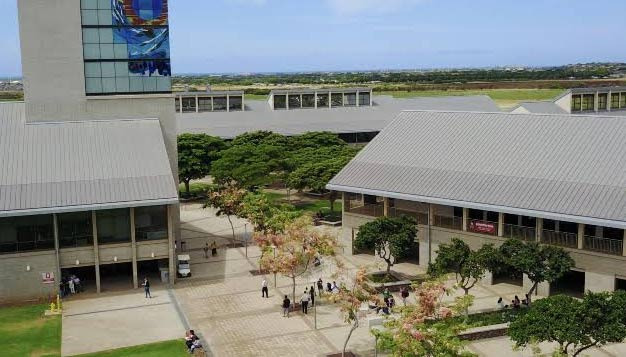
UHWO is a public 4-year college within the University of Hawaii system located in Kapolei.
It is much smaller than UH Manoa and does not have a flashy campus. However, it offers a significant advantage for those living in the west.
That advantage is commuting. Although Oahu is a small island on the map, once traffic on the H-1 starts to back up during rush hour, the situation changes completely. For a student living in Kapolei, commuting to Manoa several times a week versus attending UHWO nearby makes a considerable difference over four years. The costs of gas, parking, and, most importantly, the time wasted on the road add up.
Tuition is also an important factor. For the 2026-27 academic year, the tuition for Hawaii residents at UHWO is $306 per credit hour.
If you simply calculate for 30 credits in a year, the tuition alone would be about $9,180. Additional school fees and textbook costs will also apply. For non-residents, the cost is $846 per credit hour, making the total for 30 credits $25,380, which is a significant difference.
So, for students who are residents of Hawaii, the value of attending UHWO is definitely apparent.
Especially from a parent's perspective, the bigger difference comes when a child can commute from home. The scary part of college costs in the U.S. isn't just tuition. Once you start adding in dorm fees, meal costs, and transportation expenses, you might find yourself wondering, "I sent my child to a public university, so why is it costing so much?"
Majors such as business administration, education, social sciences, public administration, cybersecurity, information technology, and health sciences are all fields that connect well with local employment opportunities.
From observing my work life and those around me, I've noticed that while the name of the college is important, what graduates do afterward is even more crucial.
For example, if you major in business administration, you could consider office and management positions in Hawaii's banking, hospitality, tourism, insurance, real estate, and government sectors.
Focusing on accounting courses can also lead to a career in accounting and finance.
The education field offers a realistic choice for students considering becoming teachers or working in education-related roles in Hawaii.
However, becoming a teacher requires more than just obtaining a degree; you also need to check the state's certification requirements based on your desired position.
Recently, I've been paying attention to cybersecurity and IT fields. The presence of federal and military-related agencies is quite significant. Since Oahu has many military facilities and federal agencies, having skills in IT and cybersecurity, along with relevant certifications, can open up different career options.
There are also advantages to attending a relatively small school like UHWO. The atmosphere is different from large lecture halls with hundreds of students where you might never see your professor. With a smaller size, it's easier to connect with professors, and if you take the initiative, you can seize opportunities for internships and career counseling.
For those looking to return to school while working, this is also a viable option. With online classes and flexible course formats, it doesn't feel like a college only for 18-year-old freshmen. Transferring from a community college to complete a bachelor's degree is also a realistic path.
Of course, UHWO isn't the answer for every student.
If you're looking for research-focused majors or planning to attend graduate school with a wider variety of majors and campus experiences, UH Manoa might be more suitable.
On the other hand, if you think, "I'm likely to continue living in west Oahu and want to earn a degree while minimizing debt," then the conversation changes.
Especially, Kapolei is no longer just seen as a distant residential area from Honolulu. With housing, commercial facilities, and government agencies continuing to develop, west Oahu has become a cohesive living area. Understanding UHWO as a school that has grown alongside this change makes sense.
Korean parents often focus on the name of the school when discussing their children's college options.
I understand that sentiment. When someone mentions where their child is going, it naturally catches your attention.
However, four years later, the balance of student loans will feel much more real than the name of the school.
Attending college while living at home to reduce financial burdens and choosing a major that leads to employment in Hawaii can be a very reasonable college choice.
After all, college is not just a place to boast about for four years; it's where you prepare for the next 40 years.
 ImmigrantLife
 NutcrackDoll







 morvex37 |
 Ari Songhan American Immigration Life |
 Bearded Strawberry Smoothie |
 Heart Ticker |
 Duck Duck Go |
 Hawaii Tourist Information |

 HAWAII Korean Church News |
 TEX MEX STAR |
 Vacation on Hawaii |
  New Mexico Friends MAX |
  Hajiwon Blog Hair Salon |
  Wicked - Fireyo |
  Seattle - Emerald City |
  new noah |
  xylora |
  Anjollinya Blog |
  total solution |
  valtri |
  August Snowman |
  Way to easy |
  Pirate Ship Popcorn Maker |
  USA Business News |
  Samsung My My |
  bubblo |
  tartbear |
  Washington Monument |
  Forever Young |
  crystalx |