
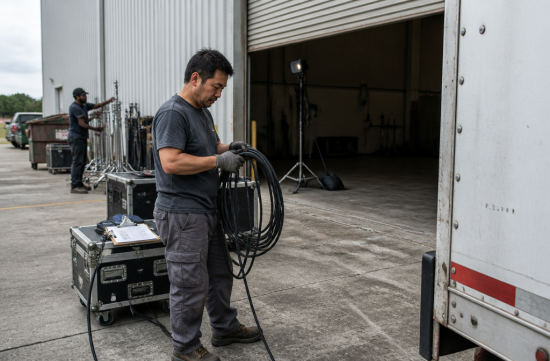
Once, a DIT (Digital Imaging Technician) working in Atlanta earned up to $9,500 a week. According to an AP report from March this year, he is now working at a tennis center front desk for $15 an hour. He has only been on set four days since May 2024.
Looking at the numbers, it's clear this isn't just an individual misfortune. The Georgia film and TV industry is currently facing serious challenges.
According to AJC, the film and TV production spending in Georgia for the 2026 fiscal year (ending June 30) was $2 billion. This is the lowest in a decade.
The previous year was $2.3 billion, and in 2022, it peaked at $4.4 billion. This means it has dropped below half in just four years.
Even more surprising is that it's lower than in 2020, when production was halted for nearly a third of the year due to COVID. Honestly, I'm a bit at a loss for words at this point.
However, there is also opposing data. During the same period, the number of productions increased by 14% to 280, and independent films rose to 77, an 83% increase.
This means that while the number of jobs has increased, the overall market has shrunk. The structure where a single large studio project could support hundreds of people for months has collapsed, and shorter, lower-budget projects are filling the gap.
The causes can be summarized in several ways. After the writers' and actors' strike in 2023 halted filming for several months, studios and streamers have reduced the number of productions altogether.
Approved projects are also facing tighter budgets. Additionally, other states and countries have increased their incentives, diluting Georgia's appeal.
A prime example is Marvel. They have moved their large projects, with "Thunderbolts" set to release in 2025, to the UK.
I also looked into the movements of competing states. California is increasing its annual film and TV tax credit cap from $330 million to $750 million starting July 2025.
Texas has established an incentive fund of $3 billion over 15 years with SB 22 in 2025, providing $300 million every two years until 2035. Notably, the ratio of Texas residents employed will factor into the funding calculations.
Georgia still maintains a tax credit of up to 30%. However, I believe that 30% is now more of a baseline than a distinguishing feature.
So where have the local staff actually gone? I must honestly say that I haven't found any official statistics tracking how many Georgia crew members have changed industries or moved to other states. Therefore, I will highlight trends based on reported cases.
The first case is those who are doing completely different jobs in the area. Like the DIT mentioned earlier, some are working hourly jobs while waiting for the next series.
The second case involves those who are still working but experiencing longer gaps. A location scout mentioned that they used to turn down work, but now they are taking two to three months off between projects to save on expenses.
One costume supervisor reported that their work has decreased to less than half. There are many complaints in local Facebook groups about veterans taking the few available positions.
The third trend is moving to a smaller market. Independent films and micro-dramas are representative of this shift.
To qualify for Georgia's tax credit, a minimum of $500,000 must be spent, but smaller projects are being bundled together to meet this threshold. The film office has also mentioned the new state law that expands incentives to include short-form vertical videos and free ad-supported streaming.
The film office believes that 2026 will be much better than 2025. However, the fiscal year spending numbers have yet to reflect that.
Considering both sides of the argument, here's the situation. Optimists cite the increase in the number of projects and infrastructure as reasons for hope. They believe that since studios and skilled labor are already in place, the industry will bounce back when the economy improves.
Pessimists, on the other hand, point to structural changes. They argue that with the streaming bubble burst and the competition from cheaper labor and higher incentives abroad, it will be difficult to return to previous production volumes.
My view is somewhere in the middle. I believe that work will return, but it will be challenging to revert to the high-wage structure centered around large projects like in 2022.
So here are some practical tips for those in the field. First, if you're in a technical role like grip or electric, consider getting involved in live events, concerts, or corporate event productions.
Second, don't underestimate independent films or short-form projects. Even if the pay is lower, the networking opportunities remain, and in this industry, connections lead to the next call.
Third, if you're thinking of moving to another state, check the local residency requirements in places like Texas, where resident employment is factored into the incentives. You could be treated as an outsider if you move without checking.
Finally, make sure to secure health insurance during gaps in employment. The earlier DIT mentioned that they want to revive their health insurance as soon as they land a series that lasts 5-6 months.
I don't believe the nickname "Hollywood of the South" is over. However, I think it's now more appropriate to diversify your work rather than putting all your eggs in one project. That's what I would do.
 RudolphPad





 Tonky |
 My NYC |
 coloradoman |
 Living Economy Information Blog |
 Tomato Health Club blog |
 moonshine 7 |

 Korea Tiger News |
 Dingho and USA News |
 Let's Be Like a Salt-like City Person |
  dense |
  Tiger Milk Foam Research Institute |
  Oreore Mushroom |
  optimistic |
  Good Good |
  berion88 |
  bravo777 |
  skyblue |
  Project Tomorrow |
  apricotla |
  Soy Angelino |
  nati8 |
  NE Hodori Preik |
  washington mom |
  celtics |
  Balancework |
  round1 |
  Way to easy |
  musicque |
  road98 |