

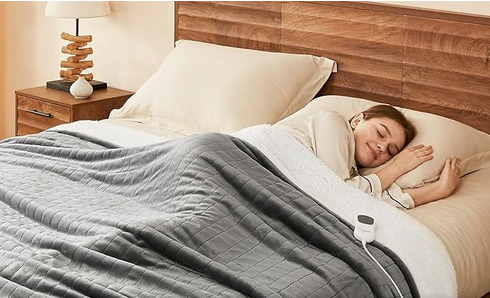
The winters in San Francisco can be surprisingly chilly when you're trying to sleep. It doesn't drop below freezing, but the cold sea breeze seeps in, creating a biting chill that penetrates every corner of the house. Running the heater all day can be expensive, and it's too cold to just tough it out without any warmth. So, naturally, I turned to an electric blanket.
Especially for those from Korea, living in the U.S. often leads to a focus on health and electromagnetic waves, which makes high-end brands appealing. I also fell into that mindset and splurged on a $320 Shield Life electric blanket. Seeing the description of its special wiring and lack of electromagnetic waves, I thought, "It must be worth the price," and laid it on my bed. The first two years were warm and satisfying.
However, the problem arose in the third year when it suddenly wouldn't turn on, and after reading reviews from other Korean Americans, I realized that repairing it was nearly impossible. Unlike Korea, there aren't local service centers, and returning it to the manufacturer for a repair estimate turned out to be almost as expensive as buying a new one. Ultimately, I couldn't get it repaired and had to throw it away, which left me feeling quite deflated.
It was frustrating to think that a product costing over $300 broke down like a disposable item in just three years. I kept thinking, "I wasted my money."
The conclusion I came to was that electric blankets should be viewed as consumable appliances that need to be replaced after a certain period.
So, I turned my attention to Amazon. I chose a $40 electric blanket with high ratings and thousands of reviews. After trying popular brands like Sunbeam and Biddeford, as well as Amazon's own products, I found that the warmth felt almost identical to the $300 blanket. In fact, the features seemed even better.
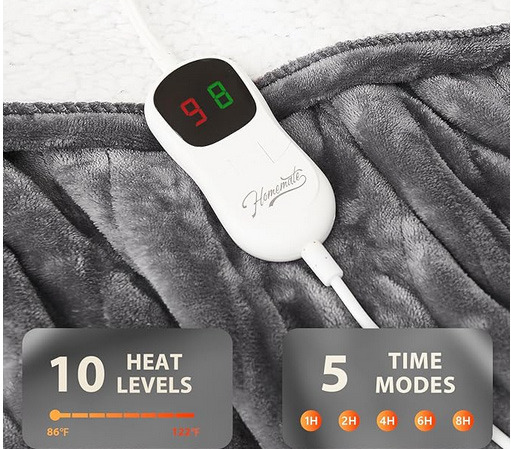
One of the biggest advantages of today's budget electric blankets is the timer function. With automatic shut-off options for 2, 4, or 10 hours, you can safely turn it on before bed and fall asleep without worry. There's no need to keep it on all night in the chilly San Francisco mornings.
The temperature control is also very precise. You can start with a high setting to warm up and then lower it before sleeping for a comfortable night. This reduces electricity costs and lessens the worry of overheating.
Most importantly, I appreciate that they are washable. Once you detach the controller, you can toss it in the washing machine. I put it in a laundry net and run it on a gentle cycle, then air dry it. This way, I can keep it clean and fresh without worrying about odors during the damp San Francisco winters.
Now, I'm convinced that I don't need an expensive premium blanket to survive the San Francisco winter. A well-reviewed $40 product from Amazon is more than sufficient. Choosing materials like flannel or sherpa keeps you cozy even without turning it on.
If it breaks, it's more rational not to stress and just buy a new one. For $320, I could replace a $40 blanket every year for eight years. In fact, using a new blanket each year is much more comforting.
Ultimately, the warmest option isn't the brand name, but rather a budget-friendly blanket that you can use without worry and wash easily. On the long, damp winter nights in San Francisco, I now sleep comfortably with just a $40 electric blanket from Amazon.
This winter, I feel that a practical electric blanket is enough to chase away the chilly air, rather than an expensive product.




 forevergee |
 mortrix |
 cherrydino |
 victoria 68 |
 American Man in a Mask |
 Peter Pan Pet |
 Sugar Cream Door Bulletproof Noodles |
  Nuchuhan Exploration BLOG |
 Moscow Kim |
 laro90 |
  MEDBIO American Doctor Blog |
  SWAT TEAM BLK |
  DREAM BIG |
  frostbite |
  330 Forever My Love |
  El Dorado |
  dralix58 |
  Gorama Round |
  Skydiving |
  dreamport |
  Yellow Snowman |
  Toaster Pizza Magic Show |
  velvetnom |
  Anytime Journey |
  Mrs. Duluth |
  jaxter |
  Atlanta Mama |
  Baguette Blog |
  Tan Sol |