
These days, the most common question I hear from seniors in front of the local grocery store or church parking lot in Raleigh is, "If I vote in favor of the 3.5% income tax on the ballot, will our taxes go down?"
I was confused at first too. So, I spent this week digging through articles and state government materials.
To put it simply, this amendment does not directly reduce taxes for next year. The change that will actually affect retirees' wallets is the already established tax rate reduction.
First, let's look at the basics. The measure on the November 3 ballot is Senate Bill 1080, which was passed by the state legislature on May 20.
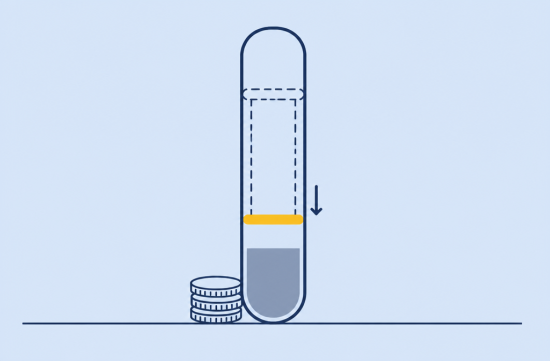
The content is straightforward. It aims to enshrine in the state constitution that personal income tax and corporate tax rates cannot be raised above 3.5%.
Currently, the cap in the North Carolina constitution is 7%. It was originally 10%, but it was lowered to 7% with 57.4% approval in the 2018 vote.
So, if this measure passes, that ceiling will be halved from 7% to 3.5%. Just looking at the numbers, it's quite a significant change, and I was a bit surprised myself.
So, what is the actual tax rate now? The personal income tax rate for 2026 is a flat rate of 3.99%.
And according to the state budget signed by Governor Stein on July 7, it will drop to 3.49% next year in 2027. This is already set by law, regardless of the outcome of the amendment.
There are additional reductions planned beyond that, but they depend on whether the state meets its revenue targets, so it's hard to pin down the numbers year by year. Different reports explain the timeline slightly differently, so I think this is as much as I can be certain about.
Here's a key point. The tax rate of 3.49% next year is just slightly below the cap of 3.5%.
In other words, the amendment is more of a "device to prevent future tax increases" rather than a "device to lower taxes." I hope you keep this difference in mind when you vote.
Now, let's break it down from the perspective of retirees. First of all, Social Security benefits are not subject to state income tax in North Carolina.
So, for those whose income mainly comes from Social Security, whether the rate is 3.99% or 3.5%, it won't make much of a difference.
Among those receiving government pensions, there are individuals affected by the Bailey ruling. If you were vested for five years or more in state, local, or federal government pensions as of August 12, 1989, those pensions are not subject to state income tax.
Military retirement pay is also exempt if you served for over 20 years or were discharged for medical reasons starting from the 2021 tax year. These individuals are somewhat insulated from the cap debate.
The ones who will truly be affected are those withdrawing money from IRAs or 401(k)s, and those receiving private company pensions. These incomes are taxed at the regular rates.
To simplify the calculations, if the tax rate drops from 3.99% to 3.49%, that's a 0.5% point decrease, which means a reduction of $50 for every $10,000 of taxable income. It's not a huge amount, but it adds up over the years.
The argument in favor goes like this: Republican lawmakers say that income tax is detrimental to attracting businesses and jobs, and that enshrining the cap in the constitution will protect all taxpayers from future tax increases.
The opposition has plenty to say as well. Governor Stein referred to this as a "millionaire protection cap," and opponents point out that it effectively blocks the ability to tax high earners more.
There's also criticism that lowering the tax rate could be done through regular legislation, so there's no need to put it in the constitution. The vote split along party lines, with the Senate voting 30 to 18 and the House 71 to 46.
Personally, I find this aspect the most concerning. Once the constitution is changed, it's hard to reverse, and I wonder if it might overly restrict the state government's ability to respond if the economy worsens.
On the other hand, for seniors living on fixed incomes, the assurance that "income taxes won't suddenly rise" could be quite comforting. Both sides make valid points, so it's hard to take a clear stance.
By the way, there's also a proposed amendment on the same ballot to limit property tax increases, as well as a voter ID amendment, so retirees who own homes should definitely read those as well.
Early voting has already started on October 15 and will end at 3 PM on October 31. Wake County will support curbside voting at all 18 early voting sites, making it easier for those with mobility issues to go with their parents.
Whether your pension is subject to Bailey or how to plan your IRA withdrawals will depend on your personal situation, so be sure to check with a tax advisor or financial expert.
If I were to summarize, I would say to accept the confirmed tax rate reduction for next year and view this vote as a question of "how much leeway do we want to leave for the state government in the future?"
In musical terms, it's like lowering the maximum volume knob rather than just turning down the volume now. Just remember that difference when you go to vote.
 TwoPizzaPls


 Burbank Lee |
 vibranto |
 sparkling |
 oh my salami |
 saffronroute |
 NC Dreamer |

 Balan |
 Audio Mania World |

 North Carolina State University |
  springwaltz |
  dense |
  Tiger Milk Foam Research Institute |
  Oreore Mushroom |
  optimistic |
  Good Good |
  berion88 |
  bravo777 |
  skyblue |
  Project Tomorrow |
  apricotla |
  Soy Angelino |
  nati8 |
  NE Hodori Preik |
  washington mom |
  celtics |
  Balancework |
  round1 |
  Way to easy |
  musicque |