

With the rapid development of technology and media, sports in America have become a massive industry.
Broadcasting companies invest billions of dollars, and sportsbooks managing sports betting operate with enormous sums of money within legal regulations.
But what if a player at the center of this system secretly manipulated their performance?
In the U.S., such actions are viewed not merely as violations but as serious fraud that undermines market fairness, akin to manipulating financial markets.
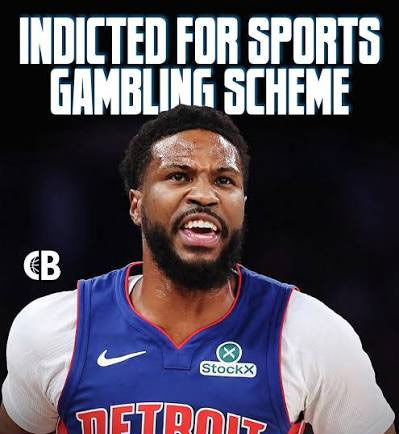
The recent case involving former NBA player Malik Beasley is a prime example of this.
According to prosecutors, Beasley is accused of intentionally adjusting his rebound counts during his time with the Milwaukee Bucks in 2024 to meet the criteria set by bookmakers.
He allegedly manipulated game outcomes to allow those betting on sports to profit, thereby reducing or eliminating his debts.
He has pleaded not guilty in court. A conviction has not yet been established.
However, many believe that the fact the federal prosecutors have brought charges indicates they have gathered substantial evidence.
What's interesting is how this situation came to light.
Many people think, "Who would know if a player intentionally grabbed one more rebound?"
However, the American sports betting system is far more sophisticated than one might think.
Nowadays, sportsbooks do not only deal with the outcomes of games.
Every player's rebounds, assists, successful three-pointers, free throw attempts, and even how many minutes they play are all betting targets.
AI and statistical programs analyze thousands of game data points.
If a player with an average of 3.2 rebounds suddenly shows unusual movements in a specific game or repeatedly engages in meaningless plays at the end of the game, the data will immediately signal an anomaly.
More importantly, it's about the flow of money. American sportsbooks share information with each other.
If a large amount of money suddenly pours into a market that usually sees little betting, an automatic alert is triggered.
For example, if an unusually large amount of money is placed on the over for 3.5 rebounds, an analysis begins: "Why is everyone suddenly betting in the same direction?"
Such unusual transactions do not end with the sportsbooks.
Information is passed on to specialized monitoring companies, leagues, and if necessary, the FBI and federal prosecutors.
There, phone records, text messages, bank transfer histories, cryptocurrency transactions, GPS locations, and account flows are tracked through warrants.
In this case, text messages were one of the key pieces of evidence.
"This time, I will let the rebounds go."
If such conversations exist, the case evolves from mere suspicion to concrete conspiracy charges.
There's a reason why the U.S. treats such crimes with particular severity.
Sports represent a massive financial market in America.
NBA, NFL, MLB, NCAA, sportsbooks, broadcasters, and advertising companies all operate on trust.
If a player manipulates game results for money, millions of fans and investors are simultaneously harmed.
Thus, in the U.S., match-fixing is not dismissed as a mere "individual athlete's deviation."
Charges of fraud, conspiracy, bribery, wire fraud, and illegal gambling are often applied simultaneously.
In Korea, people often say, "How could they possibly catch that?"
But in America, it's quite the opposite.
"Money leaves a trail."
This is the starting point of investigations.
Large bets leave records, phones leave locations, text messages leave conversations, and banks leave transfer records.
AI can even detect unusual game patterns.
Ultimately, no matter how naturally one tries to act on the court, the data does not lie.
The Beasley case is still ongoing, so the final judgment will be made by the court.
However, this case sends a clear message to the American sports world once again.
When a player accepts money to undermine the fairness of a game, America treats it not as sports but as a crime.
 ThirstyJjang
 PhoWindPower
 SKy Face






 novapixel |
 NEXT ROUND |
 Encyclopedia of New York and Surrounding Areas |
 washington mom |
 California Dreamer |
 Sugar Cream Door Bulletproof Noodles |
 my town K blog |
 Nuchuhan Exploration BLOG |
 Sirin Solitude and Advancing Hand in Hand |
 explorer |
  dictionary |
  Mr Bull Jung |
  radiant |
  Georgia 88 |
  Great TOWN NEWS |
  Open Flex Mind |
  Hartford Blog |
  unified |
  Generation X |
  ringwinds |
  American Food Information & Calories |
  Hawaii Maui Kahului |
  calvorn |
  fernando park |
  newyorker 101 |
  coffeee |
  |
|  Christopher |
  sylven |