

A friend's mother receives SSI, and the whole family was happy about last year's COLA news. However, a few months later, they received a letter saying that the food stamp amount had decreased.
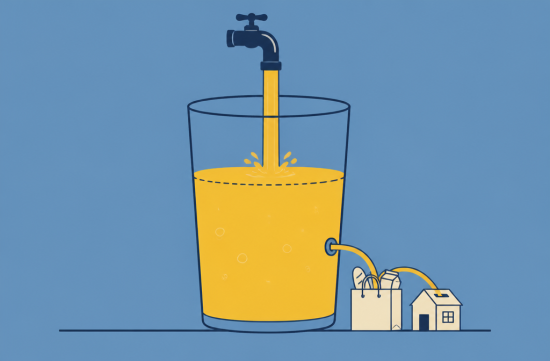
"It's not an increase; it's a shift," she said, and I think that's quite an accurate expression.
First, let's clarify the numbers. The SSA announced the 2027 COLA at 3.6% on October 14, 2026. This is higher than the 2.8% for 2026.
The reported maximum federal SSI payment will increase from $994 to $1,029 for individuals and from $1,491 to $1,544 for couples.
Since January 1, 2027, is a holiday, the SSI increase will be reflected on December 31, 2026. Even though it may seem like there are two payments in December, one is for January, so don't get confused.
This is good news so far. The problem is that SSI is a needs-based program that gets reduced based on income.
Parents receiving both Social Security and SSI often get confused. The SSA deducts $20 from the Social Security amount and reduces the SSI by that remaining amount.
For example, if Social Security is $600 a month, the 2026 SSI will be $994 minus $580, which equals $414, making a total of $1,014.
In 2027, if Social Security increases to $621, the SSI will be $1,029 minus $601, resulting in $428. The total will be $1,049, an increase of $35.
This means that the total amount combined is capped by the SSI limit. The increase from Social Security is largely absorbed by SSI.
The real trap comes next. The income increase from COLA is also counted as income for other programs like SNAP, rent assistance, and Medicaid.
Let's look at SNAP first. According to the Congressional Research Service (CRS), SNAP allows for 30% of net income to be spent on food, so benefits may decrease by up to 30% of the COLA increase.
This means that if COLA increases by $35, SNAP could decrease by up to $10.50. It's not a total loss, but the impact is definitely felt.
The bigger issue arises when income limits are exceeded. According to Senate bill data, it's estimated that 28,000 households lost SNAP eligibility due to the 2023 COLA.
From the same data, 36% of SNAP recipients reported an average monthly reduction of $32. Therefore, the COLAs Don't Count Act has been proposed to exclude COLA from SNAP income calculations, but it has not yet become law.
Next, let's discuss rent. Public housing or Section 8 vouchers typically calculate tenant contributions based on 30% of adjusted income.
HUD has advised that starting with the 2026 COLA, it should be reflected in annual reviews effective after January 1. This means that rent may increase slightly when the review date comes around.
Medicaid has protective measures. If someone loses SSI due to COLA while receiving both Social Security and SSI, they can maintain Medicaid through the Pickle Amendment.
The conditions are quite strict. There must have been a month where both benefits were received after April 1977, and after excluding the COLA received since then, the income must meet the SSI criteria.
Just because SSI is cut off doesn't mean you should accept that your Medicaid card is also canceled. In Georgia, be sure to ask DFCS if you qualify for Pickle.
Let's also look at the Medicare Savings Program (QMB, SLMB), which pays Medicare costs. Several states exclude the January COLA from income until the new poverty line is established, which usually lasts until around April.
However, this period and method vary by state. In Georgia, it's best to check the DFCS policy manual.
So, what should children do in this situation? I would take care of it in this order.
Around the end of November, I would print the COLA notice from my Social Security account, as it will be posted there first. The mail will arrive in December.
Report the changed amounts to DFCS, which handles SNAP and Medicaid, in a timely manner. If you report late, you may have to repay overpayments later.
If you receive rent assistance, check the review date and the new rent calculation. If the numbers seem off, request a written explanation of the calculations.
To be honest, I think the structure where the same increase is calculated separately by three or four agencies is inefficient. A system that beneficiaries cannot understand is hard to consider a good system.
That said, you can't just wait for the government to take care of it. Ultimately, reading the documents and checking the numbers is the family's responsibility.
The results can vary significantly based on household composition and other income. Since it depends on individual circumstances, be sure to check with SSA, DFCS, or a professional.
 SkyCastle
 mintroadbuilder1971


 orvian89 |

 vivavida |

 MEDBIO American Doctor Blog |

 Burbank Lee |

 vibranto |

 looksee 78 |

 Atlanta Business Information |

 bravo777 |


 InJung Gu |
 ssome |
 skykong |
 Shining Our Own World |
 gardener 007 |
 golfmaster |
 Nanana Nanana Nanana |
 Who's watching? |
 endone |
 RockStar |
 Casa Mia |
 You Only Live Once |
 Hardworking CPA |
 Joyce 77 |
 Runner Kim |
 My Town My Way Blog |
 My Miami Stories |
 Entip |
 Tony Park |
 Jean Claude Bundang Blog |
 DJ DC BLOG |