

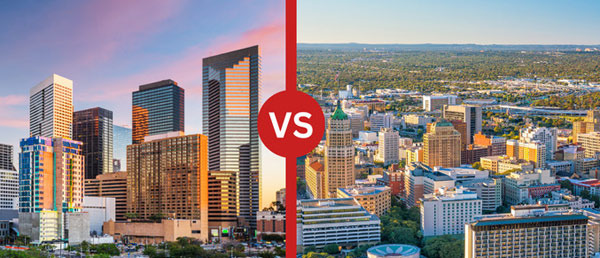
Living in San Antonio, I notice that there are definitely areas in both cities that are less desirable, but the atmosphere is quite different.
In San Antonio, as you head north, there are more new apartments, housing developments, and shopping centers, and the freeway frontage and local roads look neat.
In contrast, as you enter some of the older neighborhoods around downtown, such as the West Side, East Side, and parts of the South Side, you suddenly see much older homes and commercial buildings.
According to city data, wealth is concentrated in the northern part of San Antonio, creating an economic gap with the south, west, and east. Historical factors like racial segregation, discrimination in housing loans, and differences in education and infrastructure investment have influenced the current urban structure.
Particularly, the West Side saw a large settlement of people who migrated to escape the Mexican Revolution in the early 20th century. At that time, many Mexican laborers working in railroads and agriculture also settled in this area. The East Side was relatively mixed racially until the early 1900s but later became a primary residential area for Black residents, influenced by past policies like housing loan discrimination and racial restrictions. Current city planning documents also explain the impact of redlining and subsequent lack of investment.
So, living in San Antonio, you start to form a mental map of the city's economic landscape.
If you take 281 north toward Stone Oak or head northwest on I-10, you continuously encounter relatively newly developed areas.
Of course, it's not true that all northern areas are affluent and all southern areas are poor. The reality is much more complex, but it feels like a significant pattern across the city.
Houston feels different in this regard compared to San Antonio.
Here, rather than having a ghetto-like area concentrated in one direction, it gives the impression that low-income neighborhoods are mixed throughout the city.
In fact, city data shows that areas with concentrated low-income populations are primarily in the east, but they also exist in the north, south, and southwest.
Data indicates that poverty concentration areas appear not only in the eastern and downtown-adjacent areas like Third Ward, Fifth Ward, and Settegast but also in the southwest and north.
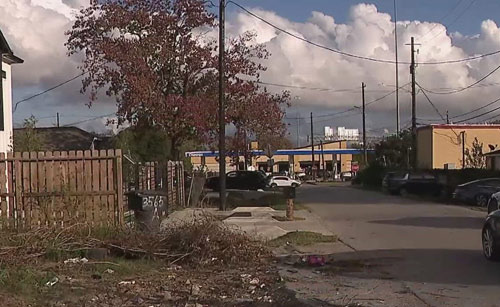
Why is there such a difference? Houston itself is incredibly vast and has expanded in multiple directions.
Different living zones have developed around the oil, port, railroad, and industrial areas, and residential areas have continued to spread along highways and outer loops.
As a result, in Houston, you might drive through a very nice neighborhood and suddenly cross a freeway and find the atmosphere changes dramatically.
Then, if you drive a little further, you encounter large shopping centers and new apartments again. Particularly in the eastern part of Houston, there are large industrial areas developed around the port and refining and petrochemical facilities. This industrial and transportation structure, combined with older residential areas, creates a completely different urban landscape compared to San Antonio.
San Antonio is a bit different.
The city grew around the old downtown, and over time, the middle class and new developments have expanded significantly to the north and northwest.
In fact, the city of San Antonio has recently identified areas like Far North Stone Oak and Far West as growth areas.
So, the feeling you get while driving is also different. In San Antonio, there's a sense of continuity that says, "Ah, I'm entering an older area now."
There are stretches where you see old single-family homes, small old commercial buildings, vacant lots, and auto repair shops for miles.
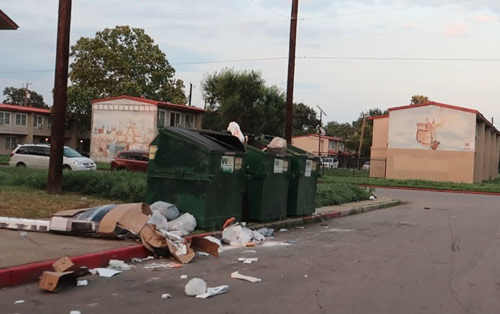
Houston is more complex. You encounter old neighborhoods, then new development areas, then industrial facilities, followed by upscale residential neighborhoods. In fact, the latest housing plans from the city of Houston indicate that relatively strong housing markets and affluent areas are mostly found west of downtown, while low-income concentration areas are distributed in various directions.
Interestingly, both cities face significant poverty issues.
Recent Census data for San Antonio shows that about 17.1% of residents live below the poverty line. So, it's not that San Antonio lacks underdeveloped areas compared to Houston.
Rather, the difference lies in how 'poverty is distributed across urban space.'
San Antonio has a relatively clear contrast between the historically formed low-income areas in the east, west, and south, and the growth areas in the north.
Houston, being such a massive city that has grown in multiple directions, has a much more complex mix of poverty areas, industrial areas, middle-class neighborhoods, and affluent areas.
So, when you drive through both cities on the freeway, even though they are both in Texas, the urban expressions feel quite different.
San Antonio feels like the city's old wounds remain as large chunks, while Houston feels like various traces of different eras are pieced together as it has grown.
It may not be obvious on a map, but when you drive, the differences become surprisingly apparent.
 midnightriverwalker1959
 mooncitywalker2017







 gravity |
 Agenda Center |
 Texas Migration Story |
 Moo Tang Clan |
 Peter Pan Pet |
 solvix18 |
 action blog 101 |
 Hajiwon Blog Hair Salon |
 TEXAS Fishing Boat |
 Coding Elf |
  Victory 1988 |
  Infinite Style |
  Mr Cleveland |
  Sugar Cream Door Bulletproof Noodles |
  novapixel |
  lavender |
  macan 08 |
  Goroke Geureoke News |
  colo colo |
  U.S. Weather Bureau News |
  Dragon Lee |
  American Food Information & Calories |
  zephyrs |
  ness 6 |
  Montgomery Mom |
  SteelOrbit |
  Puddle Puddle |
  Arizona Cowboy |
  macaronpop |