
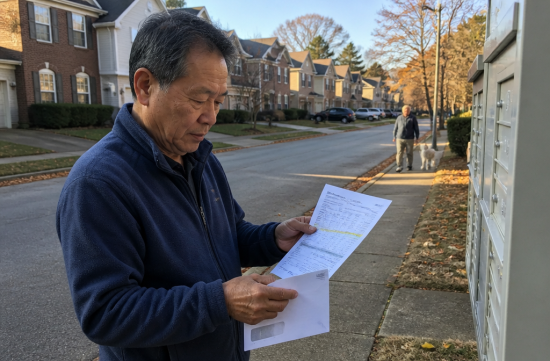
As November approaches, the HOA will send out the budget proposal and fee notices for the upcoming year. Most people just glance at the total monthly payment at the bottom and toss it in a drawer.
However, the details of the increase are already outlined in those few pages. Usually, the only opportunity to contest it is during the annual meeting at this time.
In the past, it was common for some communities to keep their fees unchanged for several years. Now, with rising insurance and labor costs, many are adjusting their fees annually.
The first thing to check is where the rules for increases are documented. In Georgia, the limits on fee increases and the requirements for resident voting are typically determined by each community's declaration and bylaws, rather than state law.
Therefore, the document to review before the notice is our community's declaration. Make sure to verify what percentage the board can raise fees unilaterally and whether a vote is required if it exceeds that amount.
The second item is a comparison chart of line items from the previous year. If the budget only lists the total amount, it's appropriate to request a breakdown by category.
Among the items, the insurance line is the first to examine. If the insurance for common facilities has significantly increased upon renewal, a large portion of the increase may come from here.
Also, look at landscaping, pool maintenance, and management company fees side by side. It's worth asking whether the contracting company has changed or if there has been a rebid.
The third item is the reserve fund. This is money set aside for necessary repairs like roofs, road paving, and fences.
Check if the current balance of the reserve fund and the last reserve study are listed together. If the study is outdated, it may not align with current construction costs, and that difference will ultimately fall on the residents.
Georgia does not legally require HOAs to conduct reserve studies or maintain a certain balance. This means it is left to the discretion of the board.
If the allocation for reserves has been decreasing each year, it may seem like fees have not increased much at first. However, this raises the likelihood of a special assessment later on.
If you are a condo owner, there is one more consideration. According to Fannie Mae guidelines, at least 10% of the condo budget must be allocated to reserves to pass a standard review, and it can be substituted with an appropriate reserve study.
If this condition is not met, buyers may find it difficult to obtain conventional loans. When reselling, that burden falls entirely on the homeowner.
The fourth item relates to delinquencies. If the accounts receivable or bad debt items have increased, it means that the remaining residents are covering the unpaid amounts of their neighbors.
If your community has adopted the Georgia Property Owners Association Act (POA Act), late fees cannot exceed the greater of $10 or 10% of the amount due. Interest is capped at 10% per year.
This year, a new law was added. Governor Kemp signed SB 406 on May 12, known as the Georgia Property Owners Bill of Rights.
Starting July 1, HOAs cannot charge residents attorney fees without prior written notice and itemized cost details. The minimum amount of unpaid dues required to initiate foreclosure proceedings has also doubled to $4,000.
Most provisions will take effect on January 1, 2027. Associations must register annually with the Secretary of State's office and submit financial information.
Unregistered associations cannot impose fines or fees, establish liens, or initiate foreclosure proceedings. Residents can file complaints with the Secretary of State's office, and related fine collections will be paused during that time.
Local broadcaster WRDW has covered this law extensively. This indicates that many homes in the area have faced HOA issues.
However, this law does not apply retroactively. Remember that new protective provisions do not apply to disputes already in litigation.
Once the new law is in effect, residents' rights to access the association's records and financial documents will also become clearer. If you find the budget numbers suspicious, it will be easier to request supporting documents starting next year.
The fifth item is the board's plans included in the budget. Often, there are brief notes about new construction, facility replacements, or changes in management companies.
Finally, make sure to mark the date of the annual meeting and the deadline for proxies on your calendar. Even if you cannot attend, you can leave your intentions via a proxy.
It's better to send questions in writing ahead of time. It's not easy to confront numbers on-site. Just asking why insurance rates have increased, whether there has been a rebid, and what the reserve fund goal is can reveal the board's level of preparation.
After observing for a while, I noticed a commonality among communities where fees suddenly spiked. They had been saving on reserves and postponing increases for several years.
Therefore, I tend to trust boards that gradually raise fees, even if by a small amount, to build reserves. The more a budget boasts of freezing fees, the more I look back at the reserve line.
Declaration provisions vary by community and can be interpreted differently. If there is potential for dispute, it's safest to consult a local real estate attorney.
It only takes about thirty minutes to read a single notice thoroughly. That thirty minutes could determine your management fees for the entire next year.
 goldencloudwalker1911








 Choco Choco Star |

 gentle |
 neapolis |

 moo moo |

 ultron78 |

 Augusta 90 |

 Carolina border |

 Watanaka Karametibaksa |

 Augusta Univ |

 Golado |
 See It |
 memorabilia |
 H Leader |
 xylora |
 linex |
 Victory 1988 |
 washington mom |
 Deep South Mississippi |
 moomoon |
 hexora |
 jammybear |
 chiobase |
 jondol |
 US Regional Information Blog |
 tredolo |
 panda express |
 luido |
 norazoo |
 Oz's Wow Company |