
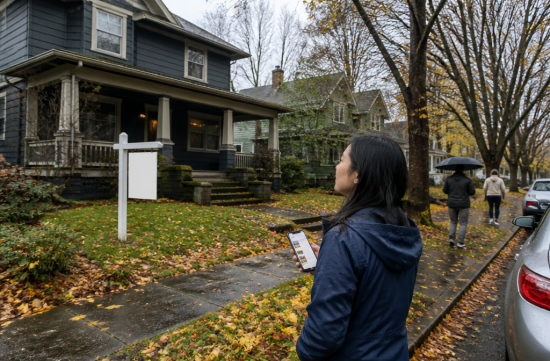
As October comes to a close, many are asking how home prices in Portland have fared. First, there's something important to note.
The local MLS, RMLS, typically releases October transaction statistics around mid-November. Therefore, the most recent confirmed figures available now, at the beginning of November, are the September numbers released in mid-October.
Today, I will summarize the September RMLS figures, along with rental data reflecting through October and this week's mortgage rates.
Let's start with the prices that everyone is curious about. The median sale price in the Portland metro area for September was $545,000, unchanged from September of last year.
The median price in August was $540,000, indicating a slight increase over the month. The average sale price was $630,500, which is 2.2% higher than last year.
The fact that the median price has remained stable while the average price has risen slightly suggests that the proportion of high-end home sales has increased a bit. It's important to note that this doesn't mean the entire market has risen. Headlines that only mention an increase in average prices can be misleading.
Transaction volume has clearly cooled. September closings totaled 1,752, down 4.0% from the same month last year.
More notably, pending sales, or contracts signed, dropped to 1,760, down 12.6% from August and 17.9% from September of last year.
Since pending sales typically lead to closings in one to two months, it's likely that the October transaction volume, which will be reported in mid-November, will also be weak.
On the other hand, new listings totaled 2,487, nearly the same as last year. The number of sellers remains steady, but the number of buyers has decreased.
As a result, inventory has increased to 4.2 months, which is 0.4 months higher than last year and the highest level so far this year. This means that at the current pace, it would take over four months to sell all the current listings.
The time it takes for homes to sell has also increased. The average market time in September was 68 days, which is six days longer than last year.
There's also data reflecting the current market atmosphere. According to a local brokerage blog that compiled SentriLock access records, buyer visits in September totaled 55,625, which is over 15% lower than September of last year.
From the same report, the percentage of listings that reduced their asking price by mid-October was 52.85%. This indicates that more than half of the listings have lowered their prices at least once, which surprised me as well.
However, this doesn't mean that sale prices have significantly dropped. It seems more accurate to view this as sellers adjusting their initial asking prices to align with reality, ultimately selling at prices similar to last year.
From January to September, cumulative closings totaled 15,649, which is 2.3% more than last year. The first half of the year was solid, but the market has cooled significantly in the fall.
The primary reason for this cooling appears to be interest rates. According to Freddie Mac's weekly survey, the average rate for a 30-year fixed mortgage on October 29 was 7.24%.
This is a slight decrease from the previous week's 7.32%, but compared to 6.17% a year ago, it's over a percentage point higher. This means that even with the same home prices, the monthly payment burden has increased significantly.
Now, let's look at rents. According to Apartment List's November report, the median rent in Portland as of October was $1,551.
A one-bedroom apartment averaged $1,409, while a two-bedroom averaged $1,671. This represents a 0.4% decrease over the month of October, but a 0.4% increase compared to last year.
The overall median rent for the metro area was $1,652, which is actually higher than the city itself. The annual change for the metro area is a decrease of 0.3%, essentially indicating stability.
Compared to the national median rent of $1,384, Portland's rent is 12.1% higher. However, given that rents have remained relatively stable throughout the year, this is a time when tenants can catch their breath. If you're approaching a lease renewal, this could provide grounds for negotiating the increase.
So, should you buy now or wait? There's no definitive answer, but the numbers do suggest a direction.
A market with increasing inventory and over half of the listings reducing prices indicates that buyers have more negotiating power. There may be opportunities to request closing cost assistance or repair credits.
Conversely, with interest rates in the 7% range, monthly burdens cannot be avoided. If I were in your position, I would avoid making a hasty purchase with the hope of refinancing later.
If you're considering investment, the calculations become tighter. With rents stagnant for a year and high interest rates, it's challenging to maintain cash flow solely from rental income.
For sellers, it's advantageous to price homes appropriately from the start. The longer a property stays on the market, the more likely it is that prices will need to be lowered, as reflected in the statistics.
In summary, as of October, Portland is experiencing a market where prices are holding steady, transactions are declining, and rents are stabilizing. Once the confirmed transaction figures for October are released, we will check to see if this trend continues.
The figures in this article are based on the RMLS September Market Action Report, the Apartment List November Rent Report, and Freddie Mac's weekly survey from October 29. There can be significant differences depending on the neighborhood and type of housing, so please check the numbers for your areas of interest separately.
 HoneyJoyful
 LifeReset








 Choco Choco Star |

 gentle |
 neapolis |

 moo moo |

 ultron78 |

 creamdough |
 jammybear |

 zephyrs |

 US Regional Information Blog |

 Oregon Our Neighborhood Story |
 See It |
 memorabilia |
 H Leader |
 Carolina border |
 xylora |
 linex |
 Victory 1988 |
 washington mom |
 Deep South Mississippi |
 moomoon |
 hexora |
 chiobase |
 jondol |
 tredolo |
 panda express |
 luido |
 norazoo |
 Oz's Wow Company |