

A friend who was only running one online store recently received a letter from the tax authority in another state. It was a notice that they had not registered for sales tax in that state.
They thought there was no reason to register since they had no physical store or warehouse in that state. This misunderstanding is a common mistake among small businesses.
The change in standards began with the U.S. Supreme Court's decision in South Dakota v. Wayfair on June 21, 2018. This ruling allowed states to impose tax collection obligations on sellers without a physical presence in the state.
This led to the concept of economic nexus, meaning that tax collection obligations are determined by sales revenue or transaction volume rather than physical presence.
The issue is that the thresholds vary by state. The most common threshold is an annual revenue of $100,000.
However, California, New York, and Texas have much higher thresholds of $500,000. Alabama and Mississippi have thresholds of $250,000.
In addition to revenue, transaction volume can also trigger obligations. A commonly used number is 200 transactions per year.
Fortunately, there is a trend to eliminate the transaction volume threshold. Illinois will eliminate the 200-transaction threshold starting January 1, 2026, and will only consider total sales of $100,000.
The burden of the transaction volume threshold becomes clear when you do the math. Selling a $20 item 200 times results in $4,000 in sales, but it still creates a registration obligation.
Conversely, there are places with no state sales tax at all. These include Alaska, Delaware, Montana, New Hampshire, and Oregon.
However, while Alaska has no state tax, local governments do collect their own taxes. For remote sellers, Alaska has a remote seller sales tax commission that operates a single point of contact, with participation thresholds of $100,000 or 200 transactions.
In summary, there are 45 states and Washington D.C. that collect state-level sales tax. This means that if you sell online nationwide, theoretically, all of these could be applicable.
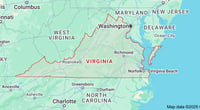
It's also good to check the standards in Virginia. If total retail sales exceed $100,000 or if there are more than 200 transactions, registration is required, and it applies if either the current year or the previous year exceeds the threshold.
The minimum sales tax rate is 5.3%, which includes a state tax of 4.3% and a local tax of 1%.
In Northern Virginia and Hampton Roads, the rate is 6%, and in the Historic Triangle, it is 7%. This means that even within the same state, the tax rate can vary depending on the delivery location.
Essential food items and essential hygiene products are taxed at a separate rate of 1%. This rate was reduced from 2.5% when the state tax portion of 1.5% was removed on January 1, 2023.
Next is the marketplace facilitator rule. This is a system where platforms like Amazon or eBay collect and remit taxes on behalf of sellers.
Therefore, if all sales are conducted through registered marketplaces, sellers typically do not need to register separately. Many people feel secure and let this slide.
According to Virginia's tax authority guidance, when determining the threshold, direct sales and sales through marketplaces are combined. This means that the determination of registration obligations and the actual tax collection entity should be viewed separately.
It becomes particularly ambiguous when running both a proprietary store and a platform. There are situations where sellers feel secure based on their proprietary store sales but get caught in the combined threshold.
At the local level, it gets even more complicated. At the time of the Wayfair decision, the issue was that there were over 10,000 jurisdictions imposing sales tax.
Among them, Colorado and Louisiana are considered the most complicated. Colorado has the SUTS portal, and Louisiana has a remote seller committee that consolidates local reporting into one place.
If you need to register in multiple states, it's worth looking into the streamlined sales tax program. There are 23 full member states, with Tennessee as an associate member, and registration can be done for free through SSTRS.
Some states also offer free rate calculations through certified service providers. If you are a seller with tight initial costs, it makes sense to check this route first.
This is the reality on the ground. Most people do not realize they have exceeded the threshold until months after they have done so.
Therefore, the first thing to do in practice is to track monthly sales and transaction counts by state. This kind of data is typically available from seller platform reports or accounting software.
If you exceed the threshold but delay registration, the uncollected tax amount continues to accumulate. This means it becomes money coming out of the business owner's pocket rather than money already collected from customers.
It's also easy to overlook that taxability of items varies by state. Be sure to check the primary items like clothing, food, and digital goods.
Honestly, having thresholds scattered at $100,000, $250,000, and $500,000 seems excessive. Large companies can absorb this with their tax teams, but it creates a barrier to entry for solo sellers.
In that sense, the trend of states eliminating the transaction volume threshold is welcome. I believe it's appropriate not to burden smaller businesses with unnecessary regulations.
If it were me, I would set the order like this. First, I would create a state-by-state sales tracking table, and if I see states approaching the threshold, I would then consider registration and tax consultation, which would be much more cost-effective.






 mapsina |
 Mr. Largo |
 Victory 1988 |
 Infinite Style |
 novapixel |
 virex |
 Next Year, Let's Become Rich |
 tervox95 |

 Kondae Garusong Blog |
  quiet river |
  shinee cho |
  alamo |
  Lol Life |
  Waiting for Godot |
  parlon |
  Say Yes in English |
  Sayonara H |
  rigid |
  Ohio Ohayoung Hello |
  U.S. Military Recruitment Information |
  You Turn Me On |
  DaeBak Electronics CNET |
  Anjollinya Blog |
  solid90 |
  elion |
  xylora |
  Study Abroad Life Know-How Tips |
  cheesepup |