

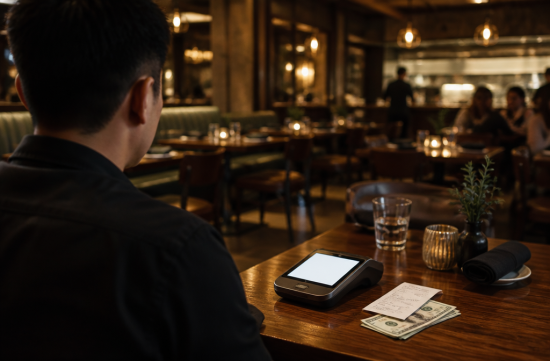
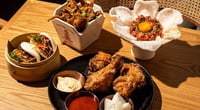
I recently heard about a new cold noodle restaurant that opened in LA's Koreatown, and it's quite interesting.
The place is called Hanta Naengmyeon, and they declared from the start that they would not accept tips. Instead, they put up notices at each table saying that while tipping is not mandatory, customers are welcome to leave a tip if they were satisfied with the food and service.
Interestingly, within just a month of opening, it became known as a hot new spot in Koreatown. This suggests that customer reactions have been quite positive.
In fact, it seems I'm not the only one feeling exhausted by the tipping culture in the U.S. In the past, if the bill showed a tip of around 15 to 18 percent, I accepted it, but nowadays, 18 and 20 percent are the norm, with some places even asking for 22 or 25 percent. It's no wonder people say calculating tips can be more stressful than the meal itself.
Whenever I travel to countries like Korea or Japan where tipping is nonexistent, I can't help but think how convenient it is. So, hearing about a restaurant in the U.S. that doesn't require tips is indeed refreshing, but the problem is that it's not as simple as it sounds.
A well-known restaurant group in New York, led by Danny Meyer, made a similar attempt in 2015. They included service charges in menu prices and paid their staff fixed salaries instead of tips. However, after five years, they reverted to the original system. The reason is interesting: 40 percent of long-term employees left because their income decreased. While it may have been convenient for customers, servers ended up making less money than when they received tips.
This highlights the crux of the tipping abolition debate. Eliminating tips can make pricing more transparent for restaurants and reduce stress for customers when paying, but the costs ultimately need to be incorporated into menu prices, and the entire wage structure for employees must be reworked. This is not as straightforward as it sounds. Some restaurants have opted to eliminate tips altogether but automatically add a service charge of 18 to 20 percent to the bill, which has been criticized for being not much different from tipping.
In Florida, the law stipulates that employees who receive tips are not paid the full minimum wage but can make up the difference with tips. Currently, the minimum wage for tipped employees is $10.98 per hour, which will increase to $11.98 on September 30 of this year, while the general minimum wage will rise from $14 to $15. This difference is referred to as a tip credit, allowing employers to cover up to $3.02 with tips. If tips are completely eliminated, this structure would be disrupted, significantly increasing labor costs for restaurants.
Personally, I agree that the tipping culture shifts the burden of payment onto customers, and I believe it needs to change eventually. However, it would be problematic if the transition process negatively impacts employees who rely on tips for their livelihood. I think it's essential to carefully assess whether employees' incomes will actually decrease when restructuring the wage system.
There are also claims that modern payment terminals prominently display tip percentages, leading customers to choose higher amounts. The payment systems are designed to encourage tipping, so the no-tip policy seems to reflect customers' desire to escape this pressure from payment screens.
It remains to be seen how the Hanta Naengmyeon case will establish itself in the future, but I want to support such attempts. The next time I visit Koreatown, I plan to stop by and check it out for myself.






 Infinite Style |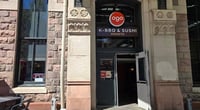
 Jellia Angel |
 Investment Campus Home Ownership |
 zenvior |
 El Dorado |
 There Are Such Things in the World |
 California Dreamer |

 Lightning Sikhye Cooking Method |
  Victory 1988 |
  Coding Elf |
  Mr Cleveland |
  Sugar Cream Door Bulletproof Noodles |
  novapixel |
  lavender |
  macan 08 |
  Goroke Geureoke News |
  colo colo |
  U.S. Weather Bureau News |
  Dragon Lee |
  American Food Information & Calories |
  zephyrs |
  ness 6 |
  Montgomery Mom |
  SteelOrbit |
  Puddle Puddle |
  Arizona Cowboy |
  macaronpop |