
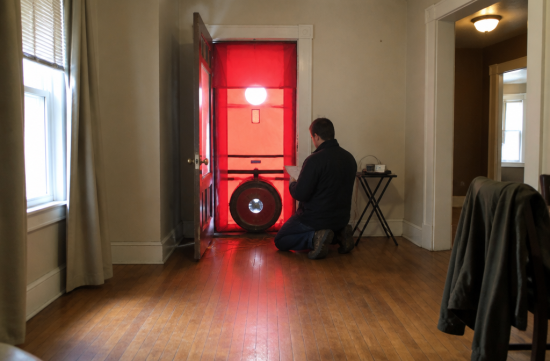
Last month, I paused when I saw my gas bill. The size of the house hasn't changed, but the numbers have grown on their own.
People around me suggested getting an energy audit, so I started by checking the price. The national average is reported to be $437.
It's ironic that I started this to save money, but it begins with a cost of $437.
To cut to the chase, many households don't need to pay this amount. There are at least three ways to get it for free.
However, there's one change starting this year. The federal 25C credit, which reimbursed up to $150 for energy audit costs, ended on December 31, 2025.
The One Big Beautiful Bill Act, signed in July 2025, terminated both 25C and 25D at once. However, if the work is completed by the end of 2025, you can still claim it using Form 5695.
So this year, instead of getting reimbursed for an audit, you need to find an audit that is free from the start.
The first option is an online utility diagnostic. PG&E's Home Energy Checkup asks questions about your home and lifestyle patterns and provides customized savings suggestions in just five minutes.
The second option is a free audit that reads smart meter data. HomeIntel offers free smart audit accounts and dedicated energy coaches to PG&E and CCA customers with 12 months of smart meter records.
Participants reportedly save an average of $350 per year. There's no need for someone to come to your home.
The third option is the key. PG&E's Energy Savings Assistance program sends a representative to your home for a free diagnosis, and any applicable measures are also installed for free.
The eligibility criteria are relatively lenient. Homes older than five years, mobile homes, and apartments qualify, and renters can apply as well.
The income limit is set at 200 percent of the federal poverty line, and the current guidelines are valid until May 31, 2027. The application phone number is 1-800-933-9555.
If you are already enrolled in CalFresh, Medi-Cal, SSI, or WIC, you won't need to provide income verification documents.
If you've made it this far, consider applying for the CARE rate discount as well. It offers discounts of over 20 percent on gas and over 35 percent on electricity, which can be quite significant.
So when does it make sense to pay for an audit? It's worth it for older single-family homes or when each room has different temperatures, and you can't find the cause.
If you get a blower door test or thermal imaging separately, each will cost between $150 and $400.
A standard diagnostic that combines both costs between $300 and $500, while a detailed audit that includes HERS ratings costs over $500.
If it were me, I would first go through the three free options, and only open my wallet if I still can't find the cause.
Of course, the audit itself doesn't generate income. You need to take the results and seal the leaks to see a change in numbers.
The EPA estimates that adding air sealing to attic and crawl space insulation can reduce heating and cooling costs by an average of 15 percent and overall energy costs by 11 percent.
National evaluations show that households participating in the federal weatherization assistance program saved an average of over $372. The income limit is also set at 200 percent of the poverty line.
Honestly, the situation with grants isn't great. The California HEEHRA single-family home rebate has been fully reserved as of February 24, 2026, and new applications have stopped, now being placed on a waiting list.
When the budget was available, the amounts were up to $8,000 for those below 80 percent of AMI and up to $4,000 for those between 80 and 150 percent. For multi-family units, the maximum was $14,000 per unit, which is still open.
That's how first-come, first-served grants work. Even with good intentions, it often comes down to who gets the information first.
That's why I don't center my plans around grants. I prefer to design my approach so that if they're available, it's a bonus, but if not, it's not a loss.
City-level programs still have some availability. Clean Power SF offers a credit of $50 per month for 24 months, totaling $1,200, if you switch to a heat pump water heater.
CARE or FERA discount customers can receive this for up to three years.
In summary, here's the plan: start with an online checkup to get the big picture, narrow down the issues with a smart meter audit, and if eligible, receive a free in-home audit and installation.
Then, focus on any remaining rebates. If you reverse the order, you'll spend money and end up on a waiting list as the seasons change.
I believe it's much more beneficial to get three free diagnostics and seal even one leak than to pay for a $437 audit.








 Softy |
 Michigan Enthusiast |
 Anna Life |
 JESIKYEOALBA BLOG |
 Dad's Tribute TC |
 Sugar Cream Door Bulletproof Noodles |
 Strawberry Pancake Warrior |
 The Emperor Must Grow |
 Nuchuhan Exploration BLOG |
 Ohio Ohayoung Hello |
  U.S. Military Recruitment Information |
  You Turn Me On |
  DaeBak Electronics CNET |
  Anjollinya Blog |
  solid90 |
  elion |
  xylora |
  Study Abroad Life Know-How Tips |
  cheesepup |
  carpflow |
  mapsina |
  Mr. Largo |
  breezem |
  Omelet Rice for Strength |
  Vermont Capt |
  waltz |
  Shoot Me |