
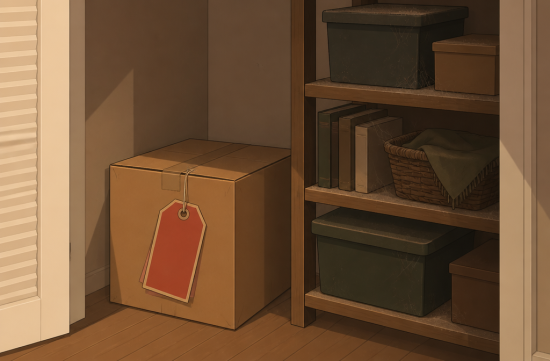
Last month, while organizing my storage, I discovered an electric grill still in its box, untouched. I had been lured by the 40% discount during Black Friday, yet I had never used it.
This experience is not unique to me. According to a recent survey, 84% of consumers reported making impulse purchases in the past year, and 44% of them regretted their purchases immediately afterward. Interestingly, among those who regretted their purchases, 45% chose to keep the items instead of returning them. The money has already been spent, and the items just gather dust in drawers or storage.
Why does this happen repeatedly? The answer is surprisingly simple. Sales disrupt our criteria for judging the value of items. When a product originally priced at $100 is marked down to $60, our brains react first to the fact that we saved $40 rather than whether we actually need the item. This is known as the anchoring effect; once the original price is established as a reference point, all subsequent judgments are influenced by it. In fact, a survey found that 72% of online shoppers make impulse purchases due to discounts or sales. This is not just a matter of individual willpower; it's a structural trap that affects nearly everyone.
The degree to which people fall into this trap varies by age group. One study found that 60% of consumers in their 20s reported regretting their purchases, while only 21% of baby boomers felt the same way. Younger generations are more likely to make immediate purchases of items they see on social media, meaning they often don't have enough time to think things through. In an era where payment via smartphone takes just seconds, there's little room for careful consideration.
When phrases like "limited time offer" or "almost out of stock" are added, the urgency to decide increases. The anxiety of missing out can overshadow rational calculations. Once a purchase is made, the psychology of justifying that choice kicks in. This is why people often choose to keep unused items rather than return them; returning an item means admitting that the decision was wrong, so it's easier to tuck it away and pretend it never happened.
Ultimately, the true cost of an item bought on sale is not just the number on the receipt, but the space it occupies and the likelihood that it will never be used again. Even if you bought it for $60, if you never use it, it's like throwing away $60. In fact, it could be a more wasteful purchase than buying something at full price after careful consideration.
I believe that instead of relying on government regulations or consumer protection campaigns, individuals should establish their own criteria for making decisions. To resist the external stimulus of sales, one must have personal principles. I ask myself three questions: Would I buy this item at this price if it weren't on sale? Can I substitute it with something similar I already own? Will I still feel I need it a week after the purchase? I only hit the checkout button if I answer yes to all three questions.
This principle isn't grand; it's simply a habit of pausing for a few extra seconds before hitting the checkout button. However, those few seconds can significantly reduce the number of mysterious small charges on my credit card statement each month. Since it's a standard I set for myself, I have a clear reason to adhere to it, and when I fail, the only person to blame is myself, which actually serves as motivation.
Sales themselves aren't bad. Buying items you genuinely need at a lower price is a rational purchase and can be seen as a smart buy. The problem arises when we mistakenly believe we need something simply because it's discounted. The next time you see a sale banner, I encourage you to consider whether that item truly adds value to your life, rather than just focusing on the discount rate.





 Michigan Enthusiast |
 Anna Life |
 JESIKYEOALBA BLOG |
 Dad's Tribute TC |
 Glow Yo |
 Real Estate Investment Korean American |
 hardu |
 rigid |
 Ohio Ohayoung Hello |
 strongman |
  parlon |
  Shoot Me |
  festive |
  You Turn Me On |
  Supplemental Security Income (SSI) Information |
  Sams Market |
  ansdal |
  VVV 80 |
  BIODOCTOR NEWS |
  Gold Bar |
  Tamfa Fan |
  Jenny's Mom blog |
  Karina's Blog |
  Best Frozen Yogurt |
  Victory 1988 |
  Coding Elf |
  Infinite Style |
  Mr Cleveland |