
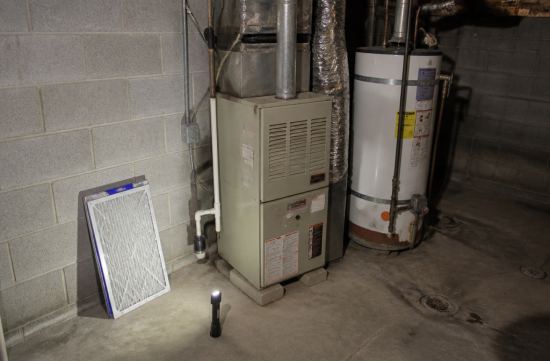
Last winter, my neighbor's furnace stopped working in the middle of the night. When I called a technician, I was told it would cost $800 for parts replacement.
That house was covered by a home warranty. I only had to pay a $100 service call fee, and that was the end of it.
However, around the same time, another house had its air conditioning outdoor unit fail, but the warranty company denied the claim, citing lack of maintenance. Despite paying the same monthly fee, the outcomes were completely different.
This is the reality of home warranties. They are not universally good or bad; the results depend on the condition of the home.
First, let's get to the numbers. As of 2026, the average annual fee for a home warranty is reported to be $1,049.
Most plans range from $350 to $900 per year. When broken down monthly, that averages around $60.
But that's not all. Each time a technician visits your home, you pay a separate service call fee ranging from $75 to $150.
If you add on extras like a pool or special HVAC systems, you can expect to pay an additional $180 to $250 per item annually. At this point, it's hard to call it cheap insurance.
So, before signing up, you need to consider not just the monthly payment but the total annual expenditure. Calculate the annual fee plus the service call fees based on how many times a technician will visit.
The most important factor is the coverage limit.
Plans often have coverage limits ranging from $1,500 to $3,000 per item.
American Home Shield covers up to $5,000 for HVAC systems, and both 2-10 Home Buyers Warranty and Home Warranty of America also have a $5,000 limit for HVAC.
However, replacing an entire HVAC system costs between $11,590 and $14,100 as of 2026.
If you have a contract with a $3,000 limit, that means you'll have to pay the rest out of pocket. Honestly, that was a bit disheartening.
Let's also touch on claims being denied. According to a Consumer Reports survey, 44% of warranty holders had their claims denied or received only partial payment.
The top two reasons for denial were pre-existing conditions and items not included in the plan, each accounting for nearly 29% of cases.
20% of claims were denied because repair costs exceeded the coverage limit, and 13% were denied due to lack of maintenance.
However, there is data suggesting that if you formally appeal, 40 to 60% of those denials can be overturned. Don't just give up after one denial.
Still, 68% of homeowners indicated they would renew their contracts, while only 10% said they would not. This suggests that satisfaction isn't completely lacking.
So, what kind of homes should get a warranty? The key factor is the age of the systems.
The average lifespan of a gas furnace is about 18 years, while an electric furnace lasts around 15 years.
Electric water heaters last about 11 years, gas water heaters around 10 years, and refrigerators typically last between 9 and 13 years.
Homes with systems in the mid-range of these lifespans, roughly between seven and twelve years old, tend to get the most value from a warranty.
That's when failures start to occur, but the systems aren't old enough to be dismissed as just worn out.
Keep in mind that these lifespan numbers are averages. Well-maintained systems can last longer, while neglected ones can fail much sooner.
So, don't throw away receipts for filter replacements or regular maintenance records. They are the best evidence to prevent a lack of maintenance claim.
Homes that have changed ownership recently also fall into this category. Without knowing the history of the systems, it's hard to predict when a major expense might hit.
If you lack DIY skills and don't have a reliable technician's contact, that adds another reason to consider a warranty.
On the flip side, there are definitely homes where a warranty isn't worth it. Homes that have had systems replaced in the last five years are a prime example.
If the manufacturer's warranty is still valid, paying hundreds of dollars each year for coverage on the same parts doesn't make financial sense.
If the systems are already over twenty years old, that's also questionable. The likelihood of being filtered out due to pre-existing conditions or lack of maintenance increases significantly.
Remember that many companies have a 30-day waiting period after signing a contract. If your air conditioner is already making noise, rushing to sign up won't help.
Homes with ample emergency funds also don't necessarily need a warranty. Replacing a 50-gallon water heater, including installation, averages around $1,800 nationwide. If you can cover that amount in cash, it's better to save the $60 a month.
When you receive the contract, there's a specific order to read it. Look for the coverage limits, exclusions, and waiting periods first.
So, to summarize from a homeowner's perspective:
A home warranty is not a product that reduces repair costs; it's a product that converts unpredictable expenses into a fixed monthly payment.
If I were you, I would sign up for a warranty on a home with systems around ten years old, but I wouldn't get one for a recently repaired home or one with a solid emergency fund.
In the end, those who read the conditions first win in both home management and life.






 Softy |
 Michigan Enthusiast |
 Anna Life |
 JESIKYEOALBA BLOG |
 Dad's Tribute TC |
 Ohio Ohayoung Hello |
 Real Estate Investment Korean American |
 hardu |
 strongman |
  rigid |
  U.S. Military Recruitment Information |
  You Turn Me On |
  DaeBak Electronics CNET |
  Anjollinya Blog |
  solid90 |
  elion |
  xylora |
  Study Abroad Life Know-How Tips |
  cheesepup |
  carpflow |
  mapsina |
  Mr. Largo |
  breezem |
  Omelet Rice for Strength |
  Vermont Capt |
  waltz |
  Shoot Me |