

Recently, I came across a post in a Korean online community. It was about someone who, after two years of listing their handmade embroidery items on Etsy, had their shop income surpass their day job salary.
There were over a hundred comments, and most of the questions were the same. People wanted to know how they did it.
This question lingered in my mind for a few days, prompting me to look into official data and statistics.
First, let me pour some cold water on this: Etsy is not a growing market right now.
According to Etsy's announced annual performance for 2025, the total transaction volume is $11.92 billion, which is a 5.3 percent decrease from the previous year.
If we look at the Etsy marketplace alone, the transaction volume is $10.46 billion with 5.6 million active sellers.
Dividing these two numbers shows that the annual transaction volume per seller is just under $2,000.
Of course, the top few sellers skew the average, so many sellers actually earn much less than this. Therefore, cases where income exceeds a day job salary are more of an exception than a rule.
According to the same report, there are 86.5 million buyers on the Etsy marketplace. When compared to the 5.6 million sellers, you can get a rough idea of the competition density.
On a company-wide basis, there are 93.54 million active buyers, which is a 2 percent decrease from the previous year.
In contrast, the company's revenue is $2.88 billion, which is a 2.7 percent increase. This means that while transaction volume has decreased, the share that the platform takes has increased.
In fact, the revenue-to-transaction volume ratio is reported to be 24.2 percent. This is not a favorable direction for sellers.
When looking at the exceptions, there were a few overlapping points.
The first noticeable point is that these individuals calculated the fee structure before making their products.
Etsy charges $0.20 per listing, and when a sale occurs, they take a transaction fee of 6.5 percent.
Additionally, for U.S. sellers, there is a payment processing fee of 3 percent and an additional $0.25.
Then there are offsite ads. If sales are under $10,000 in the last 365 days, a 15 percent fee is charged on orders from those ads; if sales exceed $10,000, the fee is 12 percent.
The really important point is that once you exceed $10,000, participation in these ads becomes mandatory.
When under $10,000, you can opt out, but once you exceed that, you cannot opt out. The maximum advertising fee per order is capped at $100, which is a small safety net.
So, during the period when sales start to pick up, the actual take-home pay can appear quite thin. The experience of those who accounted for this in advance versus those who did not is completely different.
The second overlapping point was taxes.
The criteria for issuing a 1099-K have recently changed again. Under federal guidelines, you must exceed $20,000 in annual income and have more than 200 transactions to receive one.
The problem is that just because you don't receive paperwork doesn't mean you're exempt from taxes. Income is subject to reporting regardless of the amount.
Moreover, some states have a low threshold of $1,000, so even if you fall far short of the federal threshold, you may still receive paperwork.
If your net profit exceeds $400, you become subject to self-employment tax.
The tax rate is 15.3 percent, which combines Social Security at 12.4 percent and Medicare at 2.9 percent. As of 2026, the income cap for Social Security tax is $184,500.
However, half of the self-employment tax paid can be deducted when calculating adjusted gross income.
If you expect your tax bill to exceed $1,000, you should also keep an eye on quarterly estimated payments.
There are also registration issues. In New Jersey, you must register using the NJ-REG form at least 15 days before starting business activities, and there is no fee for registration itself.
After organizing all this, I found that the common traits were surprisingly simple.
First, they set prices based on take-home pay rather than sales. This means they looked at the money left after deducting fees and taxes.
Second, they focused on products that are not one-time purchases but rather items that encourage repeat customers.
Third, they converted the time it takes to make items into an hourly rate and compared it alongside their day job pay rate.
Fourth, they established a cutoff point. They set a line indicating when they would stop if they didn't see a certain amount of income.
Additionally, I want to add a research finding.
According to a survey conducted by Bankrate in June 2025, 27 percent of 2,616 adults reported having a side hustle. This is a significant drop from 36 percent in 2024.
The average monthly income was $885, but the median was $200.
I found the gap between the average and median, which is over four times, to be the most striking. It shows how much a small number of individuals can skew the overall picture.
Among side hustle types, online sales were the most common at 15 percent, followed by handmade goods at 9 percent.
Ultimately, those who surpassed their day job salaries were not particularly lucky. They had been crunching the numbers long before they made the leap.
If it were me, I wouldn't set a sales target for the first three months. I would focus solely on getting familiar with the fee and tax structures.
Then, I would calculate how much is left per hour and only get serious when that number approaches my day job pay rate.
Rather than a flame that burns bright and quickly, a light that glows softly like moonlight seems much more suited for this kind of endeavor.


 mapsina |
 Mr. Largo |
 Victory 1988 |
 Infinite Style |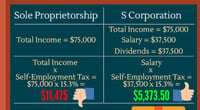
 novapixel |
 eatontown blog |
 Uptown |



 quiet river |
  shinee cho |
  alamo |
  Lol Life |
  Waiting for Godot |
  parlon |
  Say Yes in English |
  Sayonara H |
  rigid |
  Ohio Ohayoung Hello |
  U.S. Military Recruitment Information |
  You Turn Me On |
  DaeBak Electronics CNET |
  Anjollinya Blog |
  solid90 |
  elion |
  xylora |
  Study Abroad Life Know-How Tips |
  cheesepup |
  carpflow |