

Simply put, this is when a defendant does not insist on their innocence but instead admits guilt in exchange for negotiating a lighter sentence with the prosecutor.
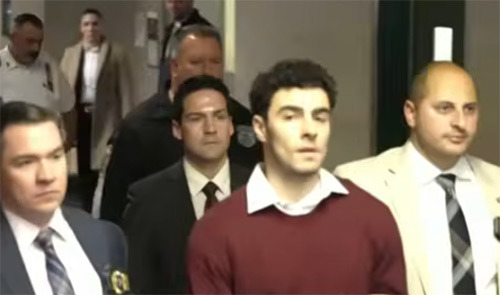
Recently, there was news that Luigi Mangione, the suspect in the shooting incident involving UnitedHealthcare CEO Brian Thompson, unexpectedly pleaded guilty in federal court.
Pleading guilty? My first thought was, "Ah, he must have struck a deal with the prosecution," but upon closer inspection, it wasn't a typical plea bargain.
Mangione confessed on August 14 in front of a federal judge, saying, "I tracked Thompson and ultimately shot him."
However, what's interesting is that this was not a typical 'plea deal' arranged in advance with the prosecution regarding sentencing.
It wasn't like he signed a contract saying, "If I confess, you'll reduce my sentence to 20 years."
The prosecution is still sharpening their knives, insisting, "He should get life in prison."
So, if the prosecutor isn't offering a reduced sentence, why did he voluntarily plead guilty?
This brings us to the unique and complex legal battles characteristic of the American criminal trial system.
In fact, admitting guilt honestly without dragging the case through a lengthy trial can be beneficial at sentencing, but in this case, it seems to be part of a much larger strategy.
Mangione is facing a separate murder trial in New York State in addition to the federal case.
The state trial was scheduled to start on September 8, but he unexpectedly pleaded guilty in the federal case first.
Then, his legal team immediately played their next card.
"Since he has already pleaded guilty in federal court for the same incident, is it appropriate for New York State to try him again for murder? Isn't this a violation of Double Jeopardy?"
They requested that the murder charges in New York be dismissed altogether.
Of course, the prosecution disagrees. In the U.S., there is a principle known as 'dual sovereignty,' which means that both the federal and state governments have independent authority, allowing for separate prosecutions for the same act under federal and state law.
Therefore, this guilty plea is difficult to view simply as, "I'll admit guilt, so please reduce my sentence."
Rather, it seems more like a legal strategy by Mangione's defense team to first resolve the federal case and then determine how to leverage that outcome in the New York murder trial.
However, whether this strategy will actually work is a completely different question. Just mentioning Double Jeopardy does not automatically dismiss the state case.
But why has it become so common in the U.S. for judges, prosecutors, and defendants to negotiate sentences?
The most realistic reason is simply that there are too many cases.
If every case were taken to trial with juries, the burden on prosecutors, judges, and courts would be overwhelming.
For defendants, there is a significant risk of receiving a much harsher sentence if they go to trial and are found guilty.
Thus, prosecutors secure convictions, and defendants negotiate to lower their sentencing risks.
For example, consider someone facing multiple charges who could receive a 30-year sentence if all charges are pursued.
The prosecutor might say, "Just admit to the most serious charge, and I'll recommend a 10-year sentence in exchange for dropping the others."
Then the defendant, feeling somewhat unfairly treated, has to weigh the options between '30 years if things go wrong' and '10 years guaranteed.'
This is the scene depicted in American movies where a prosecutor throws a file and says, "Take the deal."
However, plea bargains are not unique to the U.S. Many countries have similar systems where confessing can lead to reduced sentences.
But few countries have a system as integral to the entire judicial process as the U.S. does.
That's why, in American courtroom dramas or news reports, discussions often start with whether a deal has been made rather than the details of the trial itself.
This is what makes the Mangione case particularly intriguing. At first glance, the headline suggests, "Guilty plea? He must have struck a deal," but in reality, it's not a typical plea bargain; he took the risk of admitting to murder in federal court himself.
At the same time, he seems to be trying to dismiss the state murder trial with the argument that since he has already pleaded guilty in federal court, the state trial should be invalid.
After following U.S. news for a while, one often feels that trials here resemble a chess game played by true masters.
This is why high-paid lawyers can thrive in this system.
With enough money, a lawyer can calculate which court to approach first, which charges to negotiate, and how this strategy might impact other trials.
Mangione has made a significant move, but the risk of receiving a life sentence in federal court still looms large.
Ultimately, whether this will lead to a reduced sentence, successfully dismiss the New York murder trial, or result in failure on both fronts remains uncertain.
This news is not just about pleading for a sentence deal; it appears to be a strategic move where he has thrown down the massive card of 'guilty plea' and is now ready to start the real fight.
 TexasMan
 ChaChaCha404
 CornCafe







 Alpha and Omega World |
 Florida King |
 AH LALA |
 Victory 1988 |
 Panorama Kstar |
 newyorker 101 |
 Encyclopedia of New York and Surrounding Areas |
 International Court |
 Living with a Consistent Heart |
 Things to Do to Buy a House |
  orvik90 |
  San Gabriel Mountains |
  quanta7 |
  Fransco Family |
  leonee |
  Augusta 90 |
  Project Tomorrow |
  DOCTOR MED |
  Say IT Now |
  Always Dreaming of Big Success |
  NEXT ROUND |
  Helpful Life Stories |
  Healthy Local Fresh Information |
  molten |
  Way to easy |
  intact |
  happy 9 |
  Park M.Y. |
  tredon |