

When working at a company, everyone thinks about taking a different path at least once. Especially in today's environment, where companies can let people go at any time, those thoughts tend to creep in even more.
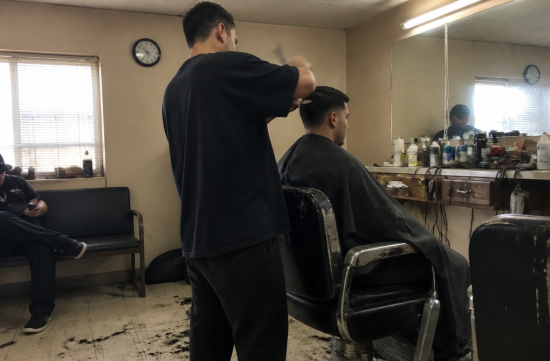
Among those thoughts, discussions about hairdresser or barber licenses come up quite often. This is likely because you can start without a college degree, and the image is that if you have the skills, you can make a living anywhere.
However, when you actually break down the numbers, the calculations are more complicated than you might think. You have to consider not just tuition but also the time required to obtain a license and the actual income after getting certified.
First, looking at the hairdresser, or cosmetology, license, the total average cost of school is about $16,251. This amount includes not only tuition but also the cost of the practical kit and the state licensing fees.
However, there is quite a bit of variation within this average. If you go to a community college, it can end up costing between $5,000 and $10,000, while private beauty schools can range from $15,000 to $25,000.
On the other hand, the barber license has a different structure. The required practical hours vary by state, ranging from a minimum of 500 hours to as much as 1,800 hours, so the time it takes to prepare can differ significantly depending on the state.
For example, Texas and New York require around 1,000 hours, while California, Georgia, and Illinois require 1,500 hours. It's interesting how the same license can have such different requirements just by crossing state lines.
Florida is considered to have relatively low barriers to entry in this field. If you receive a school evaluation, you need to complete either 600 or 900 hours, and there is no separate practical exam, making it one of the states where you can open your business the fastest.
Additionally, a mandatory 2-hour HIV/AIDS education course costs about $10 to $25, and the final licensing fee is approximately $75 to $90. This is relatively low compared to many other licenses.
In Florida, however, the required hours for cosmetology jump to 1,200. Tuition also ranges from $10,000 to $20,000, making it significantly more time-consuming and expensive than barbering.
Personally, every time I see this licensing system, I think that the fewer regulations there are, the quicker opportunities arise to prove one's skills. As paperwork and time increase, the barriers only get higher, often unrelated to actual scissor skills.
To put it sharply, the total cost of obtaining a license is often less than a semester's tuition at a college. The entry cost is definitely light.
Then, after obtaining the license, how much you actually earn becomes important. According to the Bureau of Labor Statistics data from May 2024, the median annual income for the combined occupations of barber, hairstylist, and cosmetologist was $35,420.
Breaking it down by occupation shows some differences. For barbers alone, the median hourly wage was $18.73, while hairdressers, stylists, and cosmetologists earned $16.95.
It's noticeable that barbers tend to earn slightly more per hour. However, this statistic often does not fully reflect tip income, so the actual take-home pay could be better than this figure suggests.
The job outlook is also promising. Employment in this field is expected to grow by 5 percent from 2024 to 2034, which is classified as a faster growth rate than the average for all occupations.
As of 2024, there are already 651,200 jobs in this field, so the scale is not small. At least, you likely won't have to worry about not finding a job after getting your license.
However, there is a catch. Just having a license does not guarantee that you will earn the median income; how you work can greatly affect your actual earnings.
Many barbershops operate on a booth rental basis, which means you become self-employed and have to pay a self-employment tax of 15.3 percent. You also need to pay booth rent weekly, which can range from $200 to $600, translating to an annual fixed cost of $10,400 to $31,200.
There are also places that operate on a commission basis, where it is common to take home about 40 to 60 percent of the sales. While this is stable, it also means that the upper limit on earnings is lower, creating a trade-off.
Ultimately, while the cost of obtaining a license is not burdensome, the real challenge lies in how quickly you can secure clients afterward. The initial months may involve more waiting for clients than you might expect.
So, if you are considering this path, I recommend checking the state government website for the required hours and renewal conditions before registering. Since the continuing education hours and renewal cycles vary by state, it's better to be prepared in advance to avoid surprises later.
Even for the same license, the booth rental costs and client rates can differ depending on whether you are in an urban or suburban area. In neighborhoods with high rent, the fixed costs increase, but the client rates also tend to rise, so ultimately, where you set up shop can greatly influence your return on investment.
In summary, the initial investment is definitely light, and the recovery speed is relatively fast, making it a decent option in terms of return on investment. However, it is essential to remember that turning that return into reality depends not on the license itself but on your scissor skills and client management.
 MelonSearch







 AH LALA |
 Victory 1988 |
 Panorama Kstar |
 Giant Squid and Sweet Potato Soup |
 Lol Life |

 Dr. Kelso |

 Komet Park |
 AUTO OK |
  aaoaa |
  Florida King |
  Encyclopedia of New York and Surrounding Areas |
  Study Abroad Life Know-How Tips |
  Conflite Teacher |
  Silent Sea |
  Montgomery Mom |
  Franco Family |
  coloradoman |
  lumora |
  Valley Bang |
  pravix22 |
  Cohesive Kong |
  werehere |
  CA Real Estate |
  problemo |
  galaxy88 |
  breezelove |