
In Georgia, even at the end of September, the midday sun is still quite hot. However, the morning air has definitely changed. For the past few days, when I open the window, a cool breeze rushes in, signaling the change of seasons.
As I observe the weather quietly changing, I suddenly had another thought. My attitude towards the news has also quietly changed without me realizing it.
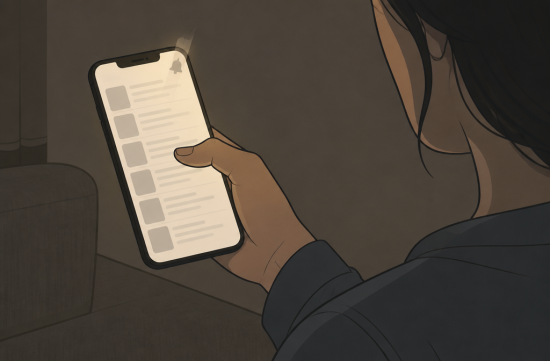
Recently, there was breaking news about a shooting, and I found myself scrolling down the screen without even thinking. A few years ago, I would have stopped to read the entire article.
In that moment, I was a bit surprised at myself. Am I becoming desensitized, or is there another reason for this?
Living in America, it often feels like there are few weeks that go by without hearing about gun violence in the news. Consequently, I often hear that Americans have become numb to gun violence.
However, this claim is actually quite divisive among researchers. Some argue that it is true, while others vehemently disagree.
Psychologist Jeff Temple believes that repeated exposure can lead to desensitization. The logic is that the brain processes it as part of everyday life the more you see it.
On the other hand, Northeastern University sociologist Jack Levin directly refutes this claim. He argues that people are not ignoring gun violence; they are still in shock.
Social psychologist Leonard Newman goes even further, suggesting that, over time, people may actually be becoming less desensitized. This is quite an interesting twist.
Looking for actual data among these conflicting claims, the numbers were quite clear. A survey conducted by the American Psychological Association, commissioned by Harris Poll, found that 79 percent of 2,017 adult respondents reported feeling stressed due to the possibility of mass shootings.
Moreover, one in three, specifically 33 percent, reported avoiding certain places or events because of this fear. This level of concern cannot be considered a completely indifferent reaction.
Specifically, the percentage of people worried about gun violence at public events is 53 percent, at shopping malls 50 percent, at schools or universities 42 percent, and at movie theaters 38 percent. This means that everyday life is filled with concerns.
Honestly, I was a bit surprised to see these figures. While on the surface, everyone seems indifferent, it indicates that many people are still quite tense inside.
So why do we say to each other that everyone has become numb? It seems that the way we react to the news and the fear we actually feel exist on different levels.
Turning to policy, the situation looks a bit different. In a Gallup poll that asks monthly about the most important issues facing the country, gun issues rarely rank high.
The highest point was in March 2018, right after the Parkland shooting, but even then, it only reached 13 percent. Even after such a shocking event, the percentage that translates into political interest is only this much.
This aspect appears to be the real point of desensitization. While emotionally still fearful, the transition to policy discussions or voting behavior is another matter.
It is also worth examining the situation from the perspective of news production. A study published in 2026 analyzed the coverage of 263 mass shootings in the U.S. from 2013 to 2022.
The question raised by this study is exactly what I was curious about. As incidents recur, is the media really putting as much effort into reporting each one as they used to?
There are indications that as incidents become more frequent, the amount of coverage dedicated to each individual incident tends to decrease. This may suggest that it is not the readers who have become desensitized, but rather the newsroom's judgment that has changed first.
In summary, while people's fear itself has not diminished, the time the news spends covering it and the political interest does not last as long as it used to.
To lump these two together and say that Americans have become desensitized to gun violence seems like an unfair diagnosis. It is more a situation where emotions and actions are playing out separately rather than desensitization.
In psychology, this is sometimes referred to as compassion fatigue. The emotion itself has not disappeared, but as it continues to be consumed, people reduce their reactions to protect themselves.
In fact, those who are closely connected to this issue show completely different reactions. In one survey, one in five adults reported having been threatened with a gun, and one in six reported having directly witnessed someone being shot.
In this survey, 84 percent of respondents said they had some sort of preparedness plan for gun violence. The most common response was discussing gun safety with family or close friends.
This shows that people are definitely not sitting idly by. They simply do not pour their emotions into every breaking news story as they used to.
Personally, I would like to view this not as desensitization but as a kind of buffer. If we are constantly shocked and saddened at maximum capacity, we will not have the energy left for the moments that truly matter.
The simultaneous existence of a finger scrolling down the screen and the anxiety lingering in the back of the mind seems to reflect the true state of Americans today. It is not simply that they have become numb; people are still worrying a lot.
Just as the seasons change quietly without notice, I think the way people respond is also quietly shifting. I believe that the term adaptation fits better than desensitization in describing the current situation.
 skycityexplorer1961

 Alpha and Omega World |
 Florida King |
 AH LALA |
 Victory 1988 |
 Panorama Kstar |
 Carolina border |




 leonee |
  Augusta 90 |
  Project Tomorrow |
  DOCTOR MED |
  Say IT Now |
  Always Dreaming of Big Success |
  NEXT ROUND |
  Helpful Life Stories |
  Healthy Local Fresh Information |
  molten |
  Way to easy |
  intact |
  happy 9 |
  Park M.Y. |
  tredon |
  Poppin News |
  metsoo |
  dewyo |
  Casa Mia |