
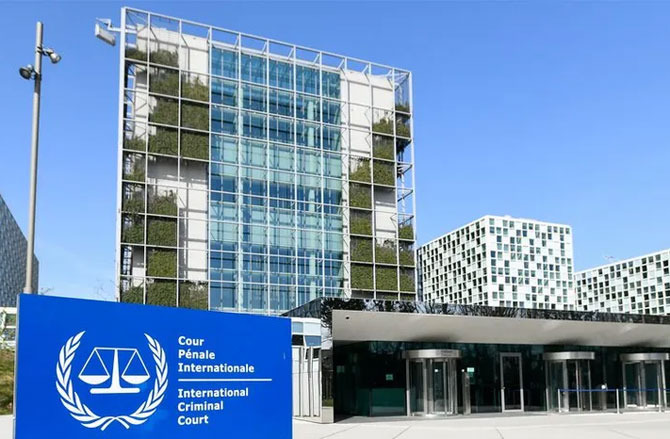
The International Criminal Court in The Hague, Netherlands, is commonly referred to as the ICC.
When thinking of an international court, one might imagine scenes of espionage or war crime trials, but in reality, it is a modern building with a surprisingly quiet and calm atmosphere.
The ICC was established in 2002. Although it is not a UN agency, it was created based on the international treaty known as the Rome Statute, making it the world's first permanent international criminal court in human history.
In simple terms, it is the only court in the world that punishes 'individuals rather than states' for crimes such as war crimes, genocide, and crimes against humanity.
Prior to this, all such trials were temporary setups.
For example, the Nuremberg Trials after World War II and the special tribunal known as the ICTR held after the Rwandan genocide are examples of this.
However, these courts were structured to disband once a particular case was concluded. Then the international community decided, "Let's make it permanent," leading to the establishment of the ICC.
The Hague, where the headquarters is located, is often referred to as the 'legal capital of the world' due to the concentration of international legal organizations in the city.
The International Court of Justice (ICJ), the International Criminal Tribunal for the former Yugoslavia (ICTY), and the Peace Palace are all located nearby.
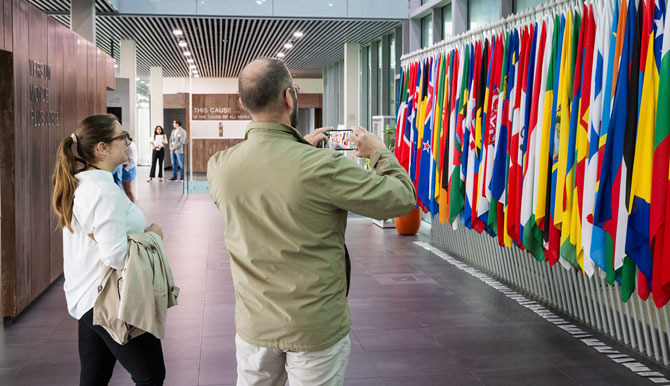
So, it's like a collection of symbols of international justice in one city. When I visited the ICC, I had to make a reservation in advance.
Public visits are allowed, but security is quite strict. I had to show my passport at the entrance and undergo thorough checks similar to airport security before I could enter. The interior was clean and modern, and the courtroom was smaller than I expected.
Rather than being grand like in the movies, the structure was divided by transparent glass walls, where judges, prosecutors, defendants, and interpreters worked in their respective booths. Given that it is an international court, a real-time simultaneous interpretation system was in operation, and by plugging in earphones, I could listen in my preferred language among English, French, Spanish, and Arabic.
It felt both distant and remarkable that humanity has ultimately created such a system.
The greatest significance of the ICC is that it serves as 'the last legal mechanism to hold accountable in an era of war and violence.' Of course, it is not perfect. Major powers like the United States, China, and Russia have not yet joined, leading to political criticisms of 'only punishing one side.'
However, despite this, the fact that there can be discussions about "being referred to the ICC" whenever human rights violations occur anywhere in the world is a significant change in itself. When I stepped outside the building, a gentle breeze was blowing, and a tram passed by in the distance.
If you go to The Hague, be sure to visit the ICC, not just the Peace Palace.








 newyorker 101 |
 Things to Do to Buy a House |
 International Court |
 Lunch and Dinner Mexican Taco |
 U.S. Weather Bureau News |
  Korean Mom |
  My NYC |
  moo moo |
  Mr Oh |
  forevergee |
  festival |
  manchester |
  constant |
  Leapfrog Move |
  vibranto |
  Tora Tora |
  yellowbutter |
  Dolly |
  US Embassy |
  NYC saladbar |
  Finding Superfoods |
  lightyear |
  song bang |
  vexomo |
  Indiana Jones |