

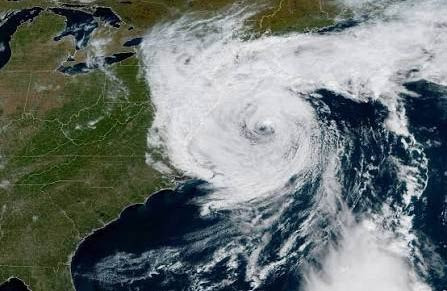
While watching the news in the morning, I initially thought a hurricane was coming up the East Coast when I saw the footage.
In New Jersey, seawater flooded the roads, and in New York, heavy rain and wind were battering the area, with waves crashing over the seawall.
The storm that hit the East Coast this time is a Nor'easter.
This is a name you often hear in winter news while living in the U.S., but this one is a powerful early fall Nor'easter that arrived in September.
A wide area from New Jersey to New York, Long Island, and New England is affected.
When you first hear the name Nor'easter, it sounds like a hurricane name.
Simply put, it is a low-pressure storm that develops along the East Coast of the U.S. and creates strong northeast winds.
The problem is that this storm did not pass quickly; it moved slowly near the coast.
As a result, it didn't just rain once and stop; the wind kept pushing seawater inland.
In some coastal areas of New York and New Jersey, roads were submerged, and residents were seen kayaking and canoeing through flooded neighborhoods.
The waves were also extraordinary. Off the coast of New Jersey and southern New England, waves over 16 feet were observed, with some areas expecting waves around 18 feet.
The winds were no joke either. In parts of Long Island, gusts exceeding 50 miles per hour were recorded, and JFK Airport recorded gusts of about 49 miles per hour.
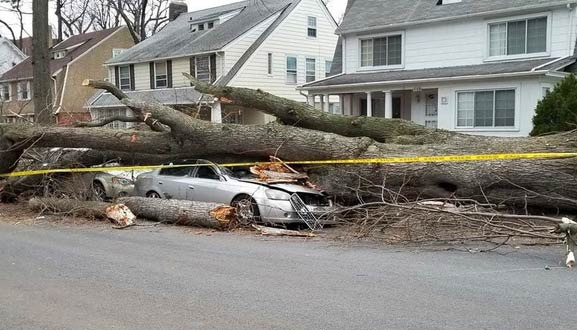
With many trees still full of leaves in September, many fell under the strong winds.
Unfortunately, there were casualties. In Brooklyn, a 56-year-old man was killed when a tree fell on him. Other tree-related accidents also resulted in injuries.
Power outages were significant. As of Sunday, reports indicated that over 100,000 households in various parts of the East were without power.
At the height of the storm, nearly 150,000 households reported outages.
In LA, even a little rain causes chaos, but the East is hit with rain, strong winds, and high waves all at once. In winter, snow is added to the mix.
Especially with this storm, even though it's not a hurricane, the damage footage looks quite threatening. When seawater rushes in, submerging more than half of car tires, and waves crash against the coastal boardwalks where people usually walk, it makes you realize that cities are no match for nature.
What's even scarier is the water. While the wind seems to pass, once seawater enters a neighborhood, it leads to damage to cars, homes, and electrical systems.
If high tide coincides with the storm, the damage can be much greater, even with the same storm.
Starting Sunday, the storm is expected to gradually weaken, but the risk of rain and coastal flooding continues in some areas. Parts of New England are expected to feel the effects longer.
According to the calendar, winter is still a long way off, but for people in the East, it's like a preview of the storm season ahead. LeaveIsMyth







 washington mom |
 California Dreamer |

 Investment Campus Home Ownership |
 U.S. Retirement Pension Information |
 newyorker 101 |
 International Court |
 Things to Do to Buy a House |
 Living with a Consistent Heart |
 NYC saladbar |
  AUTO OK |
  aaoaa |
  Florida King |
  Encyclopedia of New York and Surrounding Areas |
  Study Abroad Life Know-How Tips |
  Conflite Teacher |
  Silent Sea |
  Montgomery Mom |
  Franco Family |
  coloradoman |
  lumora |
  Valley Bang |
  pravix22 |
  Cohesive Kong |
  werehere |
  CA Real Estate |
  problemo |
  galaxy88 |
  breezelove |