
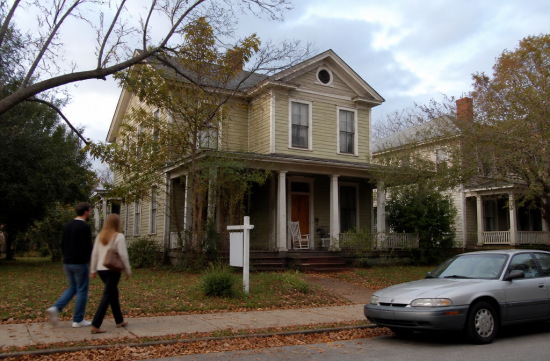
A while ago, a neighbor asked me this question while putting their house on the market: "Do I have to tell the buyer about the strange noises in this house?" It was half a joke, but their expression was quite serious.
Maybe it's because it's October, but that question has stuck in my mind. So, I looked up Georgia law directly.
Having worked in the automotive industry my whole life, this question doesn't feel foreign to me. Similar concerns often arise in the used car market.
Should you hide the history of a wrecked or flooded car? While cars have history reports like Carfax, rumors about a house are not documented anywhere.
First, let's look at the law. Georgia traditionally follows the principle of caveat emptor in real estate transactions, which means "let the buyer beware."
Therefore, state law does not require sellers to provide written disclosures. The commonly used Georgia Realtor Association's Seller's Property Disclosure Statement is not a legal requirement but a practice.
However, if a seller knows about hidden defects that are hard to find during an inspection and conceals them, that changes the situation. For example, covering up a roof leak with paint and pretending it doesn't exist is a clear case.
What about a house where someone has died? There is a specific Georgia law regarding this: O.C.G.A. 44-1-16.
This statute states that not disclosing facts or suspicions about a murder, other serious crime, suicide, accidental death, or natural death in the house does not create grounds for a lawsuit. This applies to homeowners, brokers, and agents alike.
At this point, it might seem like "you don't have to say anything." But there's a caveat.
If a buyer directly asks, the seller must answer truthfully to the best of their knowledge. It's okay to remain silent, but lying is not allowed; that's the line in Georgia.
However, from what I've read, the term "ghost" or "supernatural phenomenon" does not appear anywhere in this statute. The statute deals with facts related to death, crime, and diseases that are difficult to transfer with the property.
So, it's hard to definitively say that rumors of "footsteps at night" fall under this statute. When in doubt, consulting a real estate attorney is the most cost-effective option.
There's a well-known case that often comes up in discussions about this. It's the 1991 New York appellate court case Stambovsky v. Ackley, also known as the Ghostbusters ruling.
Jeffrey Stambovsky, who bought a Victorian house in Nyack, New York, signed a contract for $650,000 and put down a deposit of $32,500. However, he only learned after meeting the neighbors that the house was famous in the neighborhood for being haunted.
Interestingly, the seller was the source of that rumor. They had shared their ghost story in Reader's Digest and local newspapers.
The court ruled that the seller could not deny what they had publicly stated. Legally, the house was deemed haunted, and the buyer was allowed to rescind the contract.
The point is not whether ghosts are real. It's that the buyer had no way of knowing about the reputation created by the seller.
There's a similar legend in Augusta. It's about the so-called Haunted Pillar located at the corner of Broad Street and 5th Avenue downtown.
The legend says that a wandering preacher, who was rejected, placed a curse, and during a tornado in 1878, the market building was destroyed, leaving only that pillar standing. It's said that anyone who tries to move it will suffer misfortune.
That pillar was damaged in December 2016 when it was struck by a vehicle. As someone who works with cars, I found that outcome somewhat bittersweet.
These stories don't circulate for no reason. Rumors tend to outlive the law.
Even if it doesn't affect property value assessments, it certainly weighs on the minds of buyers. People tend to choose a house without unsettling rumors if the price is the same.
So, my stance is clear. Even if the law doesn't require it, be honest if asked. If it's common knowledge in the neighborhood, it's better to bring it up first.
The market operates best when information is transparent. It's not about creating more regulations, but about clearing away potential bombs that could explode after the contract is signed.
The same goes for used cars. Hiding a flood history will eventually come back to haunt the seller.
If you're a buyer, ask your agent in writing before making an offer if there have been any deaths in the house or if there are any local rumors.
Talking to a neighbor or two as a way to introduce yourself can also be helpful. If Stambovsky had done this before signing the contract, he might have had an easier time.
Whether you believe in ghosts or not, hidden truths will eventually come to light. That's what I find much scarier.
 midnightseatraveler1944






 Anova US Beauty Information |
 anchor |
 Korea Tiger News |
 Alpha and Omega World |
 Florida King |
 Augusta 90 |
 Carolina border |
 Augusta Univ |

 blue ocean |
  greenlight |
  Watanaka Karametibaksa |
  castle |
  xelton52 |
  carefree |
  vrixen73 |
  AZ Road Master |
  Victory 1988 |
  summita |
  business lim |
  Colorado Lee |
  Make My Day |
  Fros Pro |
  lioness |
  La Bean |
  American History This and That |
  Monte Sori |
  U donn |
  Sarah's Blog |