
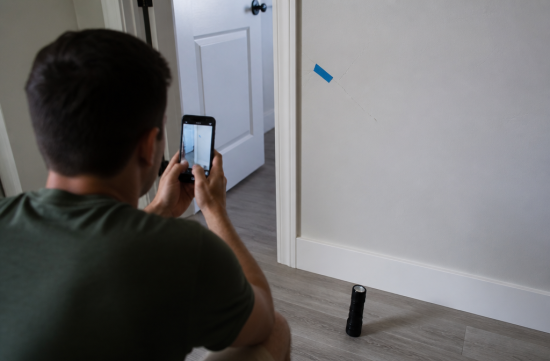
About eleven months after moving in, you may start to notice small signs around the house. Doors may stick slightly, hairline cracks may appear at the corners of walls, and the silicone in the bathroom may start to separate.
Most people tend to overlook these issues. However, if you miss this window, the cost of repairs for the same defects can vary significantly depending on who is responsible for them.
Most new builds in Texas come with a builder warranty commonly referred to as 1-2-10. This means one year covers finishes and materials, two years cover plumbing, electrical, and HVAC systems, and ten years cover structural components like the foundation and load-bearing framing.
The key here is the first year. After this period, visible finish defects like paint, trim, doors, and drywall typically need to be repaired at your own expense.
However, not all builders offer the same terms. Depending on whether it's a builder's warranty or a third-party warranty company like 2-10 HBW, the scope and claims process can differ, so you should review the documents you received at closing.
Therefore, I recommend doing a thorough inspection around the eleven-month mark. Waiting until the warranty expiration date to file a claim may be too late, and filing too early may prevent you from noticing defects caused by seasonal changes.
The first area to check is the cracks in the walls and ceilings. Take photos and note the locations of any fine cracks that appear along drywall seams or diagonal cracks at the corners of windows and door frames.
This area has expansive clay soil. When it rains, the soil swells, and during dry spells, it shrinks, so it's not uncommon for a new home that has gone through a summer to develop these cracks.
Conditions can vary even within the same timeframe. Older neighborhoods may have settled soil, while newly developed areas with freshly graded soil often show more noticeable movement in the first one to two years.
The second area to check is doors and windows. If doors that used to close smoothly are now sticking or if the gaps between the door frame and door leaf have changed vertically, this is not something to overlook.
Most issues can be resolved with hinge adjustments, but if multiple rooms are experiencing the same problem, it could indicate movement in the foundation. In such cases, it's better to document the issues as a pattern rather than noting each door individually.
The third area to inspect is places where water is present. Check the shower caulking, the junction between the bathtub and tiles, the plumbing connections under the sink, and the area behind the washing machine with a flashlight.
Don't forget the attic under the roof. If you notice stains on the ceiling after hail or heavy rain, it could indicate a roofing issue, and it's best to address this within the first year.
The fourth area is drainage outside the home. Check if water pools around the foundation the day after it rains, if the yard slopes toward the house, or if the gutter downspouts are directing water right next to the foundation.
In clay soil, having too much or too little moisture around the foundation is detrimental. Correcting drainage slopes early is much cheaper than repairing the foundation later.
While the air conditioning, plumbing, and electrical systems have a two-year warranty, I also recommend checking these. It's worth noting if each room is cooling evenly and if the circuit breaker has tripped for no apparent reason.
If you find this inspection overwhelming, you can hire an independent home inspector. Comparing the builder's inspection with a third-party inspection will reveal that builders tend to minimize the list of repairs while inspectors tend to maximize it.
There is a cost involved. However, the inspector's report will include organized photos and locations, making it useful for claims, and it serves as evidence if there are discrepancies with the builder.
Make sure to document your claims in writing. Simply texting the site manager and leaving it at that makes it difficult to prove when you reported the issues later.
I recommend submitting claims through the builder's portal or email, and keeping separate records of photos, dates, and claim numbers. Having a record that you reported issues within the warranty period is ultimately the most important evidence.
If the builder continues to delay or refuse repairs, there is a process to follow. Under Texas law, to file a lawsuit for residential construction defects, you must notify the builder in writing of the defects at least 60 days in advance, detailing the issues via certified mail with return receipt requested.
Upon receiving the notice, the builder has 35 days to inspect the home upon written request and can present a settlement proposal for repairs or compensation within 60 days. Skipping this process can jeopardize your claim, so following the steps is crucial.
Of course, it's rare for things to escalate to this point. Most issues can be resolved if you compile an inspection list and submit it on time, allowing the builder to address everything at once.
Contract terms and dispute procedures vary by home, so if the amounts are significant or structural issues are suspected, it's advisable to consult a real estate attorney or structural engineer first.
Looking back, the advantage of a new build is that someone is responsible for the first few years. Whether you take full advantage of that benefit ultimately depends on whether the homeowner marks a date on the calendar.
If it were me, I would set a reminder at ten months and clear a weekend day in the eleventh month to do a thorough walk-through of the house. It's much cleaner to present a list to the builder all at once than to make multiple requests separately.
A new home isn't perfect. However, just remember that any defects found within the first year are the builder's responsibility, while those found afterward are yours.
 CrystalTrail96








 |
| 
 Premium Gas Camp |
 CA Real Estate |
 cheesepup |
 breezem |
 velaro29 |
 Dala Dala |
 vrixen73 |

 envora21 |
  carefree |
  AZ Road Master |
  Victory 1988 |
  summita |
  business lim |
  Colorado Lee |
  Make My Day |
  Fros Pro |
  lioness |
  La Bean |
  American History This and That |
  Monte Sori |
  U donn |
  Sarah's Blog |
  Holy Cow |
  monster |
  houston mama |
  Reggae Party |
  Thou Thou |