
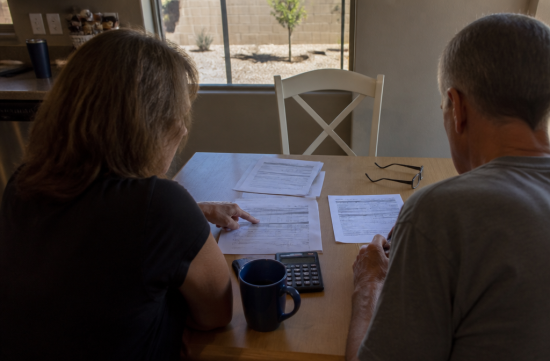
The 30-year fixed mortgage rate has surpassed 7% once again. According to Freddie Mac's weekly survey, the average rate reached 7.03% as of September 24, marking the first time it has crossed the 7% threshold since January 2025, a span of 20 months.
Just at the beginning of September, it was 6.71%. Over the course of a month, it gradually increased each week, moving from 6.76% to 6.95% before exceeding 7%, complicating calculations for those looking at homes.
During consultations, a common question arises: "With fixed rates this high, what about starting with an adjustable-rate mortgage (ARM)?" This question is becoming more frequent.
In fact, more people are making that move. According to a survey by the Mortgage Bankers Association (MBA), the proportion of ARM applications rose to 9.8% for the week ending September 18.
At the end of August, it was 8.0%. This means that nearly one in ten applications in recent weeks has opted for an adjustable-rate mortgage.
The reason is simple. In the same MBA survey, the 5/1 ARM rate was 6.10%, while the 30-year fixed (conforming loan) rate was 7.12%. With a difference of over 1 percentage point, it's understandable why people are considering it.
Let's follow through with a specific example. Imagine a household borrowing $400,000 with a 30-year term.
With a fixed rate of 7.12%, the monthly payment for principal and interest would be about $2,694. This figure excludes property taxes and insurance.
If the same amount is borrowed at a 6.10% ARM, the monthly payment would be around $2,424. This results in a savings of $270 per month, totaling over $16,000 saved during the fixed period of 5 years.
At this point, the ARM seems like the better option. However, what this household really needs to consider is what happens in 5 years.
Currently, most conforming ARMs are tied to the SOFR index, and 5-year fixed products often come with a 2/1/5 cap. This means that at the first adjustment, the rate can increase by a maximum of 2 percentage points, and thereafter, it can increase by 1 percentage point at a time, with a lifetime cap of 5 percentage points above the initial rate.
After 5 years of consistent payments, the remaining balance would be approximately $372,000. If the rate increases by the cap to 8.10% at the first adjustment, the monthly payment would jump to around $2,901.
In the worst-case scenario, if the rate reaches the lifetime cap of 11.10%, the monthly payment could be about $3,680, which is nearly $1,000 more than the initial fixed rate payment.
Of course, if rates decrease, the burden would lessen. The issue is that no one can predict what rates will be in 5 years.
Therefore, the first question I would want to ask this household is not about rate predictions. It's, "How long do you plan to stay in this house?"
If there's a high likelihood of selling or moving within 5 years, the ARM calculations look quite favorable. They would benefit from the lower rates before adjustments begin.
Conversely, if they plan to stay for over 10 years due to school for their children, the situation changes. In that case, it would be better to compare 7-year or 10-year fixed ARMs, and it's important to note that these products often come with a 5/1/5 cap.
Many people ask, "Can't I just refinance if rates go down?" While that is possible, it requires that home values, income, and credit status support it, and closing costs will apply again.
In my experience, I've seen many cases where people got into trouble by assuming they could refinance. This was especially true during the mid-2000s when many adjustable-rate loans were adjusting all at once.
However, there's no need to view today's ARMs the same way as back then. Current products have clear caps, and lending standards have become much stricter.
Ultimately, the key is to calculate the worst-case monthly payment in advance. The ARM program disclosure from the lender will provide all the caps, margins, and indices, so check those numbers directly.
It's also crucial to look at the margin. The rate after adjustment is determined by adding the margin to the index, so even if the initial rates are the same, different margins can lead to different outcomes in 5 years.
The Consumer Financial Protection Bureau (CFPB) also advises checking whether you can handle the highest payment after adjustments in their ARM guide. It's also essential to compare estimates from multiple lenders side by side.
Since each household has different income structures and plans, I recommend discussing the numbers with a loan officer or financial expert before making a decision.
In my opinion, if the plans are clear within 5 years and the worst-case payment is manageable, then considering an ARM now is a viable option.
However, if it's a long-term home and the budget is tight, I would lean towards a fixed-rate mortgage. There's no need to lose sleep over saving $270 a month.
Rates change weekly. Instead of chasing today's numbers, choosing a loan that fits our home plans is the conclusion I've reached after observing the market for decades.
 SunsetZone







 |
| 
 Premium Gas Camp |
 CA Real Estate |
 cheesepup |
 breezem |
 Kitchen Ideas |
 The Long Shot |
 Things to know |
 Young Kim |
 Victory 1988 |
  summita |
  business lim |
  Colorado Lee |
  Make My Day |
  Fros Pro |
  lioness |
  La Bean |
  American History This and That |
  Monte Sori |
  U donn |
  Sarah's Blog |
  Holy Cow |
  monster |
  houston mama |
  Reggae Party |
  Thou Thou |
  Tennessee Land |
  custardnew |
  Chimhanbang Korea ACU |