

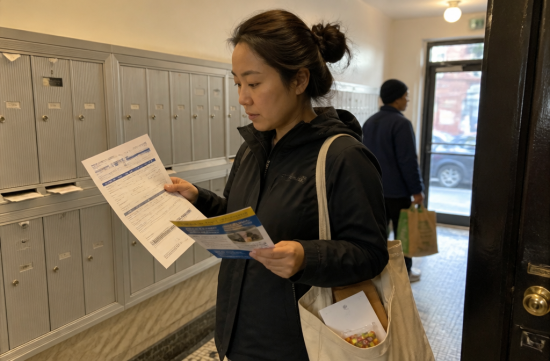
A few days ago, I received another flyer in my mailbox urging me to switch electric suppliers. The big print claimed that the rates for the first few months are incredibly low.
Honestly, I was tempted. Saving even the cost of a bag of jellybeans is a good thing.
But you have to look at the numbers first. So, I spread out my bill and compared the basic rates one by one.
First, let's talk about the structure. Massachusetts electric rates are mainly divided into delivery and supply charges.
The delivery charge is the same regardless of who you buy electricity from, as Eversource receives it uniformly. The only part that changes when you switch suppliers is the supply charge.
The residential basic service rate from Eversource in eastern Massachusetts is 17.32 cents per kWh starting August 1, 2026. This is an increase from the previous rate of 15.63 cents, and it will remain in effect until January 31, 2027.
The residential basic service rate is set every six months. So, it will change again in February next year.
Eversource explained that this increase is due to higher demand for natural gas during the cold winter and the market situation affected by international events. They state that they pass on the supply charge without making a profit.
This brings us to the Boston Community Choice Electricity (BCCE) program. The city purchases electricity for residents in bulk.
According to a notice sent by the city in March this year, there are three BCCE rates. The standard allocation is 14.214 cents per kWh, the optional basic is 13.644 cents, and the 100% renewable Green 100 is 16.231 cents.
These rates are fixed from December 2025 to December 2027. This is the main difference from Eversource's basic rate, which fluctuates every six months.
I did the math. For a household using 500 kWh a month, the supply charge would be $86.62 with Eversource's basic rate and $71.07 with BCCE's standard rate.
The difference is $15.55 a month. If you switch to the optional basic, the difference increases to $18.40. I was surprised at how significant that was.
Over six months, that amounts to a difference of over $93 based on the standard rate. For homes that use electric heaters or heat pumps heavily in winter, the difference will grow as usage increases.
So, what about the private suppliers mentioned in the flyer? This is where the mood changes dramatically.
There is a report from the Massachusetts Attorney General's Office dated March 31, 2026. It states that residential customers who switched to private competitive suppliers paid a cumulative $738.7 million more than if they had stayed with the basic rate.
Even just looking at the year from July 2024 to June 2025, residential customers paid an additional $87.4 million.
What's even more upsetting is the impact on low-income households. Low-income customers lost an average of $286 per year, while other customers lost $181.
The low rates advertised are mostly promotional rates for the first few months. Many contracts switch to variable rates after the promotional period ends, so it's essential to read the fine print in the contract.
There are also contracts with early termination fees. If you start cheap but end up paying to leave, there's nothing left to save.
So how do you know where you're currently buying electricity? The supplier's name is printed in the supply charge section of your Eversource bill.
If it says Basic Service, that's the basic rate, and if it's the city program, that name will be displayed. If there's an unfamiliar company name, you've likely signed a contract with them at some point.
According to the city notice, customers on the basic rate who haven't taken any action were automatically switched to the standard rate starting in May this year. Homes already under contract with private suppliers are usually not eligible for automatic enrollment, so they need to check separately.
To change or opt out of a plan within BCCE, you can follow the guidance on the city's website. You can also compare supply rates on the Energy Switch Massachusetts site run by the state government.
Of course, there's no guarantee that the city program will always be the best option. If a period of significantly lower basic rates comes along, the rankings could change.
However, current numbers show that BCCE is cheaper than Eversource's basic rate, and private suppliers have generally been more expensive according to official data.
I was personally surprised that Green 100 is cheaper than Eversource's basic rate. I thought it would cost a bit more for environmental reasons.
If it were me, I would just toss the flyer in the recycling bin and check the supplier name on my bill first. Then I would decide whether to stick with the standard rate or drop down to the optional basic.
I'd use the money I saved to buy a bag of jellybeans at Quincy Market, lol.
This experience taught me that choosing an electric rate isn't like picking jellybeans by color; you need to look at the ingredient list, or rather, the rate sheet.
 SleepyJolie
 goldenriverfox1952



 Mr Song Song |
 Way to easy |
 holy cow |

 Soy Angelino |

 SKy Face |

 tiramisu |

 Tart Tart |

 The Gelaton |


 Masa Masa |
 ssome |
 skykong |
 Shining Our Own World |
 gardener 007 |
 golfmaster |
 Nanana Nanana Nanana |
 Who's watching? |
 endone |
 RockStar |
 Casa Mia |
 You Only Live Once |
 Hardworking CPA |
 Joyce 77 |
 Runner Kim |
 My Town My Way Blog |
 My Miami Stories |
 Entip |
 Tony Park |
 Jean Claude Bundang Blog |
 DJ DC BLOG |