
A few days ago, while walking along the riverbank trail, I ran into a neighbor I hadn't seen in a while. I was happy to see them and asked how they were doing, and they mentioned that they had shingles last month and still felt a tingling in their side.
I asked if they had received the vaccine, and they said they got the first dose but forgot about the second one. Hearing that, I came home and checked my own records.
Shingles is a disease that occurs when the chickenpox virus, which you had as a child, lies dormant in your body's nerves and reactivates when you get older or your immune system weakens. So, even if you don't remember having chickenpox, you can't be too sure.
According to the CDC, more than 99% of U.S. adults born before 1980 have been exposed to the chickenpox virus. This means that even if you don't remember, almost everyone carries it in their body.
The CDC explains that 1 in 3 Americans will experience shingles in their lifetime. The risk increases as you age.
When I first saw this number, I was honestly a bit surprised. It made me understand why so many people around me have had it.
The shingles vaccine currently used in the U.S. is Shingrix. The older Zostavax vaccine is no longer sold in the U.S.
The recommended target is adults aged 50 and older. Adults aged 19 and older who have weakened immune systems or are expected to have weakened immunity are also encouraged to get vaccinated.
The key point here is that Shingrix is a two-dose vaccine. The second dose is to be administered between 2 to 6 months after the first dose.
In cases where rapid protection is needed, such as for immunocompromised individuals, the second dose can be given as soon as 1 to 2 months after the first. This is something the healthcare provider will determine.
So, what should those who have missed the 6-month mark do? The CDC guidelines are simpler than you might think. You don't need to start over; you can just get the second dose as soon as you remember.
This point made me feel relieved. There's no reason to give up just because it's late.
The effectiveness of getting both doses is quite high. The CDC states that the shingles prevention effectiveness is 97% for healthy individuals aged 50 to 69, and 91% for those aged 70 and older.
There are cases where nerve pain lingers for months after shingles, known as postherpetic neuralgia. The effectiveness in preventing this complication in those over 50 is also reported to be 91%.
However, not as many people complete both doses as you might expect. A study of Medicare enrollees found that 78% completed the second dose within 6 months of the first.
For those aged 50 to 64, the completion rate was slightly lower. About 70% completed it within 6 months, and around 80% within 12 months.
Long-term follow-up data released by GSK showed that the protective effect for those over 50 who received both doses lasted at least 10 years. This means that completing the vaccination properly provides long-lasting protection, making it feel even more regrettable to delay the second dose.
It's a bit disappointing that 2 to 3 out of 10 people end up only partially vaccinated. Most likely, they just forgot due to being busy.
Those who previously received Zostavax are also recommended to get Shingrix. At least 8 weeks should have passed since the Zostavax vaccination.
Even those who have had shingles are advised to get vaccinated. However, if you currently have a rash, you should wait until it has healed before getting vaccinated.
Knowing about potential side effects in advance can help reduce anxiety. You might experience soreness or swelling in your arm, fatigue, muscle pain, headaches, or fever, but these usually subside within 2 to 3 days.
Therefore, I would recommend getting vaccinated the day before a weekend when you don't have any plans. After a day or two of rest, you'll feel much better.
Those who are pregnant, have severe allergies to vaccine components, or currently have shingles should avoid vaccination. If you have any underlying health conditions or are taking medications, be sure to consult with your doctor or pharmacist before getting vaccinated.
We can't forget about the cost either. Thanks to the Inflation Reduction Act (IRA), starting in 2023, Medicare Part D enrollees can receive Shingrix at no out-of-pocket cost.
One thing to note is that Shingrix is processed under Part D, not Part B. Therefore, most enrollees will get vaccinated at their local pharmacy, and if they get vaccinated at a hospital, it may not be covered, leading to out-of-pocket expenses.
If you're aged 50 to 64 and have employer or individual insurance, it's a good idea to check with your insurance company or pharmacy about coverage beforehand. You can also confirm while making an appointment through the pharmacy app.
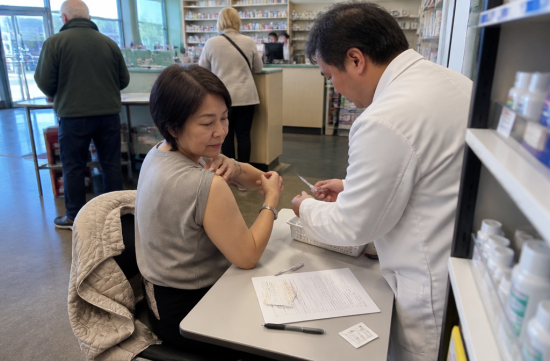
When I checked my records, I was relieved to find that I had received both doses. Still, I made a note of the vaccination dates in my phone.
If your memory is a bit hazy, ask your pharmacy for your vaccination records. If it's confirmed that you only received the first dose, you can schedule the second dose right there.
As the autumn breeze cools and the trees along the riverbank start to change color, I hope you take a moment to check on this while heading to get your flu shot. If it were me, I would stop by the pharmacy this week to confirm.
 moonlight61

 nixxon |
 LIZ Legal Information Blog |
 Karina's Blog |
 Jimbeam 88 |
 Taco Bell Candy Note Blog |
 Tennessee Land |
 Choco Mint Creator |
 ttano |


 U.S. Weather Bureau News |
  Who's watching? |
  eclipse |
  quietwave |
  Hajiwon Blog Hair Salon |
  hoosierdaddy |
  saffronroute |
  korvex93 |
  Mini Mee |
  Darnignac |
  vanilla |
  selvon |
  brownie |
  Star Blog |
  The Day the Sun Rises |
  sweetpop |
  California Kangaroo |
  zanero |
  station |
  Static |
  Star Way |