
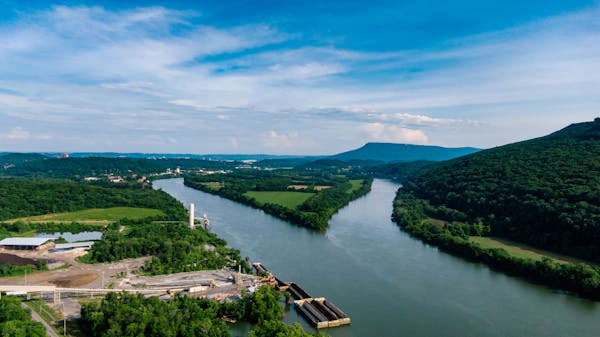
Chattanooga is a city located in the southeastern part of Tennessee, USA, known for its beautiful natural scenery of rivers and mountains, and as an important economic center with industrial, technological, and cultural characteristics. Chattanooga is also rapidly establishing itself as a growing city with various developments related to music, tourism, and technological innovation. This article will take a closer look at Chattanooga's economy, natural environment, and Korean population.
Chattanooga is a city that has achieved economic diversification by growing in various industrial sectors. Industries such as manufacturing, technology, tourism, and logistics are actively developing.
Chattanooga boasts a long history as an industrial city, particularly strong in manufacturing. While the steel industry was once central, various advanced manufacturing sectors now lead the city's economy. Industries such as chemicals, automotive parts, and metal processing are thriving, with both large corporations and small businesses actively operating in the area.
In recent years, Chattanooga has emerged as a hub for technological innovation and startups. The Chattanooga Technology Park serves as a major pillar driving the local economy, with many startups actively engaged in digital technology, IT solutions, and telecommunications. Chattanooga is establishing itself as a rapidly growing tech hub, with the introduction of cutting-edge technologies like 5G networks, attracting many companies to set up their headquarters here.
Chattanooga plays an important role as a logistics center. With well-developed transportation networks including rail, road, and air, the logistics and transportation industries are significant economic drivers. Notably, Chattanooga International Airport operates many domestic and international flights, and the logistics network through rail and road transport is well connected. This area serves as a transportation hub connecting the Mid-South and Southeast regions of the United States, playing a crucial role in corporate logistics and international trade.
Chattanooga is a city that boasts beautiful natural scenery and historical heritage, making the tourism industry an important economic source. The Chattanooga River, Raccoon Mountain National Park, and Indian Rock National Park offer excellent natural environments, and museums and art performances are actively held within the city. In particular, natural exploration and tourist sites like the Raccoon Mountain Nature Center are popular among many visitors.
Chattanooga is surrounded by the Caney Fork River, a tributary of the Mississippi River, and nearby mountainous areas, providing an optimal environment for enjoying beautiful natural scenery and outdoor activities.
Chattanooga is located in the Appalachian Mountains, characterized by a typical southeastern terrain where mountainous landscapes and rivers intertwine. The Chattanooga River and the Mississippi River flow nearby, significantly impacting the natural scenery and local ecosystem. This area offers various opportunities for outdoor activities such as walking trails, hiking paths, and bike routes.
Chattanooga has a humid subtropical climate, with distinct four seasons. Summers are hot and humid, while winters are mild with rare snowfall. Spring and autumn are relatively mild, with abundant rainfall and comfortable temperatures. Summer often sees storms and showers, and occasionally experiences the effects of hurricanes. However, unlike Nashville, Chattanooga's mountainous location boasts a relatively mild climate.
Chattanooga is a region rich in diverse natural resources and ecosystems. Various ecosystems, including forests, lakes, and rivers, coexist, and activities such as forest protection, nature conservation, and wildlife protection are actively pursued. The Chattanooga area is also known as a prime location for enjoying natural explorations like bird watching.
Korean Population
Chattanooga has a relatively small Korean population, but it is a city that is steadily growing. It is estimated that about 1,500 to 2,000 Koreans reside here. While Chattanooga has a smaller Korean population compared to major cities like Nashville and Memphis in Tennessee, it positively impacts the local community.
The Korean community in Chattanooga is actively involved in key industries such as manufacturing, healthcare, and food services. Many Koreans operate businesses through self-employment, contributing to the local economy by opening restaurants and shops. Additionally, there are many Koreans working in the healthcare sector, and Korean grocery stores and cafes are gradually increasing.
Chattanooga has a few Korean churches that activate the Korean community through worship and cultural events. Korean churches provide charitable activities and social support, strengthening the social ties of Koreans through interactions with the local community.
Chattanooga is an economic center where industry and nature harmonize, boasting the development of various industries, technological innovation, and cultural richness. Additionally, the Korean community positively influences the local economy and culture through self-employment and social activities.






 quietwave |
 ttano |

 U.S. Weather Bureau News |

 Korean Mom |
  My NYC |
  moo moo |
  Mr Oh |
  forevergee |
  festival |
  manchester |
  constant |
  Leapfrog Move |
  vibranto |
  Tora Tora |
  yellowbutter |
  Dolly |
  US Embassy |
  NYC saladbar |
  Finding Superfoods |
  lightyear |
  song bang |
  vexomo |
  Indiana Jones |