

As I get older, I can't help but pay attention to what I eat.
Whenever I hear something is good for the body, I tend to look it up. Blueberries are good, nuts are good, olive oil is good, and we should eat probiotics.
But while searching for various things, I suddenly had this thought.
While it's important to eat what's good for the body, isn't it even more important to eat in a way that promotes good bowel movements?
In fact, the final result of the food we eat is our stool. If you go to the bathroom after a few days of eating, you can see some signs of what you've consumed.
If you have to strain excessively or if it comes out in small rabbit pellets, or on the contrary, if you have diarrhea, then no matter how many healthy foods you eat, it's hard to say that your gut is in good condition.
There are an incredible number of microorganisms living in our intestines. These are commonly referred to as beneficial gut bacteria.
However, just taking one probiotic doesn't mean these guys will thrive on their own. They need food too.
That food is dietary fiber.
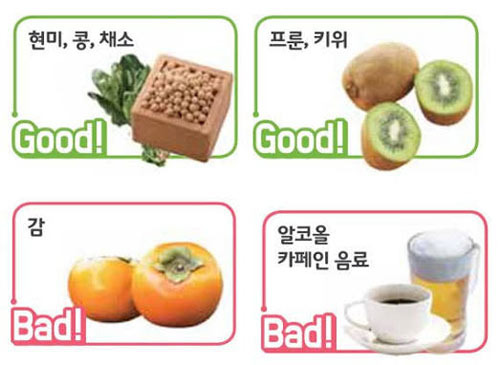
When you eat vegetables, beans, oats, barley, fruits, and nuts, some of the dietary fiber doesn't get fully digested in the small intestine and makes its way to the colon.
Then, the gut microorganisms consume this and produce substances called short-chain fatty acids, among which butyrate is an important energy source for colon cells.
So, let's think about eating broccoli. We just think, "It must be good for me because it has a lot of vitamins."
But from the gut's perspective, it's also about sending food to the microorganisms living in my colon.
So what constitutes a good stool?
It's simple to think about. The reason we often refer to 'golden stools' like bananas or sausages is because of this.
Therefore, when I think about gut health, I first look at what I usually eat rather than immediately searching for probiotics.
For example, some people eat a lot of meat, chicken breast, and eggs to build muscle but hardly consume vegetables, beans, or whole grains.
They may have consumed enough protein, but from the perspective of gut microorganisms, there might not be enough food.
On the other hand, if you eat oats or oatmeal in the morning, and pair beans and vegetables for lunch or dinner, along with some fruits and nuts, various types of dietary fiber continuously come in.
Consistently eating a variety of plant-based foods is better for the gut than consuming a single health supplement in large quantities.
You also need to drink water. If you suddenly eat a lot of dietary fiber when you're constipated but don't drink much water, it can lead to gas and discomfort.
If someone usually doesn't eat much in the way of vegetables, it's better to gradually increase their intake.
Fermented foods like kimchi or yogurt can also be helpful. But just eating kimchi and taking one probiotic isn't the end of it. Ultimately, what you eat every day is more important.
It's about taking a step beyond just thinking you should eat healthy and considering that you should eat in a way that promotes good bowel movements.When I think that the food I eat today is not just for me but also for the countless gut microorganisms living in my belly, my perspective changes a bit.
What tastes good in the mouth may be different for the gut.
If the next day I go to the bathroom and have a good bowel movement without straining, it means that at least the food I ate the day before was quite good for my gut.
 CabbageWifi
 KoreaTiker
 ChzPotatoFae







 hoosierdaddy |
 sun walker |
 Let's Be Like a Salt-like City Person |
 Springs Korea |
 US Legal Consultation on Trials |
  Rice Shop Uncle BLOG |
 Illinois Mom |
 joyfull yang |
 American General Knowledge Expert |
 Nanana Nanana Nanana |
  Stable Co. |
  Purple Moons, |
  International Court |
  roma |
  horse |
  moodansa 77 |
  zymit |
  maplefox |
  Fun Flex Life |
  hopeful |
  Reeno |
  Coastal city |
  meonetoo |
  Winter bear |
  Peach Jam Eating Laughter |
  Nando Raldo |
  American Man in a Mask |
  wendra |
  silver |
  bada2002 |