

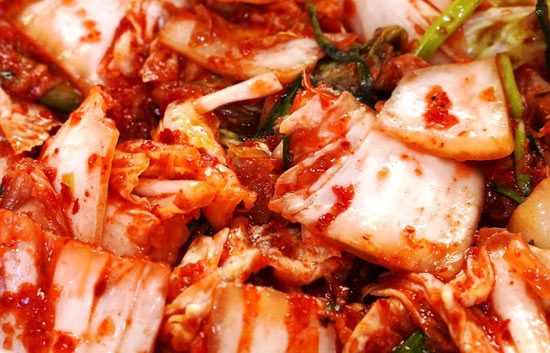
After making kimchi, there are times when it tastes a bit salty after about three days.
When this happens, you might worry that the kimchi is ruined, but that's not necessarily the case.
Kimchi's flavor continues to change as it ferments, so just because it tastes salty now doesn't mean it will stay that way.
However, if it is too salty right now, knowing how to adjust it can be very helpful.
The first method you can try is to add unseasoned ingredients.
By adding a bit more napa cabbage or radish and mixing it in, the saltiness of the kimchi can spread out with the newly added ingredients, potentially reducing the overall saltiness.
In particular, radish has a lot of moisture, which can help soften the salty taste. Slicing the radish thinly or shredding it and placing it between the layers of kimchi can sometimes improve the flavor after a day or two.
Adding more cabbage works similarly. However, the new cabbage should not be salted.
The second method is to add a bit of broth to make the kimchi less salty. If the kimchi is too salty, you can also consider eating it like a watery kimchi. Instead of just adding plain water, it's better to add some cooled kelp broth or very light anchovy broth. Adding a bit of radish, onion, or green onion can also help mellow the salty flavor.
The third method is to not try to eat it raw and instead use it in cooking. In fact, salty kimchi is much easier to handle when used in stews, fried rice, or kimchi pancakes. When making kimchi stew, a lot of water or broth is added along with ingredients like tofu, meat, and onion, which helps distribute the salty flavor. The same goes for kimchi fried rice. The addition of rice helps balance the flavor, making it taste much better than when eaten raw. Kimchi pancakes are also great because the flour batter helps absorb the saltiness.
If the kimchi is extremely salty, you can also rinse it lightly. This method is more about making it palatable for raw consumption rather than for cooking. Rinse it briefly under running water to reduce the surface saltiness, then mix it with a bit of sesame oil or sesame seeds before eating. However, be careful not to rinse it for too long, as it can wash away the kimchi's flavor.
Another option to consider is adding a little sweetness. When kimchi is salty, a lack of sweetness can make the saltiness feel sharper. Therefore, adding a small amount of grated apple or pear, or a tiny bit of sugar can help balance the flavors. Just be careful not to add too much, as it can make the kimchi taste oddly sweet. This method is more about making the saltiness less pronounced rather than eliminating it.
If you're wondering why this happens, it's usually due to the salting process or the seasoning. If too much salt was used when salting the cabbage, or if it wasn't rinsed enough afterward, or if fish sauce or salted seafood was added more than expected, the saltiness can become pronounced around the three-day mark. Even if it seemed fine at first, the flavor can intensify over time, making it taste saltier later on.
For your next batch, it's good to remember a few things.
It's important to rinse the salted cabbage thoroughly and drain it well. Also, it's better not to season too heavily from the start.
Kimchi's flavor deepens as it ferments, so sometimes it's better if it tastes a bit bland at first.
Adding fresh radish or napa cabbage to dilute the saltiness, supplementing with broth, or using it in stews or fried rice can make it much easier to eat.
Don't be too disappointed. Kimchi is a dish that you get a feel for after trying it a few times, haha.
In fact, these experiences will help you make better kimchi next time.






 Kitchen Ideas |
 Yellow Snowman |
 Moscow Kim |
 Seattle - Emerald City |
 self-evaluation |
 Illinois Mom |
 Rice Shop Uncle BLOG |
 American General Knowledge Expert |
 Electricity Field Certification Collector |
 Khan Film Blog Production |
  james kim |
  All About Cars |
  lomira98 |
  calmbridge |
  oneonly |
  Brighto |
  racuse |
  Total Beauty |
  crystal |
  Good Hotels |
  raspberry7 |
  Que que |
  Well Done Sir |
  dance dance |
  sweetpepe |
  vegas mom |
  Olivia's Blog |
  cathywhite |
  heartbreaker |
  Giant Squid and Sweet Potato Soup |