
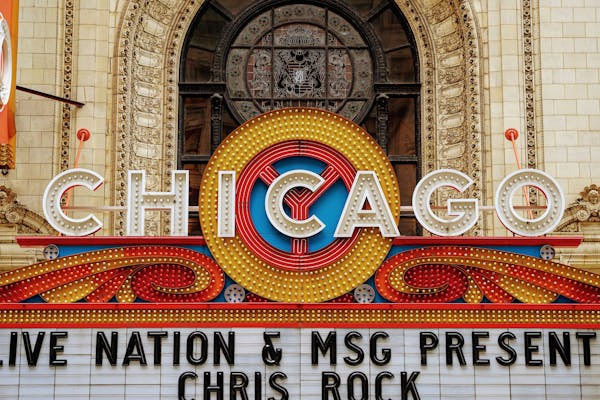
According to the 2022 American Community Survey (ACS), the Korean population in the Chicago area is approximately 61,000, making it the fifth largest among U.S. cities.
The Korean community in Chicago is primarily concentrated in the northern and western suburbs of the city.
In particular, areas like Niles, Glenview, and Northbrook have a high density of Korean businesses and residences.
While there is no officially designated 'Koreatown' in Chicago, there are areas where Korean businesses and restaurants are clustered.
The early Korean immigrants in the Chicago area settled mainly in the northern part of the city and gradually expanded westward and northwest over time.Korean immigrants tend to be relatively proficient in English, often coming from student backgrounds, which may have influenced their ability to live in various locations rather than congregating in one area.
The northwest suburban area of Chicago is informally referred to as 'New Koreatown,' where a variety of Korean restaurants and shops are located.
North Suburb: Chicago's Northern Area
The northern suburbs of Chicago traditionally began as upscale residential areas along Lake Michigan.
- Evanston: Home to the prestigious Northwestern University, it is the first city in the northern suburbs of Chicago.
- Glencoe, Highland Park, Wilmette: This area is known for its historic upscale neighborhoods, where the Jewish community and Chicago's 'old money' reside. Notably, New Trier High School in this area is popular among Korean families who prioritize school districts.
Moving a bit further west, you will find Glenview, Northbrook, and Deerfield.
- This area is one of the most populated by Koreans, thanks to its excellent school districts and affluent environment, which attracts the majority of the Korean community in Chicago.
- Niles: A central hub for Korean businesses, with many located around the intersection of Golf Road and Milwaukee Avenue.
Northwest Suburb: Northwest Suburban Area
The northwest suburbs of Chicago start west of I-294 and encompass a vast area.
- Mount Prospect and Arlington Heights: These areas have a concentration of Korean businesses alongside the Japanese community. Particularly, various Korean businesses operate around Golf Road.
- Des Plaines and Elk Grove: Located near O'Hare International Airport, these areas are trade and logistics hubs with many Korean companies.
- Buffalo Grove: Known for its excellent school district with Stevenson High School, this area is seeing an increasing number of Korean families.
Further west along I-90, Schaumburg and Palatine appear.
- Schaumburg: Home to Woodfield Mall, the most famous shopping mall in the Chicago area, it also has an active Korean community.
- Palatine: With Fremd High School located here, it is popular among Koreans who value school districts.
- Barrington and Inverness: These areas are home to emerging affluent residents, with large estates and a gradually increasing Korean population.
West Suburb: Western Suburban Area
The western suburbs of Chicago are formed around I-90 south and I-88. Naperville is often recognized as a great place to live, and although the Korean population is small, it is noted for its pleasant environment and excellent educational facilities.
The Aurora area features premium outlets and has seen a recent increase in Chinese immigrants.
Further south along I-55, the southwestern suburbs continue. Joliet is home to some Korean families, forming an extended living area outside of Chicago.
The Korean community in Chicago has a unique characteristic of not having a clear 'Koreatown' like other major cities.
This seems to be due to the history of Korean immigration in Chicago developing over time in different areas.


 Khan Film Blog Production |
 Illinois Mom |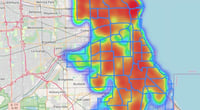
 Rice Shop Uncle BLOG |
 allstar realty |
 Enjoyable American Life Diary |
  yentra |
  Make My Day |
  Victory 1988 |
  Tonky |
  viroma |
  cookie |
  Live and that's it |
  Alright Twain |
  eatontown blog |
  HAWAII Korean Church News |
  Amore |
  linex |
  Balancework |
  laro90 |
  MEDBIO American Doctor Blog |
  SWAT TEAM BLK |
  DREAM BIG |
  frostbite |
  330 Forever My Love |
  El Dorado |