
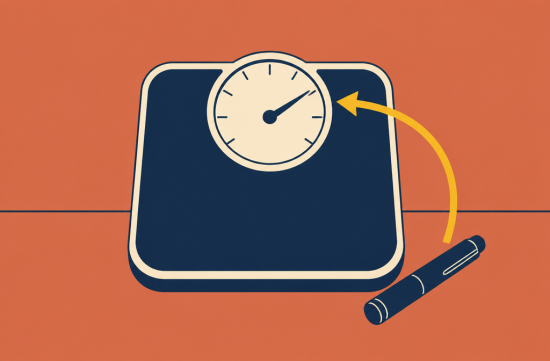
During lunch at work, a colleague was rummaging through a salad and mentioned that the weight lost with Wegovy tends to creep back after stopping the medication.
I paused for a moment. As more people around me started to relate to this issue, it felt less like someone else's problem.
Similar discussions often pop up in our community group chat. Some say they were fine after stopping, while others reported regaining their weight back to baseline within six months; experiences vary widely.
So this time, I decided to verify the rumors with research data. To cut to the chase, it turns out that regaining weight after stopping is indeed a common outcome.
The most frequently cited study is the STEP 1 extension trial. The results were published in the 2022 journal Diabetes, Obesity and Metabolism.
Participants received a 2.4mg semaglutide injection along with a lifestyle program for 68 weeks. This is the active ingredient in Wegovy.
According to the extension study, participants lost an average of 17.3% of their body weight during this period. This part is well-known as a success story.
The issue arises afterward. After 68 weeks, both the medication and lifestyle program were stopped, and participants were monitored for a year.
One year later, the semaglutide group regained 11.6 percentage points of the weight they had lost. The net weight loss compared to the start was only 5.6%.
In the researchers' words, two-thirds of the lost weight returned. Indicators like blood pressure and blood sugar also reverted to their original levels.
Honestly, I was a bit shocked by these numbers. Regaining two-thirds in just a year is much faster than I expected.
For comparison, I looked at the group that received a placebo from the start, which only regained 1.9 percentage points. They hadn't lost much to begin with, so there was less to regain.
The STEP 4 study had a cleaner design. After 20 weeks of treatment, participants were divided into a group that continued the medication and a group that switched to a placebo.
Over the next 48 weeks, the group that continued the medication lost an additional 7.9% of their weight, while the group that switched to a placebo actually gained 6.9%.
By removing the medication from the same starting point, the outcomes diverged significantly. It felt like watching two different endings unfold from the same scene in a documentary.
In January of this year, a broader perspective emerged. Researchers from Oxford University published a systematic review and meta-analysis in the BMJ.
They compiled data from 37 studies involving 9,341 participants who had used obesity medications and then stopped.
After stopping the medication, participants regained an average of 0.4kg per month. At this rate, it was estimated that they would return to their pre-treatment weight in about 1.7 years.
There was also a separate analysis focusing on semaglutide and tirzepatide. Tirzepatide is the active ingredient in Zepbound, and based on six studies with 1,776 participants, the average weight loss during treatment was 14.7kg.
However, after stopping, participants regained 0.8kg per month, suggesting they would return to baseline in 1.5 years. This indicates that the more weight lost, the faster the regain.
Compared to those who finished a diet and exercise program, the group that stopped medication gained 0.3kg more per month. Cardiovascular indicators like cholesterol were also estimated to return to baseline levels within 1.4 years.
So, does this mean the medication is a scam? Not at all. The STEP 1 researchers interpreted the findings to mean that obesity is a chronic condition.
It's similar to how blood pressure rises again after stopping blood pressure medication. When the appetite-suppressing effects of the drug wear off, the body tends to revert to its original state.
The fact that a meal that was sufficient during treatment suddenly increases back to one and a half servings after stopping indicates that it's not just a matter of willpower. The physiological drive to regain weight is stronger than expected.
The FDA approval also originally aimed for long-term weight management. It is intended to be used alongside a reduced-calorie diet and increased physical activity.
Therefore, I believe it's important to establish an exit plan from the beginning. Consider how long to use the medication, whether the costs are manageable, and what to do when stopping.
Currently, there is no research that definitively outlines how to prevent weight regain after stopping. There is also insufficient evidence on whether gradually reducing the dosage is effective.
However, the STEP 1 extension study involved stopping both the medication and lifestyle support at the same time. The eating and exercise habits established while on the medication are likely to be crucial supports after stopping.
Do not make decisions about stopping or adjusting the dosage on your own; always consult with the prescribing doctor or pharmacist. Judgments can vary significantly based on underlying conditions or other medications.
If I were to start the medication, I would first create a strength training routine. The medication is a helpful tool, but ultimately, it's the habits that will support me after stopping.
When I showed these numbers to my colleague during lunch, they let out a deep sigh. We both agreed that it's better to be informed and prepared than to be caught off guard.
 NoodleDrone







 Old English |
 nixxon |
 LIZ Legal Information Blog |
 Karina's Blog |
 Jimbeam 88 |
 calvor |
 ramen |
 menmo |


 Coastal city |
  meonetoo |
  Winter bear |
  Peach Jam Eating Laughter |
  Nando Raldo |
  American Man in a Mask |
  wendra |
  silver |
  bada2002 |
  horizon |
  Nanana Nanana Nanana |
  victoria jung |
  Kkikki Ppappa Shout Out Loud |
  Lululala |
  Toaster Pizza Magic Show |
  Utah, the Most Livable State |
  nortrix |
  Mau Nui |
  novapixel |
  fixed |