

In the U.S., while the culture and demographics vary by city, the senior retirement systems operate similarly on a broad scale.
In cities like Chicago, New York, Dallas, and Atlanta, the basic structure consists of "public + private + community" in a three-tier system.
However, there are significant differences in density, cost, and accessibility.
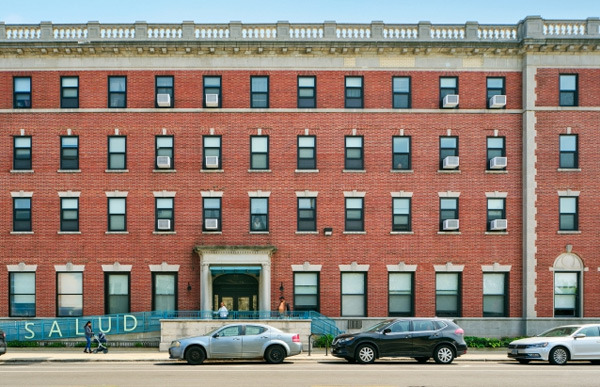
First, Chicago has lower costs than New York and is a city where nonprofit-based senior housing is well established.
There are many facilities operated by churches or local communities, and Medicaid-supported facilities are realistically accessible. However, due to the harsh winter climate, there is a high preference for indoor care facilities.
Next is New York City. New York is one of the cities in the U.S. where public senior housing is most developed.
Through public housing systems like NYCHA, there are apartments for low-income seniors. However, competition is extremely fierce, and waiting periods can extend for years. The advantage is that access to hospitals, public transportation, and welfare services is overwhelmingly good.
Moreover, nursing homes and assisted living facilities in New York City are not structured in a way that excludes those without money.
If you meet Medicaid criteria, the government often covers nursing home costs. However, you cannot just enter any facility; you need to find one that accepts Medicaid, and there are often waiting lists.
On the other hand, assisted living can be very expensive.
Since it is a concept of private housing + care services, the prices for assisted living in New York are "definitely higher than the national average."
In realistic terms, the average is about $5,900 per month, but in New York City, the typical range is usually between $5,500 and $8,500 per month, and depending on the location and facility level, it can often exceed $10,000.
In Brooklyn or Queens, it ranges from $5,500 to $7,500 per month, while in Manhattan, it exceeds $10,000, with high-end facilities reaching up to $15,000.
Dallas has a completely different atmosphere.
Due to its Southern characteristics, the land is wide and development is easy, so senior communities are formed in a "complex" style.
The costs are relatively low, and retirees can engage in many outdoor activities. There is public housing, but it is not as densely structured as in the Northeastern metropolitan areas. Instead, the private senior living market is very active.
Finally, Atlanta.
Atlanta has a large population of middle-class Black residents and retirees, so senior communities are steadily growing. It is characterized by strong senior services linked to church-based communities. While public support exists, actual living tends to rely heavily on private facilities and local networks.
Now, to address the key question: Are nursing homes only paid? To conclude, "there are almost no completely free options."
However, there are many cases where costs are almost fully covered through Medicaid.
If your income falls below a certain level, the government pays the costs instead. So, while they appear to be paid facilities, many are actually operated with public support. Conversely, Medicare does not cover long-term care, so do not be misled; it only supports short-term rehabilitation.
Regarding whether assisted living is legal in each city, the accurate expression is, "it is legal across the U.S., but regulations vary by state."
Texas, California, and New York are all legal, but the licensing standards, staff placement, and scope of medical services differ by state. For example, Texas has relatively flexible regulations, while California and New York have stricter ones.
In major U.S. cities, the public sector creates the basic framework, and the private sector fills in the actual services.
New York has a public density, Chicago is balanced, Dallas is private-centered, and Atlanta is community-based, which makes it easier to understand.
And nursing homes often have a "paid but government-covered structure," while the details of assisted living are operated differently by state.






 sparkling |
 oh my salami |
 saffronroute |
 You Only Live Once |
 Texas Real Estate Blog |
 Illinois Mom |
  Rice Shop Uncle BLOG |
 Khan Film Blog Production |
 Enjoyable American Life Diary |
 Nanana Nanana Nanana |
  ollege Mom |
  Esther 1983 |
  Arizona AZ Cowboy |
  fortbliss |
  Moscow Kim |
  My Two Way |
  toastyfox |
  FLORIDA Acus |
  tracker |
  TONTON COFFEE |
  sunrise |
  ultron78 |
  uplifted |
  Folding Instructions |
  same same life |
  USA Hyundai Kia |
  morvex37 |
  BOL SA RAM |
  TOUCHE NEWS |
  Small Business Information USA |