
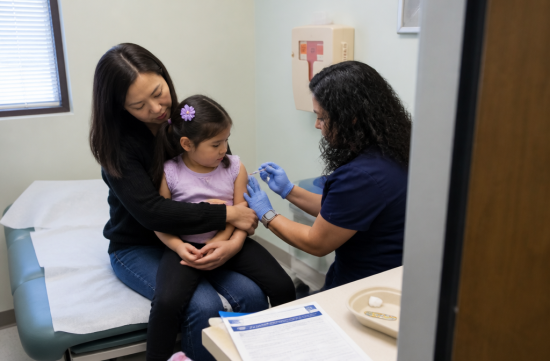
These days, the mornings and evenings have become quite cool. At this time of year, pediatric waiting rooms start to get crowded, and I feel we need to approach this year with a different mindset.
I revisited the numbers of children who have died from the flu over the past two seasons. I was speechless after seeing the figures.
First, let's clarify something. The number of 280 children who died from the flu is often mentioned, but that figure is from the 2024-25 season, not the last season.
According to the CDC's weekly report (MMWR), there were 280 flu-related deaths among children during the 2024-25 season. This is the highest number since reporting became mandatory in 2004, excluding the 2009-10 pandemic season.
That translates to 3.8 deaths per 1 million children, with the median age of the deceased being 7 years old. This means they were mostly elementary school-aged children.
What surprised me the most was that 44% of the deceased children had no underlying health conditions.
It's easy to think that only children with asthma or heart conditions need to be cautious. However, the numbers show that even healthy children are not safe from the flu.
The vaccination records are also noteworthy. Among the 208 children who were eligible for vaccination and had their records checked, 89% had not completed their vaccinations.
So, what about the 2025-26 season? According to the CDC FluView report for the week ending September 19, there have been 195 cumulative deaths.
While this is fewer than 280, it is still a significant number. Additionally, late reports may cause this number to rise.
The pattern was similar last season as well. Among the deceased children who were eligible for vaccination and had their vaccination status confirmed, 85% had not completed their vaccinations.
This same story has repeated for two consecutive seasons. At this point, it's hard to consider it a coincidence.
So, I checked the vaccination schedule for this fall. The key is to complete it before the end of October.
Children aged 6 months to 8 years who are getting the flu vaccine for the first time or have only received it once need to get two doses. The second dose should be given at least 4 weeks after the first.
Since a 4-week interval is required, if you want to finish by the end of October, you need to hurry with the first dose. If you keep postponing, the second dose could easily be pushed to the end of November.
Children who have already received two or more doses only need one this year. If you're unsure which category your child falls into, I recommend checking their pediatric vaccination records.
There's another point that confuses parents these days. In January, the CDC changed the children's flu vaccine to a shared clinical decision-making item.
In simple terms, this means that instead of a blanket recommendation, parents should discuss with their doctors whether to vaccinate. Meanwhile, the American Academy of Pediatrics (AAP) continues to recommend vaccination for all children over 6 months of age.
It's certainly unusual for government agencies and medical organizations to have differing recommendations. I believe it's best to make judgments based on the actual numbers rather than taking sides.
In either case, the conclusion is the same: talk to your doctor. Each household has different health conditions and allergy histories, so it's essential to consult with a pediatrician or pharmacist before vaccination.
You might also be concerned about costs. The flu vaccine is a preventive service, so most insurance plans cover it without out-of-pocket costs, but it can vary by plan, so it's a good idea to check with your insurance provider.
If you don't have insurance or if your child is enrolled in Medicaid or CHIP, you can look into clinics run by the Tarrant County Public Health Department. They provide flu vaccines for children over 6 months at various locations within the county.
According to county information, many clinics operate on a walk-in basis without appointments. Since times and locations can change frequently, it's best to check the county website before you go.
If your baby is under 6 months old, they cannot receive the vaccine. In this case, the most practical way to protect them is for family members caring for the baby to get vaccinated first.
It's important to ensure that not just parents, but also grandparents and caregivers are vaccinated. In Korean families, grandparents often take care of their grandchildren, so this is an important consideration.
Fall in Texas is also festival season. It's much easier to enjoy events with your child if you get vaccinated beforehand.
The flu vaccine does not completely prevent the flu. However, it reduces the risk of severe complications, which is why pediatricians recommend vaccination every year.
If I were you, I would call the pediatrician this week. If your child needs two doses, I would calculate the dates backward to set the first appointment.
Behind the numbers 280 and 195 are individual children from each household. Not delaying vaccination is the most certain preparation a parent can make.
 CornCafe







 Old English |
 nixxon |
 LIZ Legal Information Blog |
 Karina's Blog |
 Jimbeam 88 |
 kevin Kim |
 jaxter |

 Whoever It Is, I Don't Know |

 roma |
  horse |
  moodansa 77 |
  zymit |
  maplefox |
  Fun Flex Life |
  hopeful |
  Reeno |
  Coastal city |
  meonetoo |
  Winter bear |
  Peach Jam Eating Laughter |
  Nando Raldo |
  American Man in a Mask |
  wendra |
  silver |
  bada2002 |
  horizon |
  Nanana Nanana Nanana |
  victoria jung |