
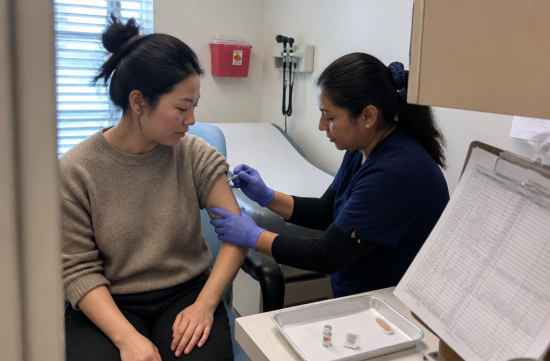
A few days ago, while having coffee with a friend, we started talking about measles. My friend said, "Didn't we all get vaccinated when we were kids?" and I realized I only knew that much.
But how many people can actually pull out their vaccination records when asked? I searched for mine when I got home, but I couldn't find it.
So this week, I decided to check the numbers first. According to the CDC, as of October 8, there have been 4,080 confirmed measles cases in the U.S. this year.
That's an increase of 193 cases from the previous week. On September 17, there were 3,471 cases, so it was just a month ago that we crossed the 3,400 mark.
Last year, the total was 2,289 cases, but this year, we surpassed that number by July. Reports indicate this is the highest level since 1991.
Of the confirmed cases, 96% are linked to outbreaks, and 414 people have been hospitalized. That means one in ten has ended up in the hospital, which honestly surprised me.
Measles starts with a high fever, cough, runny nose, and red eyes, followed by a rash that begins on the face and spreads. At first, it looks just like a cold, which makes it even scarier.
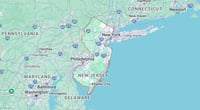
New Jersey is not exempt from this. In April, the state health department announced the first confirmed case of the year, which was a resident of Hudson County who had returned from overseas travel.
Now, let's get to the burning question: Should adults get the MMR vaccine again?
To put it simply, not everyone needs to. According to the CDC and state health department data, the criteria are clearer than you might think.
First, those born before 1957 are generally considered to have immunity due to natural infection during childhood. However, there are separate criteria for healthcare workers.
Adults born after 1957 are generally considered sufficient if they have a record of receiving the live vaccine at least once. If there's no record and no evidence of immunity, the general recommendation is to get vaccinated once.
There is a specific group that needs to get vaccinated twice: students in higher education institutions like universities, healthcare workers, and those traveling abroad.
Speaking of travel, I paused for a moment. Many people will be traveling to Korea at the end of the year.
Considering that New Jersey's first confirmed case was also someone who returned from abroad, it seems wise to check vaccination records before booking flights. You can't avoid crowded places like airports or airplanes.
There's also a specific time frame to note. Between 1963 and 1967, an inactivated, or killed virus vaccine was used.
If you were vaccinated during that time but don't know which vaccine it was, or if it was the inactivated vaccine, it's recommended to consider that vaccination invalid and get re-vaccinated. This is something to check if your parents' generation received it.
For those vaccinated between 1968 and 1989, the recommendation at that time was for one dose. Therefore, if you're in a high-risk situation, there's guidance to consider a second dose.
I was curious about the effectiveness numbers, so I looked it up: the effectiveness of measles prevention is about 93% for one dose and 97% for two doses. The second dose is meant to catch those who didn't respond to the first dose.
What if you can't find your records? There's a way to check for antibodies through a blood test.
However, some places, like the Minnesota health department, suggest that just getting vaccinated again is simpler than testing. This is because it's not a problem for someone who is already immune to receive an additional dose.
On the other hand, the MMR is a live vaccine, so it should not be given during pregnancy. There's also guidance to avoid pregnancy for 28 days after vaccination, so those planning to conceive should keep this in mind.
For those with significantly weakened immune systems or undergoing other treatments, the situation may differ. In such cases, don't make decisions alone; be sure to consult a doctor or pharmacist.
I called my mom to ask if she still has the notebook from when I was in Korea. From her response, "It should be somewhere," I think I might need to lower my expectations.
If you attended school in the U.S. or have had a workplace health check, your vaccination records might be there. You'll need to keep track of those received in Korea separately.
There's no need to worry too much if you can't find your records. If you tell your doctor that you don't have a record, they will help you decide whether to test or get vaccinated right away.
In fact, just bringing up vaccines can sometimes make the atmosphere a bit tense. So I prefer to check my own records first rather than share opinions.
If it were me, I would leave the records as they are if I have them, and if I don't or if I have travel plans, I would ask about it at my next appointment and consider getting vaccinated again.
Measles is a highly contagious disease that spreads through the air, so being cautious ultimately protects the babies and elderly around us. Newborns who haven't reached the vaccination age have no way to protect themselves.
This afternoon, the sunlight was nice, so I sat by the window and organized this article. I plan to log into the hospital portal this week to check my records.
 SunnyForest74


 Tora Tora |
 neroyo |
 nivex85 |
 Old English |
 nixxon |
 Living in New Jersey blog |
 hoosierdaddy |

 Kim You Shin |
 viewtop |
  loverun |
  Kim Do Sun |
  SEVEN SEVEN |
  yentra |
  Make My Day |
  Victory 1988 |
  Tonky |
  viroma |
  cookie |
  Live and that's it |
  Alright Twain |
  eatontown blog |
  HAWAII Korean Church News |
  Amore |
  linex |
  Balancework |
  laro90 |
  MEDBIO American Doctor Blog |
  SWAT TEAM BLK |