
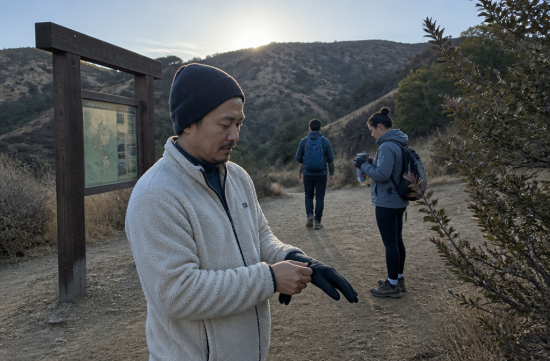
These days, when I go out for a morning hike, I can definitely feel the difference in the air. I regretted wearing a short-sleeve shirt as soon as I reached the first hill and my fingertips got cold.
At the trailhead that day, I saw someone sitting on a bench, clutching their chest. Fortunately, they said it was just a moment of shortness of breath, but that scene kept replaying in my mind after I got home.
So, I did some research. I wanted to find out if heart attacks really do increase when temperatures drop and why mornings are considered particularly risky.
To cut to the chase, both claims are backed by evidence. However, I'll summarize only what can be confirmed with numbers, rather than vague warnings.
First, let's look at the body's response. When exposed to cold air, the body constricts blood vessels in the skin and extremities to maintain core temperature.
This is called peripheral vasoconstriction. It reduces blood flow to areas far from the heart, conserving heat in the body's center.
The problem is that when blood vessels constrict, blood pressure rises. The American Heart Association (AHA) explains that this can also cause the coronary arteries supplying blood to the heart to constrict.
From the heart's perspective, it has to work against higher pressure while receiving less oxygen. For those with already narrowed blood vessels, the burden is much greater.
There are also changes in the blood. Several heart specialty hospitals indicate that platelets may clump together more easily in cold weather, increasing the risk of blood clots.
So, what do the actual statistics say? The most frequently cited study comes from Sweden.
A study published in JAMA Cardiology in 2018 analyzed 274,029 patients with myocardial infarction registered in the Swedish national heart registry (SWEDEHEART) from 1998 to 2013, linking their data with weather information.
The results were quite clear. For every 7.4 degrees Celsius increase in the daily minimum temperature, the risk of myocardial infarction decreased by 2.8%.
Conversely, this means that the risk increases on colder days. While low atmospheric pressure, strong winds, and shorter daylight hours were also associated with risk, temperature was the most significant factor.
Honestly, the number 2.8% might not seem like much at first glance. However, when considering hundreds of thousands of people, it's a significant difference, which surprised me.
Now, let's talk about mornings. The starting point is a study by the Muller research team published in the New England Journal of Medicine in 1985.
This study analyzed the onset times of pain in 2,999 myocardial infarction patients and found a distinct pattern peaking between 6 AM and noon. Subsequent studies using the same Swedish registry also showed higher risks in the early morning and on Mondays.
The reason lies in our body's circadian rhythms. In the morning, hormones like cortisol rise, and substances related to adrenaline cause blood pressure and heart rate to spike.
So, if you wake up on a chilly morning and head straight outside to tackle a hill, you're combining three factors that raise blood pressure all at once. I realized I had been doing this combination without thinking.
That said, I'm not suggesting you stop exercising in the morning. Based on AHA recommendations, I've compiled some realistic adjustments you can make.
First, don't overdo it. Your body is already using more energy to maintain temperature in the cold, so it's wise to lower your pace and take breaks more frequently.
Second, dress in thin layers. Creating air pockets between layers helps with insulation, and you can remove layers as you warm up.
Third, don't forget a hat and gloves. The heat loss from your head and fingertips is greater than you might think, and you should also pay attention to your ears and feet.
Fourth, it's best to avoid alcohol on cold days. The AHA warns that alcohol can create a false sense of warmth, leading to an underestimation of actual risks.
Personally, I've added indoor warm-up exercises. Spending about 5 minutes warming up at home makes the first uphill climb feel much easier.
You should also be aware of warning signs. Chest tightness or pain, discomfort radiating to the arms, back, neck, or jaw, shortness of breath, cold sweats, nausea, and dizziness are all significant symptoms.
If you're unsure, it's best to call 911. The AHA emphasizes that you should seek immediate confirmation, even if you're not certain.
If you have high blood pressure or heart disease, or if you're taking related medications, it's advisable to discuss exercise intensity and timing with your doctor or pharmacist, as risk factors vary from person to person.
I've decided to start my hikes about an hour later this fall. Going out after the sun has risen a bit makes the temperature feel more bearable and my body feels less shocked.
Ultimately, the goal of exercise is to maintain it over the long term. On chilly mornings, I believe that spending 5 minutes warming up is a better investment than chasing records.
 Redwolf



 nixxon |
 LIZ Legal Information Blog |
 Karina's Blog |
 Jimbeam 88 |
 Taco Bell Candy Note Blog |
 US Embassy |

 OC Real Estate Business Information |

 Various Knowledge and Information in the USA |
 Pronunciation Yo |
  Banana Style Life |
  Tesla X |
  Old English |
  urbanmint |
  forestcloud |
  forever young |
  Arlington house |
  liquid asset |
  Who's watching? |
  eclipse |
  quietwave |
  Hajiwon Blog Hair Salon |
  hoosierdaddy |
  saffronroute |
  korvex93 |
  Mini Mee |
  Darnignac |
  vanilla |
  selvon |
  brownie |